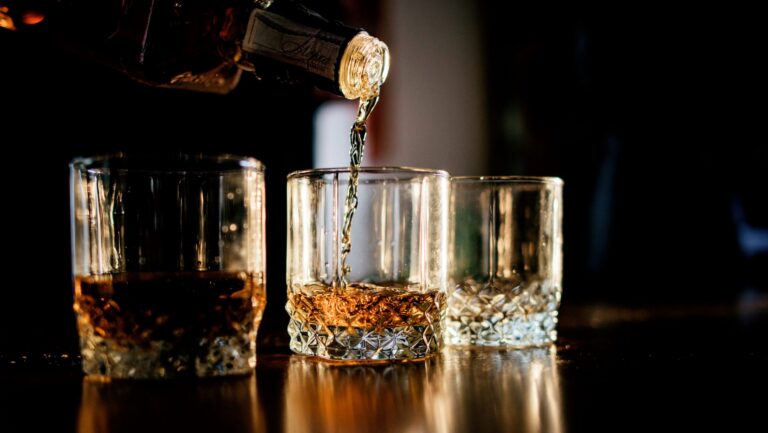
Scotch Whiskies can be some of the most prestigious beverages in the world. They can sell for thousands of dollars at auctions. They can be on the tables of many diplomats, or at Scottish cultural festivals worldwide. They can even be in a glass in front of you. What are they, fundamentally, though?
Like all whiskies worldwide, Scotch whiskies start their lives as grains. The specific grain essential to Scotch whisky is barley (others can be used, too, but barley is key). After the barley has been harvested from the field and shipped to a distillery (in Scotland, specifically, otherwise it’s not Scotch whisky), the grains have water added so they will sprout. When they sprout, the barley grains create enzymes that change starches into sugars. If you continue growing the barley, it eventually turns into a barley plant, which is great if you want to grow more barley, but less good if you want to make it into a drink. If instead you’re looking to make a drink, you can cook the barley a couple days after it’s sprouted. This process of sprouting and cooking barley is known as “malting”, and perhaps unsurprisingly, the sprouted cooked barley is known as “malt”.
If you take the malt and add enough water to make a sort of sugary tea with it, yeast can ferment the liquid, changing it into what is essentially a beer. This beer is known as “wash”, and for making Scotch whisky, is then distilled. After the first distillation, it’s known as a “low wine”, and after the second, it’s known as “new make spirit” fresh off the still. The next step is ageing the whisky at least three years in oak barrels, no larger than 700 litres. After that, the distillate, if it has been made, distilled, and aged in Scotland (and was distilled to a strength below 94.8% alcohol), can technically be a Scotch, as long as no other ingredients besides water and plain caramel colouring were added and it weren’t diluted below 40% alcohol. What type of Scotch could it be, though?
If it were released only from the one distillery on its own, it would be a Single Scotch, but if it’s meant to be mixed with Scotch from one or more other distilleries, it would become Blended Scotch. If its only ingredients are malted barley, water, and yeast, and it was distilled in a type of still known as a pot still, it could be classified as a Malt Scotch. If other grains (such as wheat, rye, unmalted barley, etc) were used or it were distilled in a different type of still, it would be a Grain Scotch.
There are five official different regions within Scotland that make Scotch whisky: the Lowlands, near the river Spey (called Speyside), Campbeltown on the Kintyre Peninsula, the island of Islay, and everywhere else (known as “Highland”). Several islands of Scotland besides Islay also have distilleries that make Scotch whiskies, including Skye, Orkney, Harris, and Arran, and though they’re officially classified as “Highland”, they’re informally known as Island.
So next time you’re having a wee dram, feel free to take a quick check on the bottle you’re trying, and also recognise all the hard work you’ve put in to understand the bottle! Cheers!
Any content, resident submissions, guest columns, advertisements, and advertorials are not necessarily endorsed by or represent the views of Best Version Media LLC (BVM) or any municipality, homeowners associations, businesses, or organizations that this publication serves. BVM is not responsible for the reliability, suitability, or timeliness of any content submitted, inclusive of materials generated or composed through artificial intelligence (AI). All content submitted is done so at the sole discretion of the submitting party.