That title sounds like it’s too good to be true, right? I guess it could be from a certain point of view, but stay with me for a bit, and I’ll explain in detail. When it comes to working with our dogs, the more successes we have, the more the behavior we are trying to teach them sticks. Yes, sometimes corrections and discipline are needed. That’s simply a part of building a balanced relationship and a balanced dog. However, when it comes to teaching your dog behaviors that are tied to verbal or gesture cues, positive reinforcement, the act of ADDING (positive) something that the dog likes to encourage (reinforce) the behavior, is the way to go. The way that positive reinforcement is successful is to only give the reward in response to the behavior you want and to not give the reward when the behavior you want is not shown.
The more your dog shows the behavior you want and gets rewarded for it, the more likely it is that your dog will perform the behavior more accurately and quickly the next time he or she is prompted. If you have consistent failures where you can’t reward your dog, there’s no forward progress on training the behavior.
How to fix this problem?
Engineer your own success. You have to engineer your own win-win scenario. There are many ways you can do this from selecting the right environment for training, being in full control of all potential distractions, finding the most high value reward for your individual dog, and breaking the behavior down into a series of progressions that start with the easiest form to produce.
Let’s quickly chat about each option.
Selecting the right environment. Too often, I see people want to start training their puppy or dog they just adopted at the City Park or the Canyon Rim or at the dog park. That’s like going into the gym for the first time and loading up 200 lbs on the bench press and expecting that to go well. It won’t go well, and you probably will just end up getting hurt, so please don’t do that. The best place to start training is right at home…in your own living room…just you and your dog. That’s the easiest place to be in full control over all the distractions.
The more distractions your dog has, the harder it is going to be for him or her to learn a new behavior. When teaching a behavior, think of it like taking a snapshot in the mind…and the more you practice the behavior correctly, the clearer the image gets. The fewer distractions you have, the faster the image becomes clear. You will want to add distractions later, but you’ll want to do it slowly in a manner that you control. So turn off the TV or the podcast, put the other dogs or cats up in a separate room, send the kids out to play. Oh, and make sure you don’t have anything in the oven. Take the time to make sure there’s nothing in between you and your dog’s focus. Training sessions only need to be about 15 to 20 minutes. Anything can wait for 15 to 20 minutes. If you’ve got that high value reward your dog goes nuts for, you’re golden.
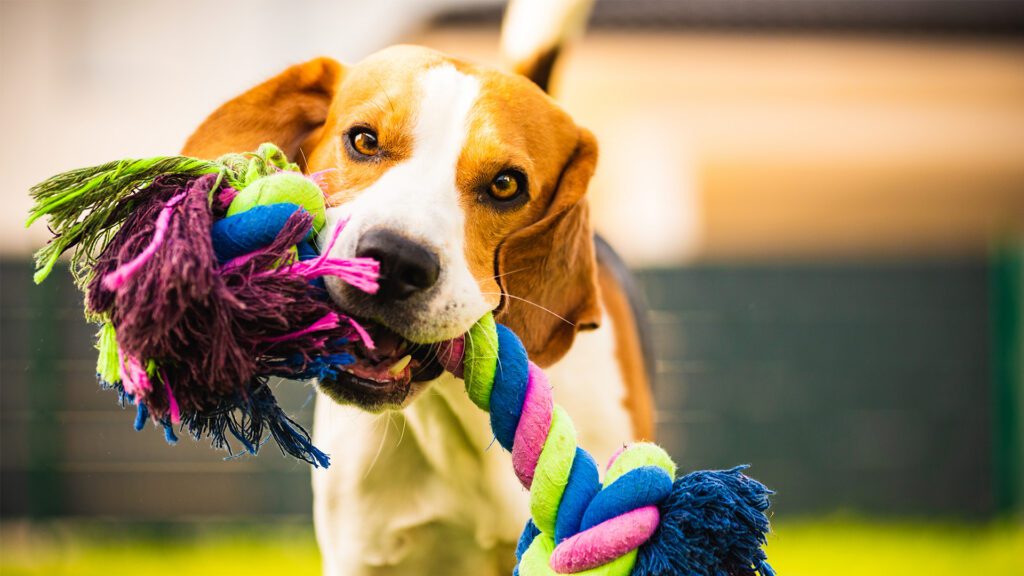
It’s important to recognize that not all rewards are created equal to all dogs. When we talk about rewards, most people think of treats, and sure, that is the most common type of reward that most dogs enjoy, but there are plenty of dogs who are just not food motivated. Don’t give up! Rewards can be plenty of things that are not food or toys.
Affection and play are fantastic rewards. With any reward, just remember that timing is vital. Wanted behavior should immediately be followed by the reward. How do you find out what motivates your dog? Spend some time figuring it out! Try a bunch of treats, different toys, different playstyles, and different types of affection. I once worked with a dog who loved that thumping “good boy” pat on his chest. You find what works for your dog. Once you’ve found your reward, time to break the behavior down.
We’ve all seen those videos on YouTube of influencers breaking down various exercisesinto easier progressions. The exact same thing can be done with dog behaviors. Let’s take an easy example: the place command, which is sending your dog to a designated spot to chill out until released. The very first progression of this behavior is just getting the dog to place one paw on the place bed. That’s it. We reward that. We go nuts for that. We work on that simple progression dozens of times until it’s second nature to the dog. Then we ask for two paws on the place bed before we reward. Once we’re good at that, we ask for three paws, then all four, then to hang out on the place bed for a count of 5, and so on and so forth. Don’t be afraid to break down any behavior into it’s most basic components and build up your confidence and your dog’s confidence.
If you take all of these points and utilize them in your training sessions, especially when training puppies or new behaviors with any dog, it will help you set your dog up for success. It will also help you calm your mind so you have less stress around training. If you can reduce your own stress, your dog’s stress will be reduced as well. Your dog will always mirror what you are feeling. If you’re having a bad training session, take a break and do a little bit of introspection as well. This is not just about engineering your dog’s success, but your success as well.
Any content, resident submissions, guest columns, advertisements, and advertorials are not necessarily endorsed by or represent the views of Best Version Media LLC (BVM) or any municipality, homeowners associations, businesses, or organizations that this publication serves. BVM is not responsible for the reliability, suitability, or timeliness of any content submitted, inclusive of materials generated or composed through artificial intelligence (AI). All content submitted is done so at the sole discretion of the submitting party.