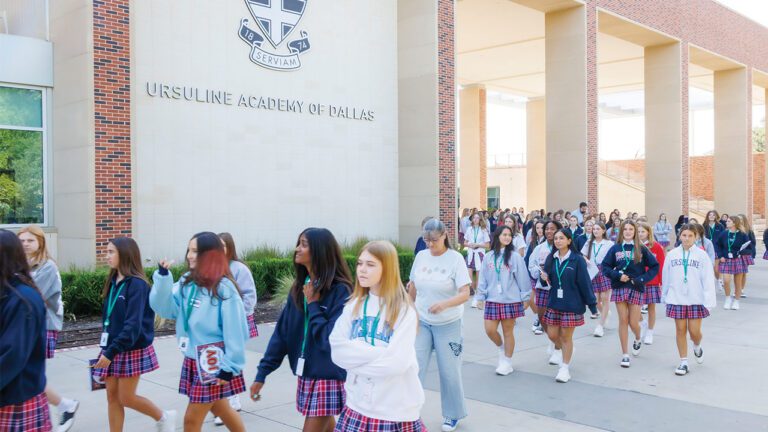
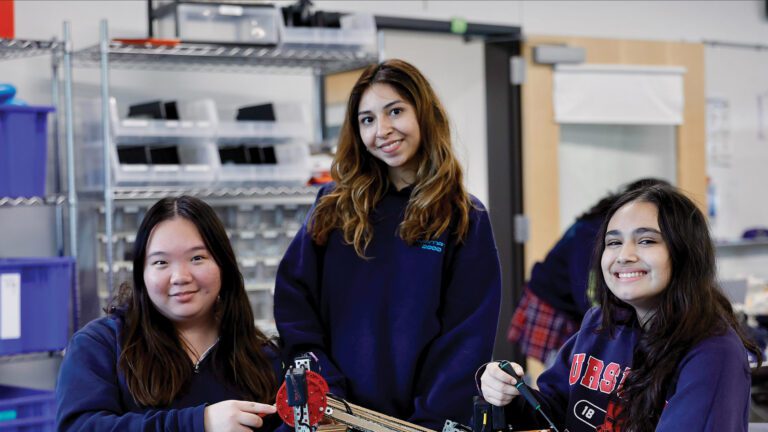
Belonging is more than a feeling; it is the foundation of a healthy school community where every student feels safe to show up as their full, authentic self. When students experience true belonging, they are more likely to engage, take risks, and thrive academically and personally. But how do families and educators work together to create environments where every young person feels welcomed, valued, and truly at home?
To explore this question, I spoke with Charleen Doan, Community & Inclusion Coordinator at Ursuline Academy of Dallas. Her insights, shaped by lived experience and her daily work with students, offer practical, meaningful ways to cultivate belonging.
For Doan, belonging begins with relationships and the curiosity we bring to understanding one another. Her perspective is rooted in her upbringing as the child of immigrants, navigating what she describes as “two different worlds” at home and at school. Integrating these identities was a years-long process—one that taught her how powerful it can be when a student feels seen, heard, and honored. She believes every student carries a story worthy of recognition. When educators and families celebrate their students’ diverse backgrounds, cultures, and experiences, they create communities where differences are embraced as strengths.
At Ursuline, Doan’s work is grounded in the school’s Catholic mission, which emphasizes the inherent dignity and worth of every person. “If we are called to love our neighbor,” she explains, “then we have a duty to each other to ensure that every student feels known and fixed in our hearts.” This shared mission becomes the basis for strong partnerships between families and educators—partnerships marked by clear communication, consistent expectations, and a united commitment to raising young people who respect both themselves and others.
While many schools express a commitment to inclusion, living out those values each day requires intention. One practice Doan frequently encourages is active listening. Students often listen to respond, rather than listen to truly hear another person. Teaching them to center the speaker builds empathy, helps prevent misunderstandings, and strengthens relationships across lines of difference. By modeling active listening, adults give students the tools to engage openly and compassionately with others.
Small, everyday interactions also shape a student’s experience of belonging. Greeting students at the door, checking in on them, asking open-ended questions, or attending their extracurricular events all send a powerful message: you matter here. These simple moments affirm students as whole people with interests and identities beyond the classroom.
Importantly, the foundation of belonging is laid long before students enter school. The values and behaviors children observe at home guide how they show up in the community. “Children are always watching,” Doan notes. When families model empathy, respect, and curiosity, students naturally carry those habits into their school relationships.
Families can strengthen this foundation by asking reflective questions that help children understand who they are and what they value. A child secure in their identity is more open to appreciating and engaging with the identities of others. In this way, belonging is a shared journey—one that begins at home and is nurtured every day at school.
Any content, resident submissions, guest columns, advertisements, and advertorials are not necessarily endorsed by or represent the views of Best Version Media LLC (BVM) or any municipality, homeowners associations, businesses, or organizations that this publication serves. BVM is not responsible for the reliability, suitability, or timeliness of any content submitted, inclusive of materials generated or composed through artificial intelligence (AI). All content submitted is done so at the sole discretion of the submitting party.