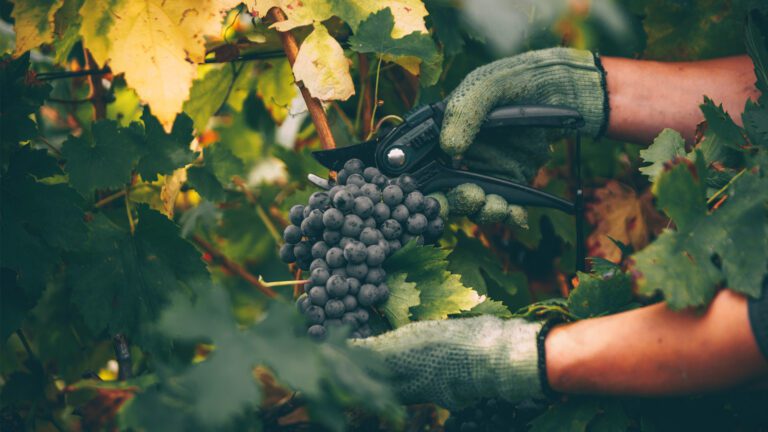
Every winter in Livermore Valley, something quietly dramatic happens in the vineyards. There are no grand openings, no release parties, no Instagram-worthy sunsets with glasses held aloft. Instead, there are people in heavy jackets, armed with clippers, staring intensely at grapevines like chess players plotting three moves ahead. This is pruning season, and while it lacks glamour, it may be the single most important reason Livermore wines taste as good as they do.
If wine were a Broadway show, harvest would get the standing ovation. Fermentation would earn the critical acclaim. Aging would accept the awards with a thoughtful speech. But pruning? Pruning is the stage manager—unseen, uncelebrated, and absolutely responsible for whether the whole thing collapses halfway through Act Two. To the untrained eye, pruning looks suspiciously like vandalism. Perfectly healthy vines are aggressively cut back, reduced to what appear to be woody stumps with a few hopeful nubs sticking out. It feels counterintuitive, like telling a child they’ll grow better if you take away most of their vegetables. But grapevines are not delicate flowers. They are enthusiastic overachievers, and if left unsupervised, they will produce a wild tangle of leaves, shoots, and fruit that looks impressive but results in wine that tastes… well, distracted.
Pruning is about discipline. It’s the art of saying no. No to extra shoots. No to excess fruit. No to chaos. And in Livermore Valley—where sunshine is generous and vines grow with enthusiasm bordering on recklessness—this discipline is especially critical. The goal of pruning is simple to explain and maddeningly difficult to execute balance. A vine must produce enough fruit to be worthwhile, but not so much that the grapes lose concentration. Think of it like hosting a dinner party. Invite too few guests and it’s awkward. Invite too many and no one gets fed properly. Pruning decides the guest list months before the invitations go out.
In Livermore, pruning decisions are shaped by the Valley’s unique climate. Warm days encourage growth, while cool nights preserve acidity. That combination is a gift—but only if it’s managed correctly. Too much growth and the vine spreads itself thin, producing grapes that lack character. Too little and you risk overconcentration or stress. Pruning is where winemakers and vineyard managers set the tone for the entire vintage, long before anyone debates yeast strains or barrel programs.
This is not guesswork. Pruning requires an intimate understanding of each vine’s personality, which sounds absurd until you spend time in a vineyard and realize it’s true.
Some vines are overachievers. Some are lazy. Some are dramatic and need constant reassurance. Skilled pruners know which canes to keep, which to cut, and how many buds will give the best chance for evenly ripened fruit come harvest.
And yes, this all happens while your wine glass is still very empty.
Madison Vineyards, one of Livermore’s quiet standouts, treats pruning with the seriousness of a sacred ritual, albeit one performed with practical boots and sharp tools rather than incense. Their approach reflects a broader Livermore philosophy: great wine starts long before grapes are ripe, and often long before anyone is paying attention. The irony is that pruning is fundamentally about subtraction in a culture that loves addition. More flavor. More intensity. More extraction. More oak. But Livermore’s best wines increasingly prove that restraint—starting with pruning—creates wines that are more expressive, more balanced, and frankly more enjoyable to drink.
When vines are properly pruned, they produce fewer clusters, but those clusters benefit from better airflow, better sun exposure, and more consistent ripening. That means fewer disease issues, less need for intervention later, and grapes that arrive at the winery already set up for success. Winemakers love to talk about letting the vineyard speak. Pruning is how you teach it proper diction.
It also explains why vintage variation is embraced rather than feared in Livermore. Each year’s pruning decisions respond to what the vines experienced the year before. A cooler season? Adjust accordingly. A vigorous year? Pull back harder. This responsiveness gives Livermore wines their sense of place—not just the soil or the weather, but the accumulated wisdom of decisions made cane by cane.
There’s also something wonderfully humbling about pruning. It’s done in the cold, often in mud, long before there’s any guarantee the year will cooperate. Frost could strike. Heat waves could follow. Smoke might roll in from somewhere far away. Pruning is an act of optimism. You cut today believing that months from now, conditions will align and reward your choices.
And when they do, the payoff is profound. Wines with clarity. Wines with structure. Wines that feel intentional rather than accidental. The kind of wines Livermore has become increasingly known for—approachable, food-friendly, and confident without being loud.
It’s tempting to focus on what happens in the cellar, because that’s where the romance lives. Barrels, aromas, tastings, hushed conversations about texture and length. But the truth is that many of the most important winemaking decisions happen when no one is watching, with nothing more glamorous than pruning shears and a plan.
Livermore’s strength as a wine region lies in this quiet competence. The understanding that excellence is built incrementally. That cutting back is sometimes the best way forward. That the best wines are not the result of one dramatic moment, but hundreds of thoughtful ones.
So, the next time you enjoy a glass of Livermore wine and find yourself admiring its balance, its elegance, its sense of ease, consider the winter vineyard. Consider the hands that made hard choices so you could have an easy second pour. In a Valley that doesn’t take itself too seriously, pruning remains a deeply serious business.
And thankfully, it’s one snip at a time.
Any content, resident submissions, guest columns, advertisements, and advertorials are not necessarily endorsed by or represent the views of Best Version Media LLC (BVM) or any municipality, homeowners associations, businesses, or organizations that this publication serves. BVM is not responsible for the reliability, suitability, or timeliness of any content submitted, inclusive of materials generated or composed through artificial intelligence (AI). All content submitted is done so at the sole discretion of the submitting party.