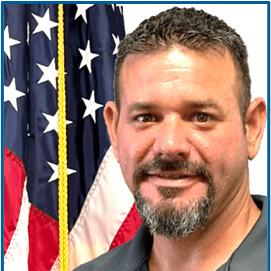
For more than two decades, Brandon Salazar and Richard Ramsey trained military operators and federal law-enforcement personnel in high-risk environments, including advanced tactical movement and combat driving programs. During that time, they helped develop, test, and challenge real-world operating procedures used in high-threat missions. Today, both serve as Senior Instructors at Urban Defense Advisory Group, applying those same lessons to civilian emergencies—where the most likely threat is no longer a battlefield encounter. It’s a car crash.
In serious collisions, seatbelts often restrain the torso, but arms and legs remain exposed. During high-energy impacts, rollovers, or ejections, extremities are frequently crushed, lacerated by glass and metal, or severely damaged during vehicle deformation. These injuries commonly result in severe bleeding, and once that bleeding begins, time becomes the most critical factor. A person with uncontrolled limb bleeding can lose consciousness—and their life—in three to five minutes. Calling 911 is essential, but realistically, dialing, explaining the situation, and providing a location can take two to three minutes. During that time, blood loss continues, physical strength fades, and decision-making deteriorates. That reality leads to a simple but critical principle taught at Urban Defense: Stop the bleeding first. Then call 911. Bleeding control is not a secondary step. It is the first intervention.
Active shooter incidents, animal attacks, and violent assaults dominate headlines and television coverage. While those threats remain real, the most statistically probable life-threatening emergency most Americans will ever face occurs on the roadway. According to national traffic data, approximately 40,000 people die each year in vehicular accidents in the United States, with countless more suffering serious injuries.
The TAK-710 deploys with one hand and a single button, automatically applying and maintaining effective pressure for up to six hours. No prior medical training is required. It is simple enough for an eight-year-old to operate, yet advanced enough for military and emergency medical professionals. While car accidents are the most common use case, the TAK-710 is equally effective for gunshot wounds, active-shooter incidents, animal attacks, workplace injuries, and any traumatic limb bleed.
Urban Defense Advisory Group has been awarded official U.S. distributorship for the TAK-710 The World’s First Self-Adjusting Automatic Tourniquet, designed specifically for high-stress situations where fine motor skills fail and seconds matter.TAK-710 is made by Xmetix.
Most people understand the value of an AED, but AEDs require a specific cardiac event and another person to assist. A tourniquet can be self-applied, used immediately, and deployed across a far broader range of real-world emergencies. In many situations, a tourniquet is more likely to be needed—and more likely to be usable—than an AED.
Urban Defense Advisory Group maintains on-hand TAK-710 inventory locally in Brevard County, Florida, making this life-saving technology immediately accessible to families, schools, churches, businesses, and first responders. To learn more about the TAK-710 and other life-saving products, visit www.UrbanDefenseAdvisoryGroup.com.
Any content, resident submissions, guest columns, advertisements, and advertorials are not necessarily endorsed by or represent the views of Best Version Media LLC (BVM) or any municipality, homeowners associations, businesses, or organizations that this publication serves. BVM is not responsible for the reliability, suitability, or timeliness of any content submitted, inclusive of materials generated or composed through artificial intelligence (AI). All content submitted is done so at the sole discretion of the submitting party.