If your vision feels as though you are looking through a foggy lens—blurred edges, muted colors, or difficulty driving at night—you may be developing cataracts. Cataracts are a natural part of aging, but advances in ophthalmic technology have made their treatment one of the most successful procedures in modern medicine. According to UCI Health, cataract surgery has an excellent safety profile, with studies showing success rates of approximately 99 percent.
Traditional cataract surgery remains a safe and effective option. However, many patients today benefit from a more advanced approach known as laser-assisted cataract surgery. This technology enhances surgical precision and consistency, helping create an optimized foundation for improved visual outcomes—especially when paired with advanced intraocular lenses.
Precision Through Laser Technology
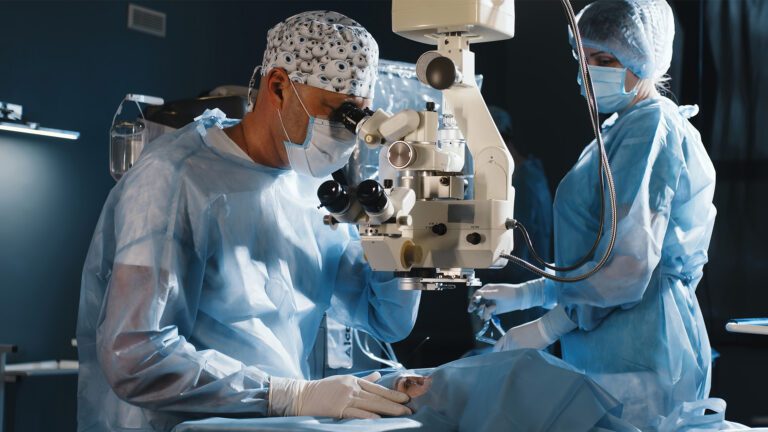
Laser-assisted cataract surgery uses a femtosecond laser to perform several of the most delicate steps of the procedure. Instead of relying entirely on handheld instruments, the laser creates corneal incisions and openings in the lens capsule with exceptional accuracy, measured at the micron level. This consistency supports improved lens positioning and stability, which is particularly important when implanting premium lens implants.
The laser also softens the cataract before removal.
By reducing the amount of ultrasound energy required during surgery, this approach may place less stress on the eye. Many patients experience reduced inflammation and smoother visual recovery as a result.
For individuals with astigmatism, laser technology can also be used to make precise corneal adjustments during surgery. These adjustments may decrease dependence on distance glasses following the procedure, depending on individual anatomy and lens selection.
Advanced Intraocular Lenses (IOLs)
Cataract surgery involves replacing the eye’s cloudy natural lens with an artificial intraocular lens (IOL). While standard monofocal lenses typically provide clear vision at one distance, advanced IOL options allow surgeons to better match vision to a patient’s lifestyle:
- Multifocal and Trifocal IOLs provide vision at near, intermediate, and far distances and may reduce the need for reading glasses in appropriately selected patients.
- Extended Depth of Focus (EDOF) IOLs offer a continuous range of vision, supporting everyday activities such as driving, computer work, and sports.
- Post-operatively, Adjustable IOLs allow for refinement of the prescription after surgery, offering an added level of customization once healing is complete.
Selecting the right lens is a personalized decision based on eye health, visual goals, and daily activities.
Personalized Care at Florida Eye Specialists
At Florida Eye Specialists, cataract surgery is tailored to each patient. By combining advanced diagnostics, laser-assisted technology, and customized lens selection, our surgeons aim to deliver clear, functional vision and long-term confidence in everyday life.
By Kathryn B. Freidl, MD – Florida Eye Specialists
Dr. Freidl is a board-certified, fellowship-trained ophthalmologist at Florida Eye Specialists, specializing in advanced cataract and glaucoma surgery. For more information or to schedule a consultation, please contact Florida Eye Specialists at (904) 872-6879 or visit us online at www.floridaeyespecialists.com
Any content, resident submissions, guest columns, advertisements, and advertorials are not necessarily endorsed by or represent the views of Best Version Media LLC (BVM) or any municipality, homeowners associations, businesses, or organizations that this publication serves. BVM is not responsible for the reliability, suitability, or timeliness of any content submitted, inclusive of materials generated or composed through artificial intelligence (AI). All content submitted is done so at the sole discretion of the submitting party.