Baby Blues with Eye Care For You
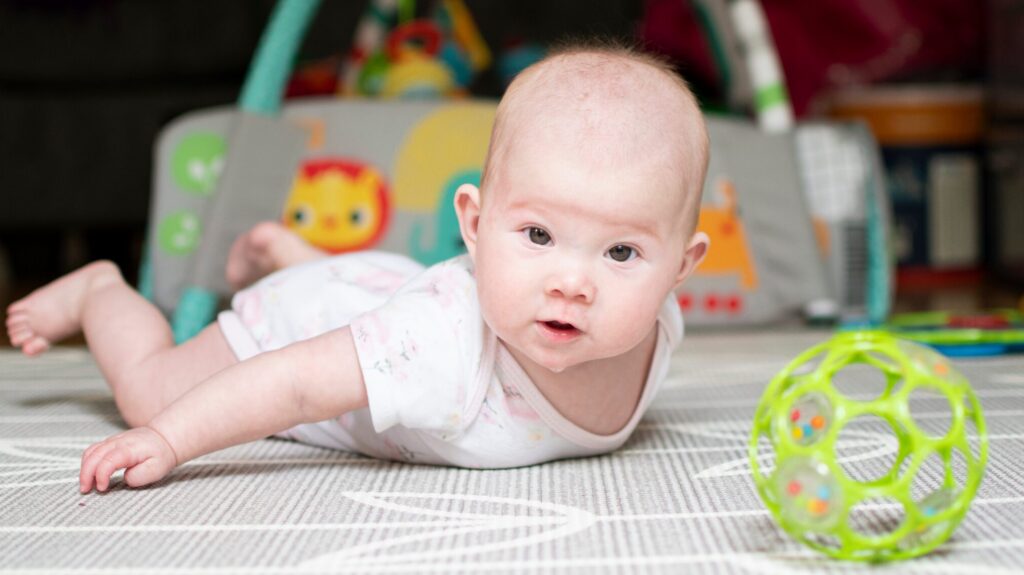
This past month a very interesting thing happened to me: I became a grandpa for the very first time. It was a great experience! Those of you who are know exactly what I’m talking about. There’s really nothing like it. When my wife and I had our children, the adrenaline and the stress along with the fact that our lives were about to change radically made the event significantly more intense. But as one who was about to become a grandparent for the first time, all I wanted was a healthy baby, a healthy momma, and no unforeseen complications. And that’s what I got (…except for the future family folklore about both parents having the flu and having to battle that and baby delivery at the same time. I wouldn’t recommend it.)
So, maybe as a grandpa and eye doctor I can spread some information about babies and their eyes. A baby’s eyes are about 75% of the size of their adult eyes. That’s pretty amazing when you think of all that development that had to take place in such a short timespan to get them to where they are when they are born.
You may think your baby cries a lot when they are newborns, but actually they don’t produce actual tears until about three weeks of age. Then, the waterworks take over. It’s just part of the physiological development process. Some things take longer to form, and when you think of all the plumbing of their tear ducts and nasal cavity, it’s a wonder we ever cry at all – but we do.
Have you ever seen those black and white baby development pictures you can put in front of your baby to help with visual stimulation and eye processing? We put those up in our car so the baby had something to see as we were driving down the road. (No, we did not have tablets or DVD players playing Baby Einstein shows, but that did come a little later…) Why are they black and white? It has to do with contrast and that it is suggested by scientists that babies at birth only see black, grey, and white. That is the most helpful the first few months of life. Scientists believe that the very first color infants recognize is red. The last colors are indigo blue and violet. That probably has something to do with how the visible spectrum of light frequencies stimulate their young retinas. (Remember, the old “ROYGBIV” rainbow acronym that helps you remember the colors of the rainbow in order by frequency?)
Babies don’t quite have as good a visual acuity as you might think. Newborns are often near 20/400 and get slowly better. They start out seeing best at about a foot away. They slowly eventually better (their neuronal connections, eye muscles, and retina all develop) and by kindergarten you want your child at least 20/30; in first grade, 20/25, and by second grade, 20/20. Their critical period of development ends at around 9 or 10 years of age. If they can’t see a certain level by then, they usually never will.
Depth perception develops in the first 4 or 5 months. Coordination increases and they start noticing details and depth between two objects.
Most babies are born with blue eyes. Eye color changes happen usually by 6 months, but eye color can darken even into age 2 or 3. If your blue-eyed baby is still blue by age 4, they are almost assuredly gonna stay blue (unless they buy some colored contacts…)
A baby may appear to have a crossed eye for up to the first 6 months of life. Eye muscles strengthen, and coordination happens, and as the bridge of the nose develops and the bones harden, the eyes often straighten out permanently. So, don’t be alarmed if your baby’s eyes seem crossed. They may actually be, (by which they can be straightened one way or another) or they will eventually straighten out on their own with no one doing anything to make that happen.
Measles is a leading cause of blindness in young children. Get your child vaccinated against diseases that can severely harm your child. That should be obvious, but to some, it isn’t. Some parents aren’t aware, but you are, at least now you are, so you have no excuse.
Being a grandpa will be fun and a real blessing. I hope to see my grandkids grow up to adulthood and I hope they will be able to see me back as well. Yours too.