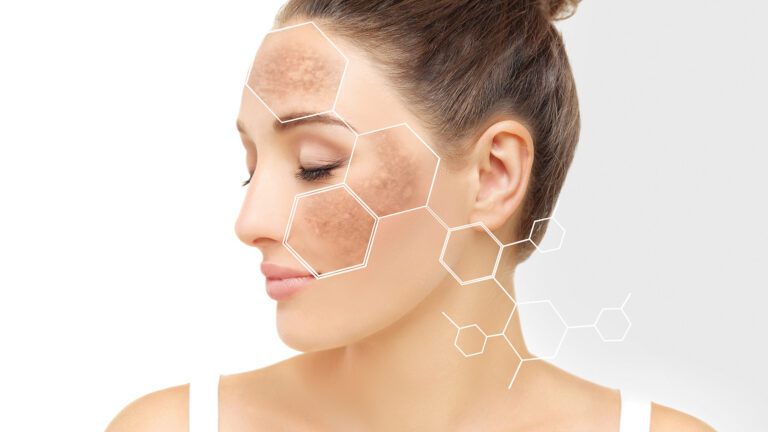
What Is a Chemical Peel?
A chemical peel is a professional exfoliation treatment that uses carefully formulated acids to improve the skin’s appearance and health. Unlike physical scrubs that manually buff the skin, chemical peels work by dissolving the “glue” that holds dead skin cells together. This process encourages healthy cell turnover, revealing smoother, brighter, and more even-toned skin underneath.
Chemical peels come in different strengths and formulations, allowing them to be customized based on individual skin concerns and goals. While they are most commonly performed on the face, chemical peels can also be safely and effectively used on areas such as the neck, chest (décolleté), hands, arms, and even the back.
Benefits of a Chemical Peel
Chemical peels offer a wide range of skin-improving benefits, including:
- Reducing sunspots and discoloration
- Improving hyperpigmentation and uneven skin tone
- Helping treat body acne and reduce future breakouts
- Minimizing the appearance of acne scars and certain surgical scars
- Smoothing rough or bumpy skin, such as keratosis pilaris
- Refining skin texture and overall tone
- Enhancing product absorption
- Stimulating collagen and elastin for firmer, healthier skin
Who Is a Good Candidate?
Chemical peels are highly versatile and suitable for most skin types. They are especially beneficial for individuals dealing with acne, discoloration, sun damage, fine lines, uneven texture, enlarged pores, or acne scarring. That said, a consultation with a licensed professional is essential to determine the most appropriate peel and to set realistic expectations for results.
What to Avoid Before and After a Chemical Peel
To prepare for a chemical peel, it’s important to stop using active products such as retinol, tretinoin, hydroquinone, and exfoliants at least 5–7 days prior to treatment. Avoid direct sun exposure or tanning before and after your peel, as this can increase sensitivity.
After treatment, proper aftercare is crucial. For the first three days, avoid sun exposure, hot showers, saunas, strenuous exercise, and makeup. Cooler months—such as fall and winter—are ideal times for chemical peels, as reduced sun exposure helps maximize results.
What Is the Treatment Process Like?
After reviewing pre- and post-care instructions, the peel application itself typically takes about 15 minutes. Some peels cause visible flaking or shedding, while others offer little to no downtime. Lack of peeling does not mean the treatment wasn’t effective—many modern peels work beneath the surface without noticeable skin shedding.
What Results Can You Expect?
Most people notice smoother, brighter skin shortly after treatment. Collagen stimulation continues for up to six weeks post-peel, meaning results improve gradually over time. Additional benefits may include improved texture, softened fine lines, and a more even complexion.
How Often Should You Get a Chemical Peel?
Depending on your skin concerns, a licensed professional may recommend a series of peels spaced about 4–6 weeks apart. The type of peel chosen will determine the ideal treatment schedule.
YOU Aesthetics is located at 4805 Main Street in Yorba Linda. To learn more or book a consultation, please visit www.YOUaesthetics.com or call 714.779.5700.
Any content, resident submissions, guest columns, advertisements, and advertorials are not necessarily endorsed by or represent the views of Best Version Media LLC (BVM) or any municipality, homeowners associations, businesses, or organizations that this publication serves. BVM is not responsible for the reliability, suitability, or timeliness of any content submitted, inclusive of materials generated or composed through artificial intelligence (AI). All content submitted is done so at the sole discretion of the submitting party.