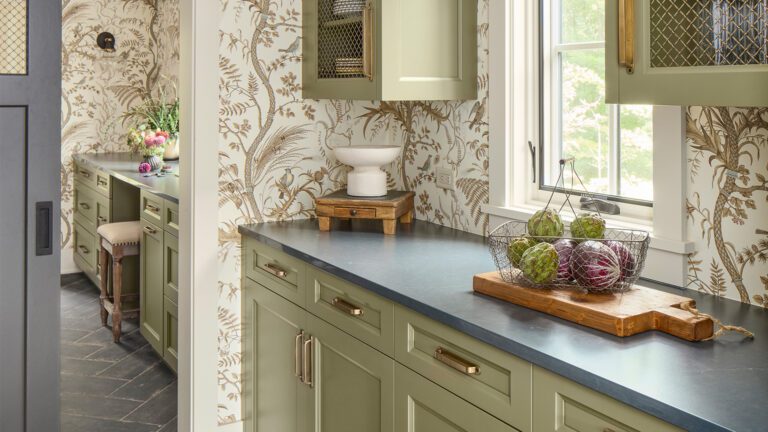
Once synonymous with dated florals and painstaking removal projects, wallpaper spent years in design exile. Even now, it’s not uncommon for clients to hesitate when the idea is first introduced. “Sometimes when I suggest wallpaper in a space, I brace myself,” says Heather Scott, Interior Designer at Bartelt Remodeling. “Many homeowners are still recovering from the removal of their 1990s wallpaper.”
Fast forward to 2026, and wallpaper has firmly reestablished itself as a design essential. Today’s offerings are nothing like their predecessors. With elevated materials, refined patterns, and more intentional applications, wallpaper has become a sophisticated tool—one that adds depth, character, and a sense of finish that paint alone often can’t achieve.
Why Wallpaper?
One of wallpaper’s greatest strengths is its versatility. It isn’t tied to a single aesthetic or era. From hand-painted murals and soft botanicals to grasscloth, textiles, metallics, cork, and subtle geometrics, wallpaper works just as beautifully in a clean-lined contemporary home as it does in a traditional or transitional space.
Beyond style, wallpaper excels at adding dimension. It can introduce texture without clutter, drama without excess, and personality without overpowering a room. We often use it to highlight architectural features, define an accent wall, line a ceiling, or bring intention to overlooked areas like powder rooms, stairwells, or window nooks. When thoughtfully selected, wallpaper enhances a space’s character without adding more things to it.
How Do I Choose Wallpaper?
The most important first step is identifying the role wallpaper will play in your space. Are you looking to add warmth or texture? Create contrast? Introduce color? Or make a bold, memorable statement? Clarifying your design goal will immediately narrow the field. A quiet, tonal pattern may be perfect for layering softness, while a large-scale or graphic design is better suited for creating a true focal point.
Consider gathering inspiration before making any decisions. Pay attention to the patterns, colors, and moods you’re consistently drawn to—this helps ensure your choice reflects your personal style rather than a passing trend. While platforms like Pinterest, Houzz, and design publications are excellent resources, working with a professional designer can help translate inspiration into a cohesive, timeless result.
Finally, never skip the sample stage. Order large samples and live with them on your walls for at least 24 hours. Natural and artificial light can dramatically change how a wallpaper reads throughout the day, and seeing it in context—with your furnishings, finishes, and color palette—is essential. A wallpaper should feel considered and effortless, not impulsive.
Any content, resident submissions, guest columns, advertisements, and advertorials are not necessarily endorsed by or represent the views of Best Version Media LLC (BVM) or any municipality, homeowners associations, businesses, or organizations that this publication serves. BVM is not responsible for the reliability, suitability, or timeliness of any content submitted, inclusive of materials generated or composed through artificial intelligence (AI). All content submitted is done so at the sole discretion of the submitting party.