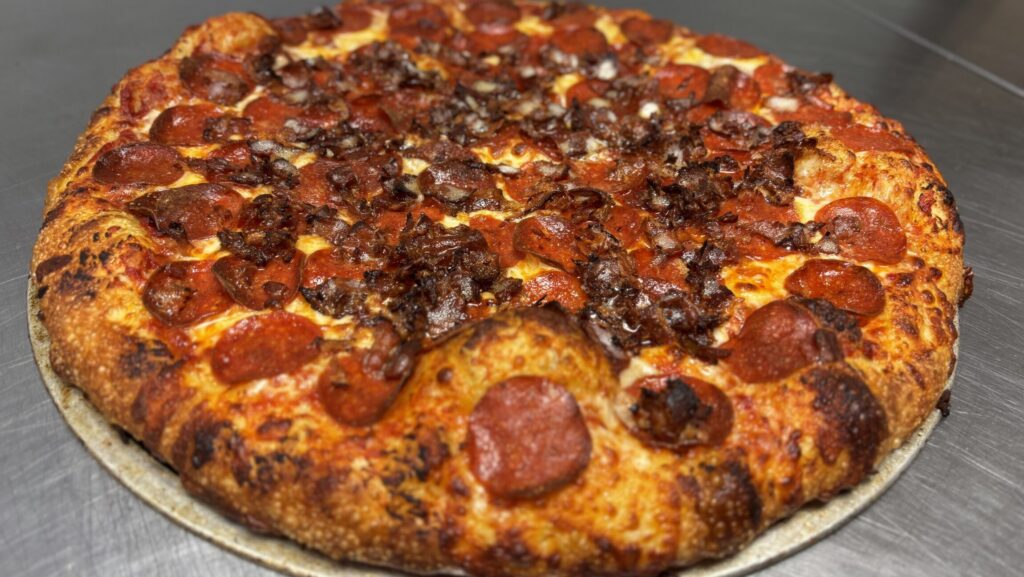
Pizza may feel like a simple comfort food, but great crust is both an art and a science. Long before it became a Friday night staple here in West Michigan, pizza began as a humble flatbread in Naples, Italy, in the late 1700s. Bakers topped simple dough with tomatoes, oil, and herbs. What sets pizza apart then and now is the crust.
At its core, traditional pizza dough contains just a few ingredients: salt, sugar, oil, warm water, yeast, and high gluten flour. The magic happens in how those ingredients are handled.
High gluten flour gives the dough its strength and signature chew. Yeast activates in warm water and works slowly over time, creating the airy pockets that give pizza its light texture and beautiful bubbles. Sugar feeds the yeast during fermentation and contributes to browning in the oven, helping the crust develop that golden color and subtle sweetness. Salt enhances flavor and strengthens the structure. Oil adds tenderness. While the ingredient list is simple, the difference between good crust and unforgettable crust lies in time and technique.
One of the most important steps is fermentation. At C’s Pizza & BBQ, the dough rests in the refrigerator for three to four days. This slow, cold fermentation allows flavor to develop naturally and gives the dough time to form the airy structure that bakes into a crisp exterior and soft interior. Dough that is rushed may rise quickly, but it rarely develops the same depth of flavor or texture.
Mixing is another detail that matters more than most people realize. Commercial mixers are powerful machines, and dough requires patience. As you can see from the photo Rylee Cridler sent us, turning an industrial mixer up too high while blending 50 pounds of flour creates something closer to a blizzard than a bakery. The key is keeping the mixer set on low, usually at speed one, so the ingredients incorporate gradually without overworking the dough or covering the kitchen in a cloud of flour. Consider it a hands-on lesson in what not to do.
Different regions have embraced their own crust styles. Neapolitan crust is thin and soft with charred bubbles from high heat. New York style is thin but sturdy enough to fold. Chicago deep dish features a thick, buttery base built more like a pie. Detroit style uses a rectangular pan, producing crispy caramelized edges and a light interior. Even cauliflower crust is growing in popularity, showing how pizza continues to evolve. Each style reflects the culture, ovens, and traditions of communities around the globe.
Even with all the different kinds of pizza, the fundamentals remain consistent: quality ingredients, proper hydration, careful mixing, and adequate fermentation. So, the next time you enjoy a slice, notice the bubbles, the chew, and the crisp edge. Behind that crust is not flour and yeast alone, but timing, technique, and sometimes a little flour on your face to show for it.
Any content, resident submissions, guest columns, advertisements, and advertorials are not necessarily endorsed by or represent the views of Best Version Media LLC (BVM) or any municipality, homeowners associations, businesses, or organizations that this publication serves. BVM is not responsible for the reliability, suitability, or timeliness of any content submitted, inclusive of materials generated or composed through artificial intelligence (AI). All content submitted is done so at the sole discretion of the submitting party.