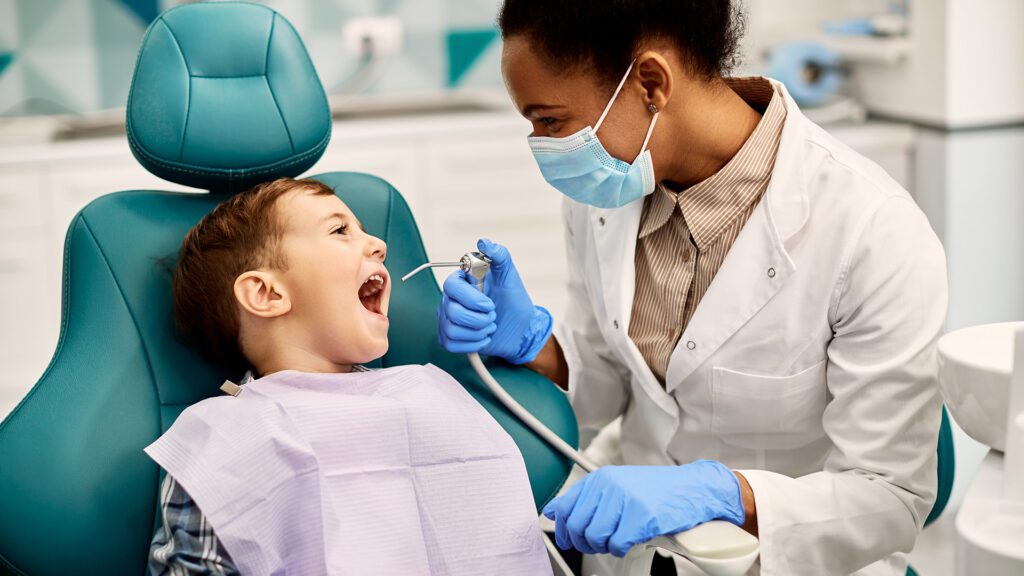
One of the most common questions parents ask at Dino Kid’s Dentistry is: “Does my child really need a filling if that tooth is going to fall out anyway?”
It’s a great question—and a very reasonable one. Baby teeth are temporary, but that doesn’t mean every cavity should be ignored, and it also doesn’t mean every cavity needs a traditional filling. Pediatric dentistry is about finding the right level of treatment for the right tooth at the right time, always with your child’s comfort and long-term health in mind.
Why Baby Teeth Matter (Even Though They Fall Out)
Baby teeth play many important roles. They help children chew comfortably, speak clearly, hold space for adult teeth, and avoid pain or infection. When baby teeth are healthy, kids can focus on being kids—eating, learning, and smiling without discomfort.
That said, treatment decisions depend on several key factors, including how long the tooth needs to last, the size of the cavity, and your child’s individual needs.
Timing Is Everything: When Do Baby Teeth Fall Out?
One of the most important considerations is how close a tooth is to falling out naturally.
Here are general timelines:
- Baby incisors (front teeth)
- Usually fall out between ages 6–8
- Baby canines (pointed teeth)
- Typically fall out around ages 10–12
- First baby molars
- Usually lost around age 9
- Second baby molars
- Often stay until age 11–12
A tooth that needs to last several more years must stay strong and pain-free during that time. A tooth that is expected to fall out soon may be managed differently—especially if the cavity is small and stable.
Size and Severity of the Cavity
Not all cavities behave the same way. At Dino Kid’s Dentistry, we look carefully at:
- How large the cavity is
- Whether it is actively growing
- If it is close to the nerve
- Whether food gets trapped
- If your child is experiencing pain or sensitivity
Very small cavities, especially on teeth close to exfoliation, may sometimes be safely monitored. Larger cavities, or those on teeth with a year or more left before falling out, are much more likely to worsen and often need treatment.
Minimally Invasive Options: Silver Diamine Fluoride (SDF)
When appropriate, we love using minimally invasive treatments—options that protect teeth while keeping visits gentle and stress-free.
One such option is silver diamine fluoride (SDF). SDF is a liquid medication that:
- Stops cavities from progressing
- Kills cavity-causing bacteria
- Hardens weakened tooth structure
- Requires no drilling or numbing
SDF is especially helpful for young children, anxious children, or when the goal is to delay or avoid more invasive treatment. The main downside is that it can permanently darken the treated cavity area. While this discoloration does not harm the tooth, it’s an important cosmetic consideration—especially for front teeth.
When a Filling or Crown Is the Best Choice
Fillings or crowns (“dental restorations”) are usually recommended when:
- The cavity is large or deep
- The tooth has significant time left before falling out
- The tooth is becoming sensitive
- Food traps are causing ongoing decay
- The tooth plays an important role in chewing or space-holding
Treating these cavities helps prevent pain, abscesses, emergency visits, and early tooth loss that can affect adult tooth alignment later.
A Personalized Approach at Dino Kid’s Dentistry
There is no single right answer for every child. Dr. Richman and Dr. Akabike carefully consider:
- Your child’s age and comfort level
- The type of tooth and expected lifespan
- Cavity size and risk of progression
- Your family’s preferences and goals
Our philosophy is simple: use the least invasive approach that still keeps your child healthy and comfortable.
Frequently Asked Questions
If the tooth is going to fall out soon, can we just leave the cavity?
Sometimes, yes. If the cavity is small, not painful, and the tooth is close to exfoliating, monitoring may be appropriate. We always watch these closely.
Why do molars get treated more often than front teeth?
Molars are used for heavy chewing and usually stay in the mouth much longer. Cavities there are more likely to grow and cause problems if left untreated.
Is SDF safe for children?
Yes. Silver diamine fluoride has been used worldwide for decades and is very safe when applied appropriately.
Will a filling or crown last until the tooth falls out?
In most cases, yes. The goal is to keep the tooth comfortable and functional until it is naturally lost.
What happens if we do nothing and the cavity grows?
Untreated cavities can lead to pain, infection, abscesses, and emergency treatment—often more invasive than early intervention.
Call us today to schedule your child’s appointment!
This article is for general information only and is not medical or dental advice. Please seek medical and dental care with you or your child’s medical or dental provider for specific questions.