The Importance of Load Center Inspections
Your electrical load center is the command center of your home or business. It distributes power to every circuit that keeps your lights on, your equipment running, and your family or employees safe. Most of the time it operates quietly in the background, which is exactly what it should do. But when a load center is neglected, small issues can grow into serious safety hazards, costly repairs, and unexpected downtime.
In 2026, electrical systems are working harder than ever. Electric vehicle chargers, high efficiency HVAC systems, smart appliances, solar integrations, battery storage, and increased technology demands have significantly raised electrical loads. Many older systems were never designed with these modern demands in mind. That is why routine load center inspections are no longer optional maintenance. They are a critical part of protecting your property and ensuring long term reliability.
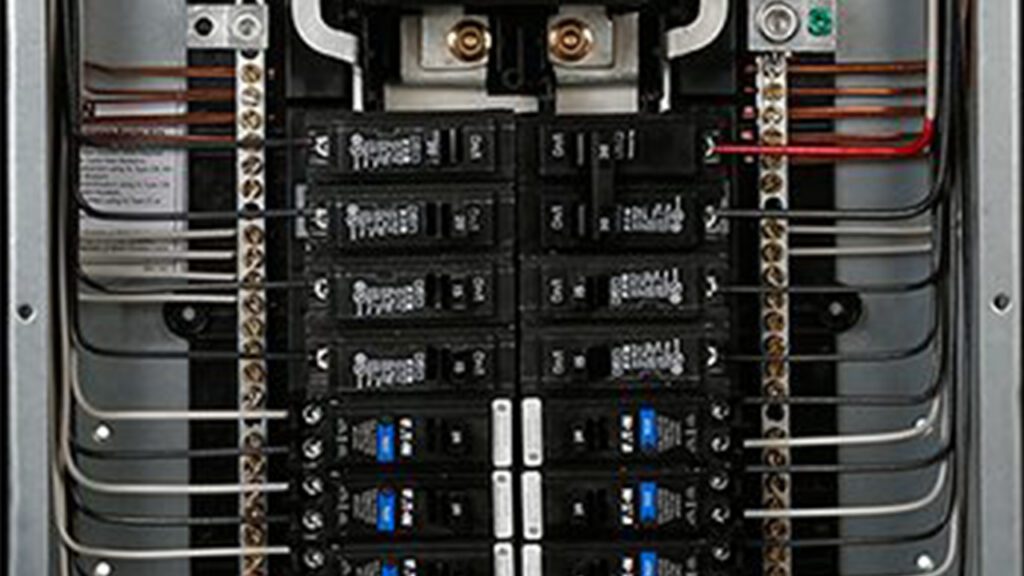
A load center is the central distribution point for incoming power. Inside are circuit breakers that protect wiring and connected equipment from overloads, short circuits, and ground faults. Every outlet and major appliance depends on it functioning properly. Over time, heat cycles, vibration, environmental exposure, and increased load demands can loosen connections, stress breakers, and reduce overall performance.
One of the most important aspects of a professional inspection is verifying torque specifications. Every breaker and terminal is designed to hold conductors at a precise torque value established by the manufacturer. If a connection is under torqued, resistance develops. Resistance produces heat. Heat accelerates deterioration and increases fire risk. If a connection is over torqued, conductors and terminals can be damaged, leading to premature failure. Best practice today requires the use of calibrated torque tools to confirm proper tightness and document corrections. This simple step significantly reduces overheating issues inside the load center.
Thermal imaging has also become a key component of modern inspections. Infrared technology allows electricians to identify temperature differences that cannot be seen with the naked eye. Overheated breakers, loose connections, unbalanced loads, and overloaded circuits can be detected early, often before a breaker trips or visible damage appears. Performing thermal scans while the system is under normal operating load provides accurate, real world insight into how the system is performing.
Breaker condition and compatibility are equally important. Inspectors check for discoloration, signs of arcing, cracked housings, and mismatched breaker brands. Even if a breaker physically fits, it may not be approved for use in that specific load center. Incorrect breakers compromise safety ratings and increase liability.
Load balancing and capacity evaluation are also critical in today’s environment. With rising electrical demands, some systems are operating near or beyond their intended limits. Inspections help determine whether loads are properly distributed and whether upgrades should be planned before failures occur.
Grounding and bonding are verified to ensure proper fault protection. Inspectors also check for moisture, corrosion, dust buildup, and adequate working clearance around the load center. Clear and accurate circuit labeling is confirmed for safety and emergency response efficiency.
Residential load centers should generally be inspected every three to five years, and commercial systems more frequently depending on demand and environment. Any system exposed to flooding, lightning, or major electrical events should be evaluated immediately.
At East Tech Electric, inspections are performed using current best practices, precise torque verification, and advanced thermal imaging. Proactive maintenance protects equipment, prevents downtime, and most importantly safeguards people and property. Your load center may be out of sight, but it should never be out of mind.