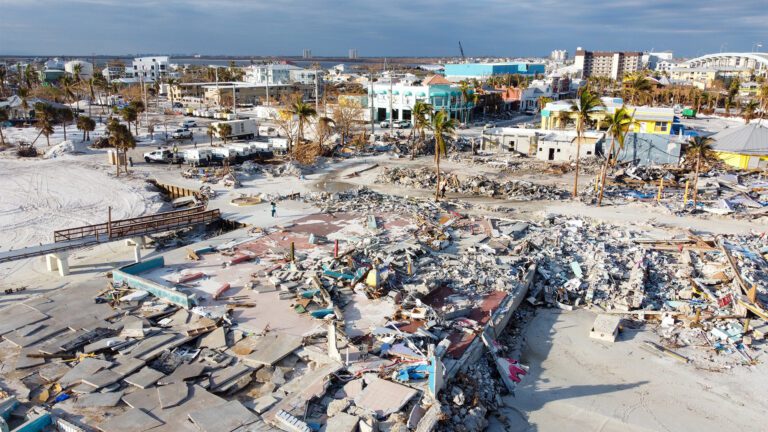
What Fort Myers Beach Homeowners Need to Know
For homeowners on Fort Myers Beach, hurricane season brings more than concerns about wind, rain, and storm surge. It also brings confusion—especially when it comes to insurance deductibles. One of the most misunderstood parts of a homeowners insurance policy is the difference between an All Other Perils (AOP) deductible and a hurricane deductible.
After our recent storm seasons, many residents discovered—often only after filing a claim—that the deductible they expected to apply was not the one used. Understanding how these deductibles work, what triggers them, and how wind coverage is handled in coastal areas can help homeowners avoid costly surprises and plan more confidently before the next storm forms in the Gulf.
What Is an AOP Deductible?
The AOP, or All Other Perils, deductible is the standard deductible most homeowners are familiar with. It applies to covered losses that are not related to a declared hurricane and is usually a flat dollar amount, such as $1,000, $2,500, or $5,000.
Losses that typically fall under the AOP deductible include fire, theft or vandalism, lightning, non-hurricane wind events such as strong thunderstorms, and sudden or accidental water damage from plumbing failures. When one of these losses occurs, the deductible is subtracted from the claim payment, and the insurance policy covers the remaining approved damage.
Because it is a fixed amount, the AOP deductible is generally predictable and far easier for homeowners to budget for.
What Is a Hurricane Deductible?
A hurricane deductible works very differently. Instead of being a flat amount, it is calculated as a percentage of the home’s insured dwelling value. In coastal communities, this percentage is commonly 2%, 5%, or higher.
For example, a home insured for $750,000 with a 5% hurricane deductible would require the homeowner to pay $37,500 out of pocket before insurance coverage begins. This deductible applies regardless of how severe the damage is. Even limited roof or exterior damage can result in significant financial responsibility simply because of how the deductible is structured.
What Triggers the Hurricane Deductible?
A hurricane deductible is triggered when a storm is officially declared a hurricane by the National Weather Service. Once that designation is made, the hurricane deductible applies to all covered losses caused by that storm.
This means the deductible applies even if the damage is caused solely by wind, even if flooding never occurs, and even if the storm weakens before reaching the local area. Many policies also define a “hurricane event window,” meaning losses that occur within a certain timeframe surrounding the storm fall under the hurricane deductible.
The key takeaway is that the storm’s official classification—not the severity of damage—determines which deductible applies.
When Wind Damage Uses the AOP Deductible
Not all wind damage is subject to a hurricane deductible. Wind losses typically fall under the AOP deductible when they are caused by severe thunderstorms, tropical disturbances, or tropical storms that have not reached hurricane status. Wind damage that occurs outside the defined hurricane event window may also qualify for the AOP deductible.
In these cases, homeowners usually face significantly lower out-of-pocket costs compared to hurricane-related claims.
When Wind Damage Falls Under the Hurricane Deductible
Wind damage falls under the hurricane deductible when it occurs during a declared hurricane and within the policy’s defined event period. This applies even if there is no flooding, even if the damage is limited to the roof or siding, and even if the storm’s impact feels relatively mild at the property.
This distinction is one of the most common sources of confusion and frustration for homeowners after a storm.
Why Some Homes Have Separate Wind Policies
In high-risk coastal areas like Fort Myers Beach, some insurance carriers exclude or limit wind coverage from standard homeowners policies. When this happens, homeowners must purchase windstorm coverage through a separate policy.
This approach allows insurers to manage the higher loss potential associated with coastal wind exposure, particularly for homes with older roofs, certain construction types, or close proximity to open water. When wind coverage is separate, the homeowners policy may cover fire, theft, liability, and non-wind losses, while the wind policy responds to windstorm and hurricane damage.
Each policy may have different deductibles, coverage limits, and claims procedures, making it essential for homeowners to understand how their coverage is structured before a storm occurs.
The Bottom Line
Understanding the difference between AOP and hurricane deductibles is critical for Fort Myers Beach homeowners. Reviewing your policies, knowing your deductible amounts, and understanding how wind coverage applies can help prevent financial surprises and ensure you are better prepared when the next storm arrives.
Any content, resident submissions, guest columns, advertisements, and advertorials are not necessarily endorsed by or represent the views of Best Version Media LLC (BVM) or any municipality, homeowners associations, businesses, or organizations that this publication serves. BVM is not responsible for the reliability, suitability, or timeliness of any content submitted, inclusive of materials generated or composed through artificial intelligence (AI). All content submitted is done so at the sole discretion of the submitting party.