Throughout Gillespie County, conversations about estate planning are often postponed. Many people assume there will be time later to “get around to it,” or that family members will naturally agree on how property should be divided. Unfortunately, I have seen firsthand how often those assumptions lead to confusion, conflict, and expensive litigation.
Under the Texas Estates Code, when a person dies without a valid will, they are said to have died “intestate.” Texas Estates Code determines who inherits and in what proportions. These statutes are rigid. They do not consider personal intentions, verbal promises, or what “seems fair.” Instead, they apply a formula based strictly on marital status and blood relationship.
In our county, that formula can produce surprising results. If a married person dies and all children are from that marriage, the surviving spouse may inherit the community estate. But under the Texas Estates Code, if there are children from a prior relationship, the distribution changes. The surviving spouse may retain only their one-half of the community property, while the deceased spouse’s half passes to the children. Separate property is divided differently still. The result can be that a surviving spouse becomes a co-owner of the family home or ranch with stepchildren.
In Fredericksburg, where land often stays in families for generations, this matters deeply. A ranch outside city limits or inherited acreage along the Pedernales may suddenly be owned in fractional shares by multiple heirs scattered across Texas — or across the country. Each heir owns an undivided interest. Decisions about sale, partition, or improvements require agreement. When agreement fails, the matter can end up in court.
Even when there is a will, disputes can arise. Probate litigation is more common than many realize. Under the Texas Estates Code, a will must be admitted to probate in accordance with statutory requirements. But heirs may challenge a will based on lack of testamentary capacity, improper execution, forgery, fraud, or undue influence — what many people think of as coercion.
Forgery cases involve allegations that a signature is not genuine. Fraud claims may arise where a person was misled into signing a document they did not understand. Undue influence occurs when someone exerts such pressure over the testator that the will reflects the influencer’s wishes rather than the testator’s true intent. These cases are fact-intensive and emotionally charged. They often involve family members accusing one another of manipulation or deception.
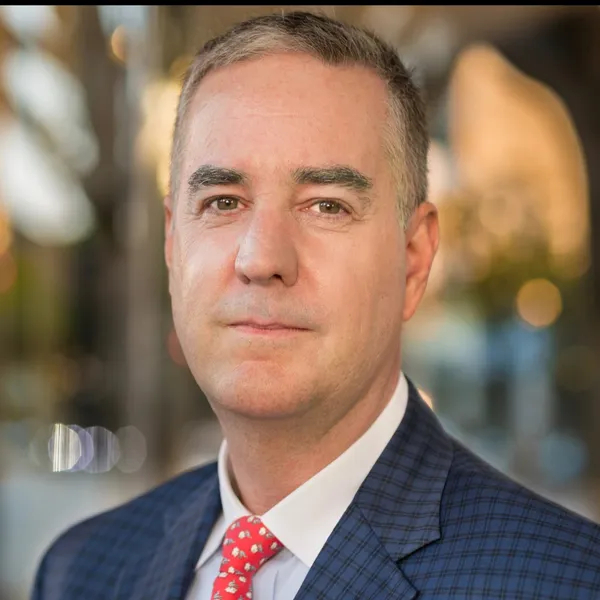
As a probate plaintiff’s attorney based in Fredericksburg, I have handled contested estate matters in which relationships have permanently fractured. Litigation over a will can involve handwriting experts, medical testimony regarding mental capacity, and detailed examination of financial records. The cost — both financial and emotional — can be significant.
Earlier in my career, I worked on what is widely regarded as the largest probate dispute in United States history: the estate litigation involving Anna Nicole Smith. At issue in that case was approximately $1.6 billion in Koch Industries stock owned by Howard Marshall II. The case spanned years and multiple courts, illustrating how high the stakes can become when estate planning is unclear or contested. While most estates in Gillespie County do not involve billions of dollars, the principles are the same. Disputes over intent, influence, and inheritance can escalate quickly.
A properly drafted will, executed in compliance with the Texas Estates Code and related provisions, reduces uncertainty. No document can eliminate the possibility of litigation entirely. However, careful planning — including clear language, proper formalities, and, where appropriate, medical evaluation of capacity — significantly strengthens a will against later attack. In many cases, the existence of a well-prepared, professionally drafted will discourage frivolous contests before they begin.
Fredericksburg is a community built on family ties, small businesses, and land that carries both financial and sentimental value. The Texas Estates Code will control your legacy if you do not. Writing a will is not merely a legal formality. It is a way to protect your family from statutory defaults, prevent unnecessary probate litigation, and ensure your intentions are honored. Planning ahead provides certainty in a time of grief and preserves not only assets, but relationships.
Any content, resident submissions, guest columns, advertisements, and advertorials are not necessarily endorsed by or represent the views of Best Version Media LLC (BVM) or any municipality, homeowners associations, businesses, or organizations that this publication serves. BVM is not responsible for the reliability, suitability, or timeliness of any content submitted, inclusive of materials generated or composed through artificial intelligence (AI). All content submitted is done so at the sole discretion of the submitting party.