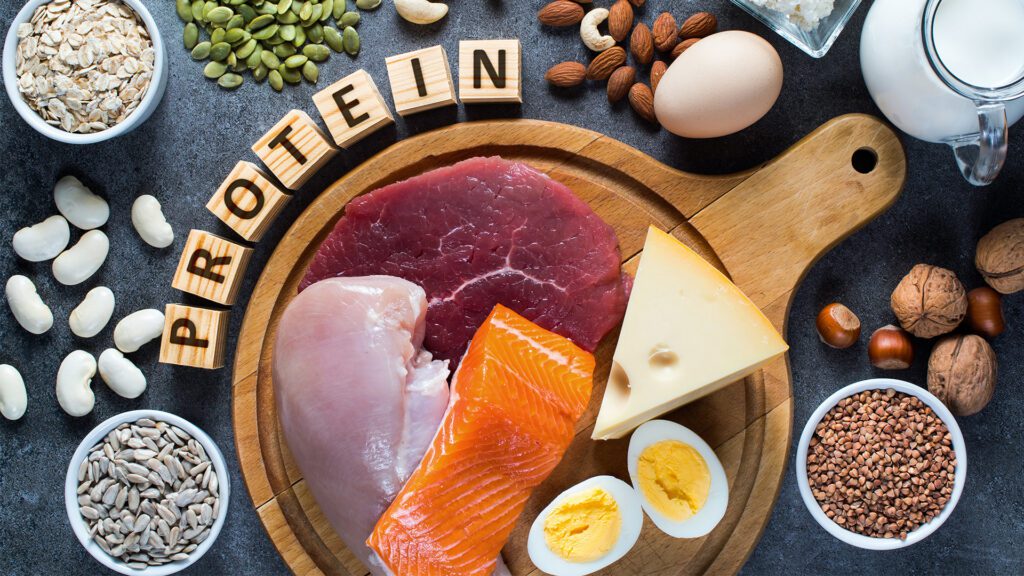
Adequate high-quality protein can improve satiety, help manage weight, blood sugar and prevent high blood pressure. Protein is digested slower, so we don’t get rapid spikes in blood sugar.
Optimal protein intake is between 1.2-2 g/kg of body weight. Depending on age, activity level, and lean body mass. Distributing protein intake evenly across the day helps to maximize the body’s muscle repair and building machinery especially after the age of 30. In meal terms, for many adults this means aiming for at least 25 to 30 g protein per meal. With high protein snacks between.
Animal proteins generally have all essential amino acids. Plant foods contain protein as well, typically in lower amounts/serving. Plant sources of protein include nuts, seeds, beans, and whole grains. Including a variety of plant & animal foods is the simplest way to meet your goals.
You can meet your needs on a vegetarian diet; you just have to be more aware of combining food sources and incorporating a variety of plant based proteins.
MYTH: Animal protein is more easily absorbed than plant protein
Plant proteins from whole plant foods are SLIGHTLY less digestible (10-20%) than animal proteins mainly due to the fiber content interfering with absorption. Animal proteins (dairy, eggs, meat & fish) contain more leucine than plant-based proteins. Leucine is an amino acid critical for muscle protein synthesis.
Meaning: we need to eat more plant-based protein to get adequate leucine. In plant sources, soy foods are higher in leucine. Plant based proteins are packed with fiber, healthy fats (mono & polyunsaturated), and phytochemicals.
Conclusion: To get the most effective benefit of all essential amino acids, eat a varied diet of both plant & animal protein sources.
Add in whole grains, nuts and seeds to other protein sources. Whole grains and seeds will bring a few grams of protein in a serving but will help contribute to protein in the meal alongside other animal-based proteins.
- One slice of whole grain bread, half cup of low-fat cottage cheese and two eggs will get you to 30g of protein. Top oatmeal with chia seeds, fruit and Greek yogurt.
- High fiber wrap that has about 10g of protein, alongside 100g of chicken breast is about 40g of protein. Add veggies and condiments.
- Brown rice, black bean, corn Mexican salad – 9g of protein in one cup.
- Protein plus spaghetti (made whole wheat flour, chickpeas, lentils, pea protein) and shrimp – 35g protein, along with veggies and pesto or marinara sauce.
It’s so much more enjoyable to get protein from a variety of food sources, so you are also getting enough carbs, fiber and healthy fats. It is really just going back to basics of balanced meals with an intentional protein source, starch, veggies and fat for flavor.
This is what I teach my nutrition clients to do based on their individual nutrition needs. Create meals they enjoy that also meet their nutrition targets to keep blood sugar stable, have sustained energy and achieve their health goals. For more information about working together complete the nutrition coaching application at jenniedore.com and she will directly reach out to you.
Any content, resident submissions, guest columns, advertisements, and advertorials are not necessarily endorsed by or represent the views of Best Version Media LLC (BVM) or any municipality, homeowners associations, businesses, or organizations that this publication serves. BVM is not responsible for the reliability, suitability, or timeliness of any content submitted, inclusive of materials generated or composed through artificial intelligence (AI). All content submitted is done so at the sole discretion of the submitting party.