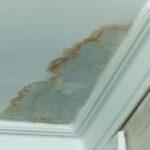
According to the insurance industry, approximately 98% of homes will experience water damage at some point in their lifetime. The EPA estimates that 87% of commercial buildings have experienced water damage, and nearly 47% have active water leaks. Top that off with living in an area that is a magnet for water, which is great for vegetation and air quality, but what happens when the molecule of life gets into your dwelling, and how long before it becomes a problem?
For most people, their home is their most valuable financial asset, and, as most are aware, it takes a lot of work to protect that asset. So, what happens when you, or your contractor, such as a plumber, roofer, or crawl space expert, detects a leak? What next?
First, you want to make sure that you understand what the root cause is and get that leak stopped. Know where your water main is located in case of an emergency, so you can turn the water off if you cannot detect where the leak is coming from, or you are unable to access the area where the leak is originating. Document everything, because this information will be very important to your insurance claim adjuster and incoming restoration contractors, if a claim is opened to address the damage in your home.
Read and understand what your home policy covers and what it doesn’t. If needed, contact your insurance agent and have them help you understand your policy coverages and limits. Most home policies have provisions available for sudden and accidental water damage, but coverage amounts vary from policy to policy and provider to provider.
Your next step will be to contact a water restoration contractor who specializes in mitigation or water damage cleanup. Sometimes, your insurance provider will proactively send out their preferred vendor. While convenient, as the homeowner, you do have the right to choose a contractor of your own choice, regardless of whether it’s your insurance company’s preferred vendor. Once your water damage contractor comes, they map out water migration via thermal imaging and moisture detection tools. In many cases, the surface water will be removed by the homeowner, but the water that gets trapped in and behind building materials lingers and is undetected to the naked eye. This is why these detection tools are so important. The longer that elevated water conditions stay in porous building materials, the greater the opportunity for microbial amplification, mold growth, and dry rot in wood, which can cause structural defects and compromise building integrity.
There’s a lot to know about the world of water damage, and I hope you never have to experience it. However, if you do, similar to doctors and firefighters, mitigation contractors are emergency responders who are trained professionals, available to help prevent an emergency situation from getting worse. They are the ones who prepare your home or business’s journey along the path to its full recovery and proper restoration.
Any content, resident submissions, guest columns, advertisements, and advertorials are not necessarily endorsed by or represent the views of Best Version Media LLC (BVM) or any municipality, homeowners associations, businesses, or organizations that this publication serves. BVM is not responsible for the reliability, suitability, or timeliness of any content submitted, inclusive of materials generated or composed through artificial intelligence (AI). All content submitted is done so at the sole discretion of the submitting party.