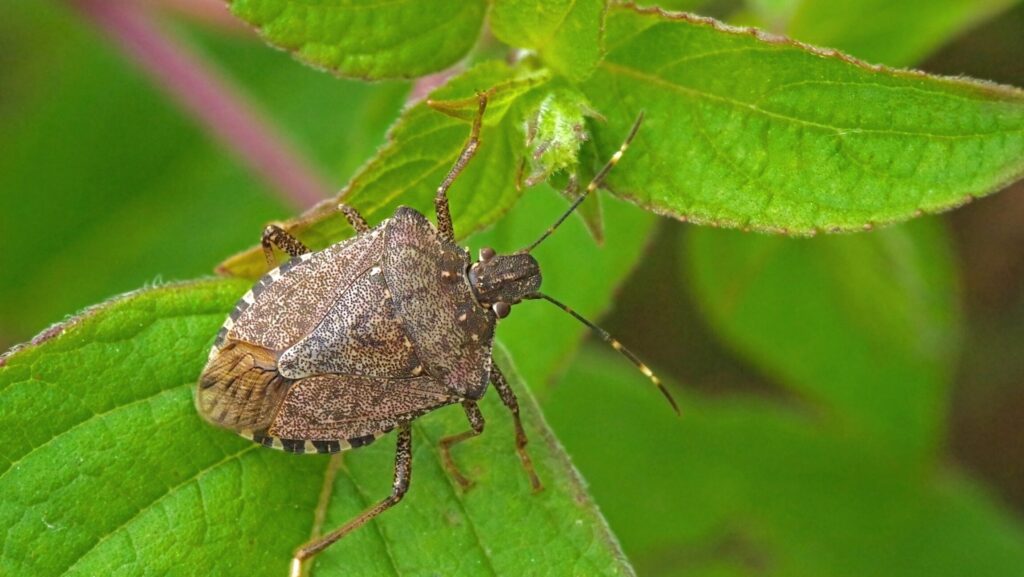
You now have about 2-3 different stink bugs that you see around greater Seattle and Washington. The main one is the Brown Marmorated (aka Halyomorpha halys from the family Pentatomidae), which most people identify as looking like a shield with white spots along the edges. They make a lot of noise when they fly, and you may think it is a bee flying around.
About 4 years ago, they arrived in this area; some claim to have seen them earlier, but the majority of the activity started and has spread further each year. This year has been a bit lighter than past years, but some homes just attract the little guys. I have a few clients who get both the Stink bug and the ladybug, and they are very similar in behavior. One is less annoying and cuter, so most tend to tolerate them.
Here are some facts to know about them, along with what to look out for.
Submitted photo
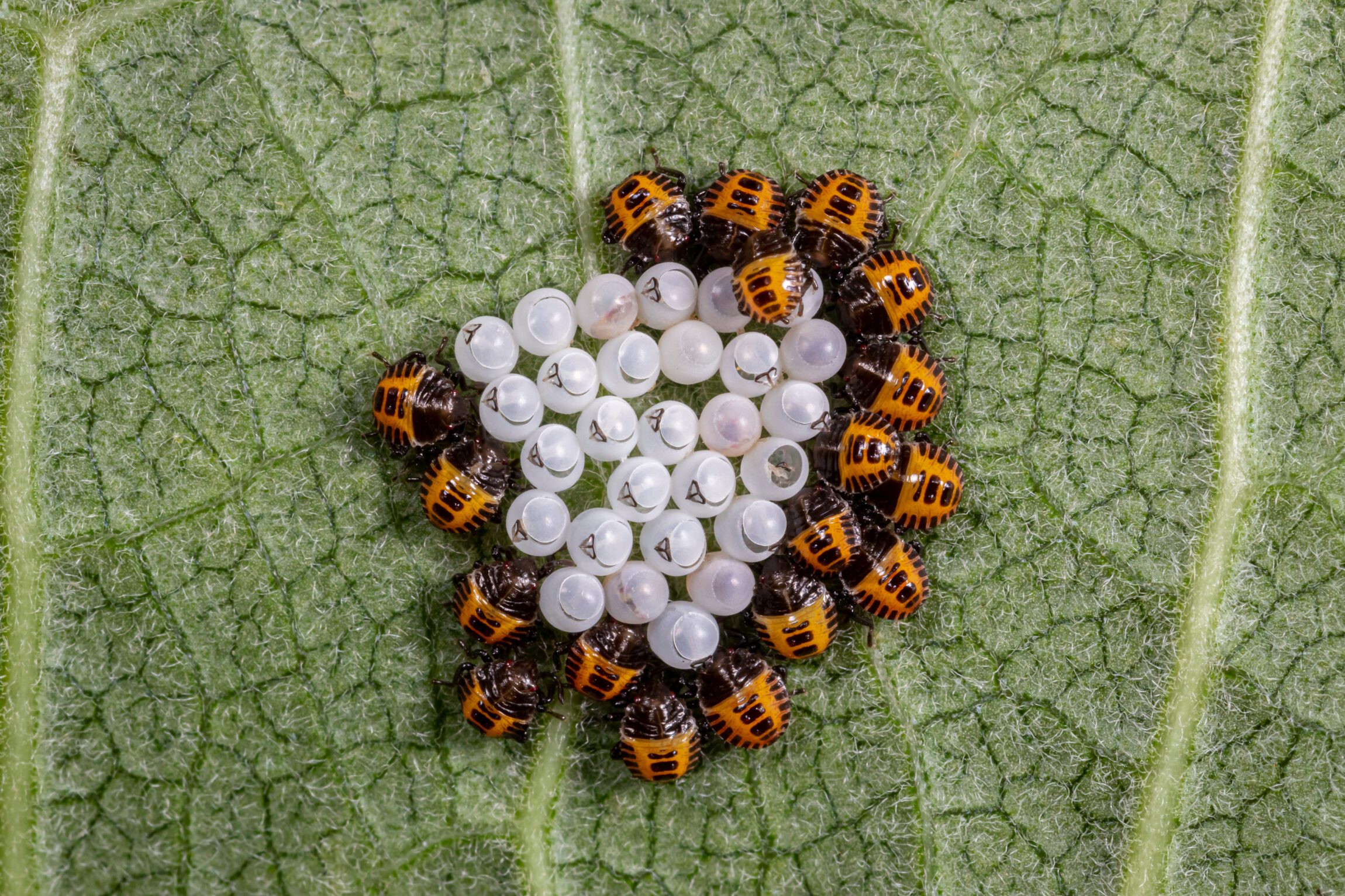
It is an Invasive Asian insect that came to the US around the 90’s. It is now in most states and continuing to spread. Many claim they started in Allentown, PA, in 1998. They are approximately 14-17 mm in length. They have long mouths that can pierce into food and suck (sap). The Nymphs (babies which are often black or dark brown) are more colorful than the adults. The eggs will be laid on the underside of leaves (light green in color).
Our biggest concern is that, as they reach vegetation, the Department of Agriculture is monitoring them and other insects to prevent them from becoming a huge issue in Eastern, WA. They are very destructive to many plants, including fruit trees, vegetables, and field crops. They leave a small necrotic patch (damaged plant tissue that kills and creates brown spots) on the plants they eat. This makes the produce inedible.
The stink bugs have a gland that produces defensive chemicals through holes (creating a smell). This gland is located on the underside of the thorax between the 1st and 2nd pair of legs. Body fluids can be toxic and will irritate your skin.
In late May to June, they will feed on a wide range of fruits. From September to October, they will often come into your home through windows, doors, or soffits and move into the Attic, where they overwinter until March-April, when they want to get out and eat.
There are not many predators currently out there to stop them. There is one Asian wasp that is being tested nationally that could be bred to help.
When in your home, watch your gaps to avoid them coming inside. The south-facing part of your home is more likely to get them since they love the sun and heat. They love windows when inside and hang out by the windows trying to get outside in spring. Using a fan inside will help reduce some heat, which can help. Skylights are popular, and treating around the windows and doors does help. Lighter colored homes seem to attract them.
Stinkbugs, like spiders, do not groom themselves, so they are a bit harder to treat and often take a bit longer to knock the numbers down. The key is patience and regular treatment. There are some newer products that target the stink bugs, and we have had success with them.
Treatment is a bit of a partnership, and working with a pest solutions provider with a plan for your home helps. There may be things you need to do to reduce the numbers while the provider works their magic in treating both inside and outside your home. It may require a treatment in the fall in the attic or adding finer screens to the soffits. We can do both.
It is best to give us a call, and we can walk through a treatment plan with you.
Call us today at 425-318-8551
Any content, resident submissions, guest columns, advertisements, and advertorials are not necessarily endorsed by or represent the views of Best Version Media LLC (BVM) or any municipality, homeowners associations, businesses, or organizations that this publication serves. BVM is not responsible for the reliability, suitability, or timeliness of any content submitted, inclusive of materials generated or composed through artificial intelligence (AI). All content submitted is done so at the sole discretion of the submitting party.