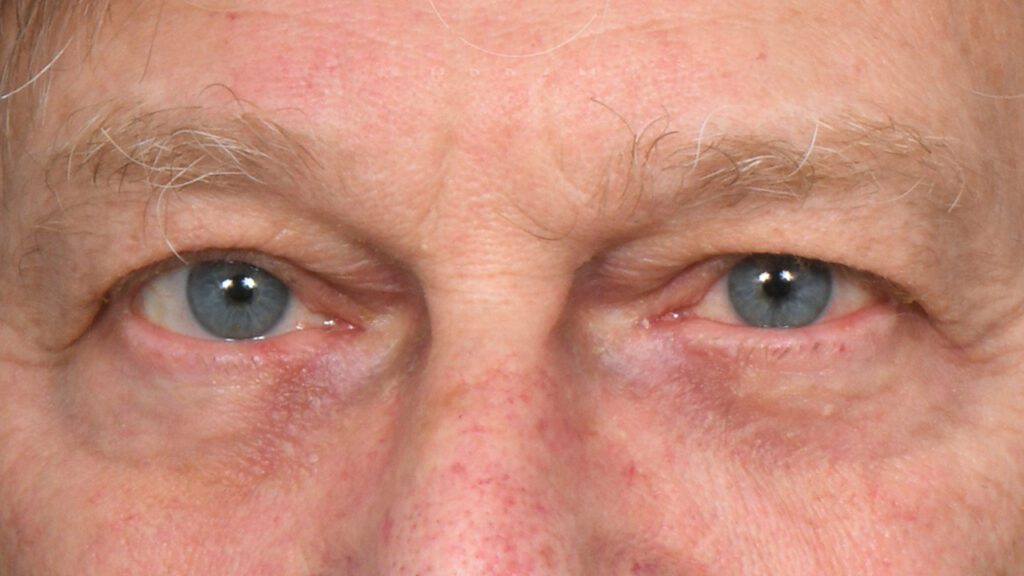
We hear it every day: patients point to their lower eyelids and ask for the single cream, laser, or surgical tweak that will finally erase their tired appearance. But here is the reality of facial anatomy: the under-eye area is incredibly complex. It doesn’t just age in one way, which means treating it with a one-size-fits-all approach often leads to unnatural or underwhelming results. Natural and lasting rejuvenation requires understanding that under-eye aging is actually three distinct processes happening simultaneously. To get the best result, we address all three.
Undereye “Bags” (Bulging Fat)
Deep within the eye socket, fat cushions the eyeball, held back by a thin fibrous wall. Over time, this wall weakens, allowing the fat to bulge forward and create visible “bags.” To fix this safely, we perform a transconjunctival blepharoplasty. Rather than cutting through the delicate skin and muscle on the outside of the eyelid, I make a tiny incision purely on the inside of the lid. This allows me to remove or reposition the excess fat with zero visible scarring. More importantly, leaving the outside muscle intact drastically lowers the risk of altering your eye shape or causing chronic dry eye.
“Dark Circles” (Lost Volume)
Directly below those undereye bags is the upper cheek. In our youth, plump fat pads create a seamless, smooth transition from the eye to the cheek. As gravity and time deflate these pads, a hollow depression forms—creating a shadow that patients often interpret as dark circles.
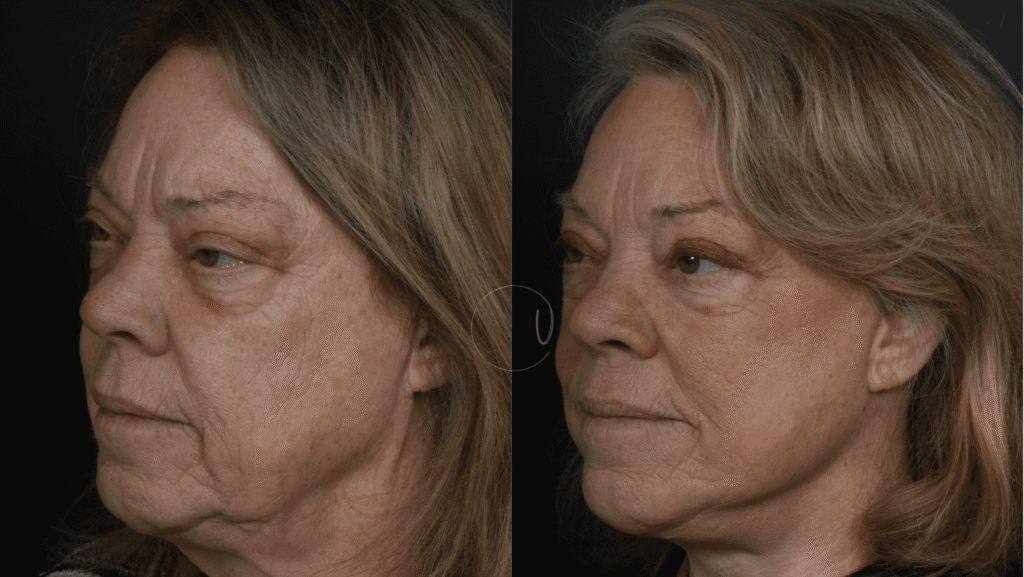
You cannot fix a hollow by simply removing the bulging tissue above it; you must restore the lost volume. During undereye surgery, I meticulously graft or reposition the patient’s own natural fat into this tear trough. This bridges the gap, recreating that youthful, flush contour between the lower lid and the cheek.
Crepey Skin and Wrinkles
Lower eyelid skin is the thinnest on the human body. As it loses collagen and elastin, it develops a crepe-paper texture. Historically, surgeons would simply cut away this excess skin. However, excising lower eyelid skin carries a high risk of pulling the eyelid downward (a complication called ectropion). Instead, I prefer to tighten the skin using advanced resurfacing, such as a CO2 laser or a highly specialized Phenol/Croton Oil peel. These treatments induce massive collagen remodeling. They dramatically shrink and tighten the skin, erasing deep wrinkles without a single external scalpel cut.
The Bottom Line
A refreshed, natural appearance isn’t about pulling skin tight or chasing every wrinkle; it is about intelligent structural restoration. By combining conservative internal fat removal, precise volume replacement, and advanced skin resurfacing, we can safely and comprehensively treat all three signs of under-eye aging at once. The result? You, just exceptionally well-rested.
Dr. Matthew Urban is a fellowship-trained facial plastic surgeon practicing in Chester, NJ. He specializes in cosmetic injections, lasers and peels, rhinoplasty, facelift, neck lift, eyelid lift, blepharoplasty, and hair transplantation.
This article does not constitute medical advice and no doctor-patient relationship is formed by reading it. Prior results do not guarantee a similar outcome. Additional facts or future developments may affect subjects contained within this blog post. Before acting or relying upon any information within this newsletter, seek the advice of a medical doctor.
Any content, resident submissions, guest columns, advertisements, and advertorials are not necessarily endorsed by or represent the views of Best Version Media LLC (BVM) or any municipality, homeowners associations, businesses, or organizations that this publication serves. BVM is not responsible for the reliability, suitability, or timeliness of any content submitted, inclusive of materials generated or composed through artificial intelligence (AI). All content submitted is done so at the sole discretion of the submitting party.