Every July, Moore County homeowners dust off their portable generators, check the oil, and pull the starter cord to make sure it fires. That’s a good start. But there’s one piece of the puzzle that often gets skipped entirely, and it’s the piece that separates a safe, convenient backup power setup from a dangerous one. It’s called a generator inlet plug, and if you don’t have one, you may be doing it wrong.
The Extension Cord Workaround — And Why It’s Risky
When the power goes out, the instinct is to run extension cords from a generator in the driveway to whatever appliances need power. It works, sort of. But it leaves your refrigerator, sump pump, and CPAP machine on long cords snaking through doorways and windows; and your hardwired circuits (lights, ceiling fans, outlets throughout the house) completely dead.
Some homeowners try to solve this by “back-feeding,” plugging a cord from the generator directly into a dryer outlet or other receptacle. This is extremely dangerous and illegal in many areas. Back-feeding can energize the utility lines outside your home, putting utility workers at serious risk of electrocution.
The Right Way to Do It
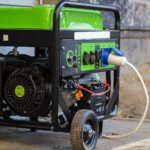
A generator inlet plug, also called a power inlet box, is a weatherproof receptacle installed on the outside of your home. It connects through a properly sized circuit back to a transfer switch or interlock kit at your electrical panel. When the power goes out, you simply run your generator’s output cord to the inlet, flip the interlock, and you have safe, managed power flowing to selected circuits in your home.
No extension cords through windows. No back-feed risk. No jury-rigged setups.
What the Installation Involves
This is a licensed electrical job, and it should be. The work includes selecting the correct inlet receptacle for your generator’s output (typically a 30-amp or 50-amp twist-lock), running appropriate wiring to the panel, and installing an interlock device that physically prevents the main utility breaker and the generator breaker from being on at the same time. That interlock is what keeps your home, and the linemen working to restore power in your neighborhood, safe. The job usually takes a few hours and can be completed well before the next storm threatens.
Don’t Wait Until the Storm Is in the Forecast
Electrical contractors across the Sandhills get flooded with calls the moment a storm enters the Gulf. If you want this done right and done before you need it, now is the time to schedule it. Your generator is already sitting in the garage. Put it to work the right way.
Mister Sparky of the Sandhills serves the Southern Pines area and is licensed in North Carolina (EC License #U.38520). Call (910) 390-2852 to schedule a generator inlet installation or whole-home electrical inspection.
Any content, resident submissions, guest columns, advertisements, and advertorials are not necessarily endorsed by or represent the views of Best Version Media LLC (BVM) or any municipality, homeowners associations, businesses, or organizations that this publication serves. BVM is not responsible for the reliability, suitability, or timeliness of any content submitted, inclusive of materials generated or composed through artificial intelligence (AI). All content submitted is done so at the sole discretion of the submitting party.