On the North Shore, mature trees are part of what makes a property feel established, private, and beautiful. Towering oaks, maples, and ornamental trees add character and value to a home. But below ground, those same trees become one of the most destructive forces your sewer line will ever face.
Homeowners are often surprised to learn that tree roots do not need a large break in a pipe to cause trouble. In fact, they usually begin with something much smaller: a tiny crack, a separated joint, or a weak point in an aging sewer line. Once a pipe begins to leak even a small amount of moisture, roots are naturally drawn to it. They follow that moisture to the source and work their way inside.
This is especially common in older homes, where sewer lines are almost always made of clay or cast iron. Clay pipes fail at the joints over time. Cast iron pipes corrode and weaken with age. In either case, the sewer line becomes vulnerable. What begins as a hairline opening underground becomes an open invitation for roots.
Once roots enter the pipe, the problem rarely stays small. Fine roots begin to expand, forming a mass inside the line that catches toilet paper, grease, and debris. Flow becomes restricted. Drains may start running slowly. A home may experience an occasional backup that seems isolated. But over time, the blockage becomes more severe, pressure inside the pipe increases, and the line can crack further, collapse, or fail altogether.
That is why tree root intrusion is so deceptive. The tree in the yard may look perfectly healthy. The sewer may still appear to be working. Meanwhile, underground, the damage is progressing.
Many homeowners assume the tree itself is the problem. In reality, roots usually expose a weakness that was already there. Healthy roots do not typically break into a perfectly sound sewer line for no reason. They take advantage of age, deterioration, shifting soil, and failing joints. The older the pipe, the greater the risk.
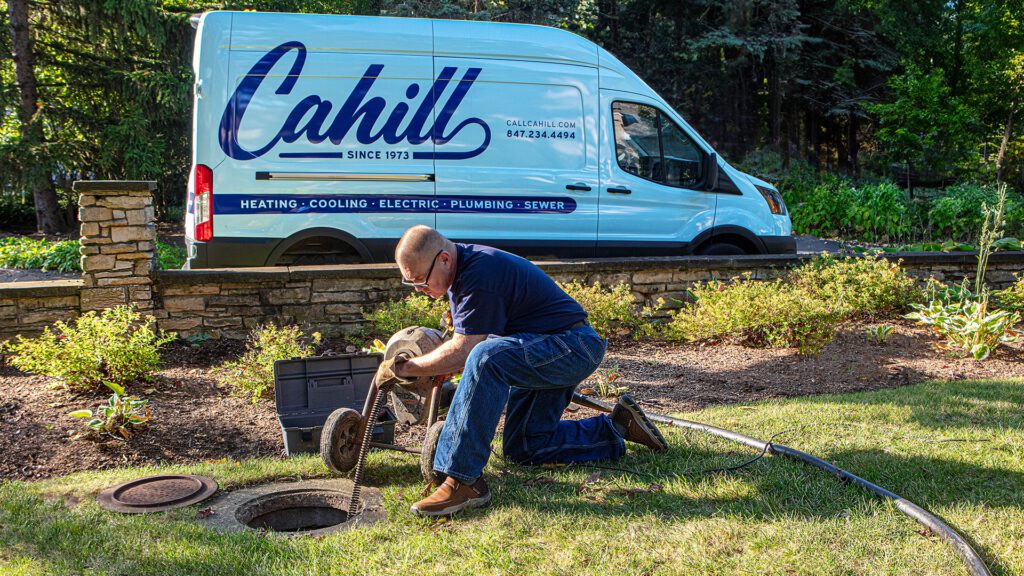
When roots are present, sewer rodding or hydro jetting can be an important first step. Both methods can clear blockages and restore flow. In many cases, that is exactly what is needed to solve an immediate problem. But it is important to understand what cleaning does and does not accomplish. If roots entered through a defect in the pipe, clearing the roots does not eliminate the defect. It only removes the symptom. Without a long-term repair, the roots return.
That is why sewer lining has become such an important solution for aging sewer lines. Once the line is properly prepared, trenchless lining can create a new, seamless pipe inside the old one, sealing off the cracks and joints where roots once entered. It not only restores the line, but prevents the same intrusion from happening again. Just as importantly, it can often be done with far less disruption to lawns, landscaping, hardscape, and mature trees than traditional excavation.
On the North Shore, where both older homes and mature trees are part of the landscape, tree root intrusion is not unusual. It is one of the most common sewer problems homeowners face. The key is catching it early, before a small opening becomes a major repair.
Most sewer problems begin years before homeowners notice them. The only way to truly understand the condition of your sewer line is with a camera inspection. Cahill offers North Shore homeowners a $79 sewer camera inspection to help them understand the health of their sewer before problems start.
For more information, call Andy directly at 847-234-4494 or visit cahillplumbers.com.
Any content, resident submissions, guest columns, advertisements, and advertorials are not necessarily endorsed by or represent the views of Best Version Media LLC (BVM) or any municipality, homeowners associations, businesses, or organizations that this publication serves. BVM is not responsible for the reliability, suitability, or timeliness of any content submitted, inclusive of materials generated or composed through artificial intelligence (AI). All content submitted is done so at the sole discretion of the submitting party.