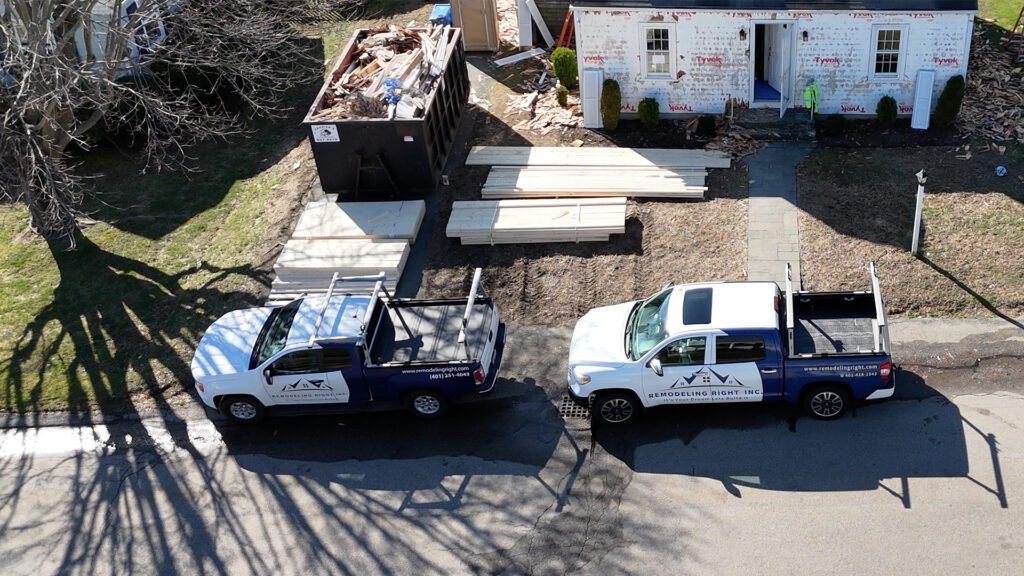
For most families on Aquidneck Island, their home is the largest investment they’ll ever make. We work hard to own it, maintain our mortgages, and take pride in how it looks from the street. Yet many of us spend more time scheduling oil changes for our cars than we do thinking about the house where we raise our families and build our futures.
I’ve been doing remodeling work on this island for years, and I have a perspective most homeowners never get: I see what’s behind the walls, beneath the floors, and above the ceilings. Whether I’m working on a 1920s colonial in Portsmouth, a mid-century cape in Middletown, or a renovated Victorian in Newport, one thing is consistently true. Small maintenance issues that go unaddressed almost always become expensive problems. The good news is that most of them give us fair warning long before they become emergencies.
What Your Home Is Trying to Tell You
A small section of peeling paint on an exterior wall isn’t just an eyesore. It’s often a signal that moisture is finding its way behind the surface. Loose grout in a shower looks like a minor annoyance, but it can allow water to work its way behind the tile, into the subfloor, and eventually into the framing. A deck railing that feels just slightly wobbly today can become a genuine safety concern over time.
Even something as overlooked as deteriorated caulking around a window frame can funnel water into places it was never intended to go. Our island’s freeze-thaw cycles can happen dozens of times in a single Rhode Island winter, and they are particularly unforgiving. Water gets into a small gap, freezes, expands, and widens that gap every season. What costs a few hundred dollars to seal today can cost tens of thousands to repair in five years.
Inside the home, it’s worth paying attention to changes. Doors that suddenly don’t close the way they used to. New hairline cracks in drywall. A musty smell in a closet or basement. Unusually high heating bills. Recurring condensation around windows. None of these are automatically cause for alarm, but all of them are worth understanding before they develop into something larger.
The Walk-Around Habit
One of the simplest habits any homeowner can build is a seasonal walk-around of their property, exterior and interior, with fresh eyes. You’re looking for cracked or missing caulking, damaged trim, loose siding, missing or lifted shingles, clogged gutters, settling at walkways and steps, soft or discolored deck boards, and any signs of water staining on ceilings or walls. Many of these items can be addressed quickly and affordably when they’re caught early. The same items, deferred for two or three seasons, rarely stay affordable.
I often compare it to routine car maintenance. Nobody questions the logic of an oil change. We understand that small, consistent care keeps a larger system running. A home is a far more complex and valuable system than any vehicle, and it responds to the same principle. The homeowners I’ve seen handle maintenance well over the years are not the ones who spend the most money. They’re the ones who spend it consistently and at the right time.
Planning Ahead Removes the Stress
The homeowners who feel the most in control of their properties are almost always the ones who think in timelines. Every major component of a home has an expected lifespan, whether that’s roofing, siding, windows, HVAC systems, water heaters, or exterior finishes. Knowing roughly when each of these will need attention allows you to plan and budget thoughtfully, rather than absorbing a $12,000 HVAC replacement in the same season as a roof repair because both were deferred past their useful life.
On Aquidneck Island, this matters more than most places. Our housing stock is older. A significant portion of homes in Newport, Middletown, and Portsmouth predate World War II, and many were built long before that. Older homes require more attentive maintenance, not less. The charm and character of a well-kept historic home is an asset. Deferred maintenance on that same home can compound in ways that are genuinely expensive to undo, and that can create problems at exactly the wrong moment, when you’re ready to sell, refinance, or renovate.
I have always believed that every homeowner should have a long-term maintenance plan, not because something is wrong today, but because having a plan removes the stress of not knowing. A well-maintained home is safer and more comfortable to live in, more efficient to heat and cool, and ultimately worth more when it comes time to sell. The families on this island who have taken that approach consistently are the ones whose homes I enjoy working on most, because there are rarely surprises, and the work we do together genuinely improves something that was already well cared for.
Taking care of your home is not just about protecting a building. It’s about protecting your investment, your family’s safety, and your peace of mind. Whether your home is five years old or a century old, preventive maintenance is almost always the least expensive improvement you’ll ever make. Your home is constantly telling you what it needs. You just have to know how to listen.
Mike Biestek is the owner of Remodeling Right, a residential design-build remodeling company serving Aquidneck Island and neighboring towns. Remodeling Right specializes in kitchen and bathroom renovations and whole-home projects on and around Aquidneck Island. Mike is also the founder of the Right Home Advantage Program, a proactive home maintenance advisory service for homeowners. Reach out today for more information at www.remodelingright.com.
Any content, resident submissions, guest columns, advertisements, and advertorials are not necessarily endorsed by or represent the views of Best Version Media LLC (BVM) or any municipality, homeowners associations, businesses, or organizations that this publication serves. BVM is not responsible for the reliability, suitability, or timeliness of any content submitted, inclusive of materials generated or composed through artificial intelligence (AI). All content submitted is done so at the sole discretion of the submitting party.