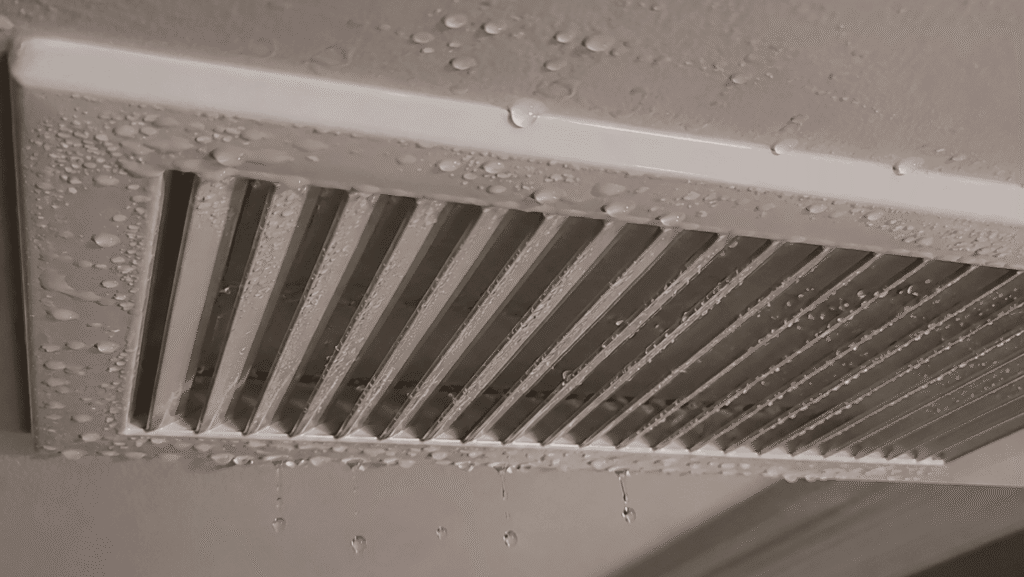
You glance up at the ceiling and notice water droplets forming on your air return vent. In some cases, the grille drips onto the floor, leaving water stains on the ceiling or creating dark spots that appear to be mold. It is a common problem during our hot, humid summers, and it should never be ignored.
A sweating air return occurs when warm, moisture-filled air comes into contact with a surface that is much colder than the surrounding room. The air conditioning system cools the metal grille, and if indoor humidity is high enough, moisture condenses on the vent just like a cold glass of iced tea on a summer afternoon.
Several issues can contribute to the problem. High indoor humidity is the most common cause, although leaky ductwork in the attic, inadequate insulation around the return box, poor attic ventilation, air leaks around the grille, an oversized air conditioner that does not remove enough humidity, or a clogged air filter can all play a role. Sometimes, the cause is a combination of several small issues.
The moisture itself is only part of the concern. If the vent continues to sweat, it can damage drywall, stain ceilings, soften paint, and eventually lead to wood rot around framing members. Persistent moisture also creates ideal conditions for mold and mildew. Once mold begins growing on the vent or in the return duct, spores can circulate throughout the home whenever the HVAC system runs. That can aggravate allergies, asthma, and other respiratory conditions, especially for young children, older adults, and anyone with a compromised immune system.
If you already have visible mold on the vent, avoid simply painting over it or wiping it with a dry rag. Turn off the HVAC system before removing the grille. Clean the metal vent with warm water and a mild detergent, then rinse with a safe, non-paint stripper disinfectant. Allow the grille to dry completely before reinstalling it. If mold extends into the ductwork or insulation, the underlying moisture problem must be corrected first, or the mold will return.
The permanent solution is identifying why the condensation is occurring. That may involve sealing air leaks around the return, insulating the return box and ductwork, repairing disconnected or leaking ducts, improving attic ventilation, lowering indoor humidity, or verifying that the air conditioning system is properly sized and operating efficiently. Every home is different, so a thorough inspection is the best place to start. A sweating vent is your home’s way of telling you that something is out of balance. Addressing it early can prevent expensive ceiling repairs, improve indoor air quality, and help your HVAC system perform at its best all summer long.
For more information or to schedule an HVAC inspection, contact Crowe Services at 901-413-5361 or visit crowehvac.com.
Any content, resident submissions, guest columns, advertisements, and advertorials are not necessarily endorsed by or represent the views of Best Version Media LLC (BVM) or any municipality, homeowners associations, businesses, or organizations that this publication serves. BVM is not responsible for the reliability, suitability, or timeliness of any content submitted, inclusive of materials generated or composed through artificial intelligence (AI). All content submitted is done so at the sole discretion of the submitting party.