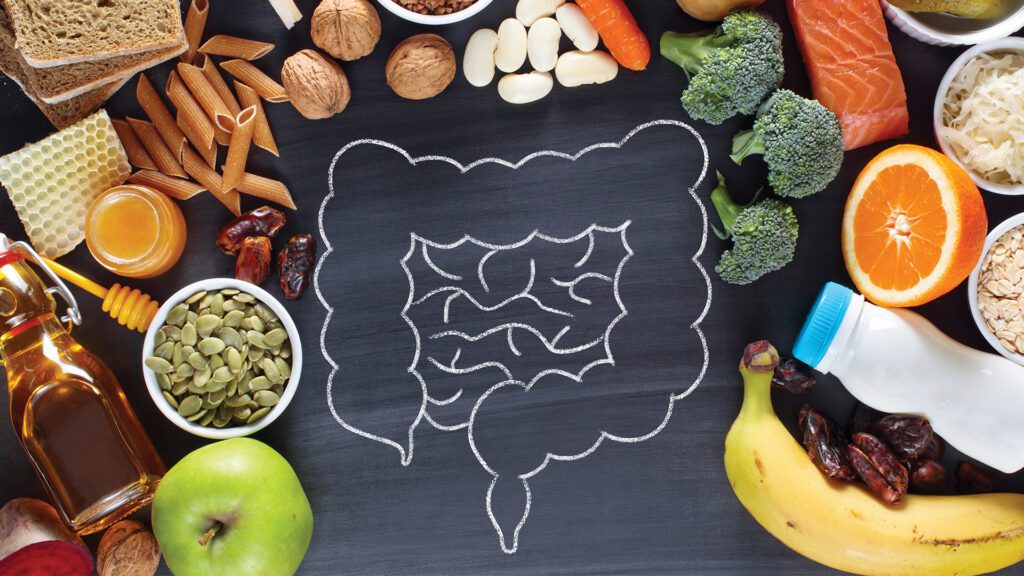
Your gut is one of the most intelligent and active systems in your body. From your first bite of food, there is an extraordinary chain of events that takes place. Your gut goes to work breaking food down into useable components, protecting you from invaders, and communicating with your brain, actually influencing how you feel emotionally.
The food you eat has to become you and support your health. Your breakfast doesn’t become energy and nutrients because you ate it. Your gut contains microbiome, beneficial bacteria, that works in the dismantling of your food into vitamins and creates molecules and compounds your body needs. Proteins become amino acids. Carbohydrates become glucose. Healthy fats become fatty acids. Once food is broken down in useable components, only then can your cells use it to build muscles, repair tissues, produce hormones, and generate energy.
Your gut is designed to be selective of what it allows into your bloodstream and what it denies. Nutrients are permitted to enter. Think of it as your personal security system. It works to eliminate harmful bacteria, toxins, and prohibits large food particles from entering your bloodstream.
Imagine two friends who never stop texting each other. That’s your gut and your brain. It’s remarkable that your microbiome communicates continually through nerves, hormones, and your immune system. The healthy bacteria in your gut produces substances that help regulate inflammation and supports the production of neurotransmitters, like serotonin, that affect your mood. Actually, far more messages travel up from the gut to the brain via the vagus nerve. When your gut is calm and healthy, it sends signals of safety and well-being to your brain. These feelings cause the brain to produce chemicals that promote a healthy immune system and feelings of wellness. But when your gut is inflamed or distressed, the signals the brain receives are very different messages and may cause your brain to produce cortisol, the fight or flight stress hormone.
This helps explain why poor nutrition, prolonged stress, lack of sleep, or repeated courses of antibiotics can affect not only digestion but also energy, focus, and emotional well-being.
The great news is that your microbiome responds to the choices you make. Eating a variety of colorful fruits and vegetables and fiber-rich foods, staying physically active, getting a good night’s sleep, and managing stress all help create the environment for your gut biome to flourish and balance your health.
Your body is intelligent and designed to thrive. With your support, it will do so brilliantly.
Any content, resident submissions, guest columns, advertisements, and advertorials are not necessarily endorsed by or represent the views of Best Version Media LLC (BVM) or any municipality, homeowners associations, businesses, or organizations that this publication serves. BVM is not responsible for the reliability, suitability, or timeliness of any content submitted, inclusive of materials generated or composed through artificial intelligence (AI). All content submitted is done so at the sole discretion of the submitting party.