Artificial intelligence is changing how people approach estate planning. Tools like ChatGPT and platforms like LegalZoom and Trust & Will now allow anyone to generate a draft will or trust document in minutes, at little or no cost. For individuals with simple circumstances, AI tools can serve as a starting point, helping users organize information, understand common planning concepts, and recognize the need for planning rather than ignoring it altogether. That is genuinely valuable, and for some people, it may be enough to complete valid and effective documents.
But for many families in the Hudson Valley, the picture is more complicated.
New York Has Its Own Rules
New York’s execution requirements are strict, and missing even small details can void a will. Under EPTL §3-2.1, a valid will must be signed at the end by the testator and witnessed by at least two people. An AI-generated document may look polished and complete while still failing to meet important requirements.
The Hudson Valley Is Not a Generic Place
Our region is home to multigenerational farms, small business owners, artists and creative professionals, blended families, and aging parents who want to stay close to the people they love. These circumstances rarely fit a template. A small business owner in New Paltz needs a succession plan that addresses what happens if a partner dies or becomes incapacitated. A family with a farm in the Wallkill Valley may need to think carefully about how land passes to the next generation without forcing a sale. A parent in Gardiner with a child with special needs requires trust structures that protect benefits eligibility. This is something a standard AI-generated document is unlikely to address correctly.
What Only a Person Can Do
AI tools rely on generalized inputs and cannot account for nuance, family dynamics, or the kinds of conversations that only happen when someone is really listening. A user may give it initial prompts and input, but AI won’t know the nuanced questions to ask to probe deeper and find the potential conflicts that need resolving. AI can also “hallucinate” — producing fictional case citations or statutes that do not exist with serious consequences for a legal document.
According to Trust & Will’s 2026 Estate Planning Report — the largest annual study of its kind — only 5% of Americans would use AI to create estate planning documents without attorney review. Even as AI becomes more trusted and accessible, 95% of people still want a professional involved in the outcome. Those concerns are well-founded.
The future of AI in estate planning isn’t about replacing human expertise — it’s about amplifying it. AI can help you gather information, clarify your thinking, and prepare good questions before a consultation. But the strategy, the judgment, and the relationship remain irreducibly human.
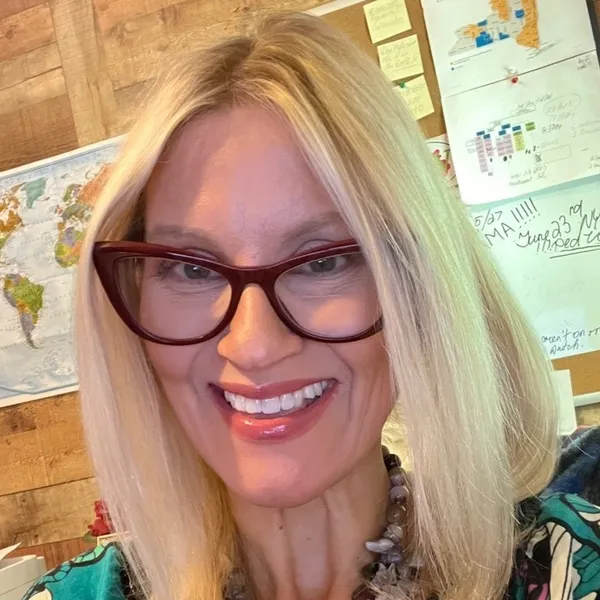
Dana Ware is an estate planning and trusts attorney at Hudson Legacy Law, serving families and business owners throughout the Hudson Valley. She can be reached at hudsonlegacylaw.com.
Any content, resident submissions, guest columns, advertisements, and advertorials are not necessarily endorsed by or represent the views of Best Version Media LLC (BVM) or any municipality, homeowners associations, businesses, or organizations that this publication serves. BVM is not responsible for the reliability, suitability, or timeliness of any content submitted, inclusive of materials generated or composed through artificial intelligence (AI). All content submitted is done so at the sole discretion of the submitting party.