Condos and townhouses aren’t the same. Ownership, monthly fees, outdoor space, financing and lifestyle all come into play. Understanding those differences can help you choose the home that fits your needs, now and down the road.
What Is a Condo?
“Condo” is short for condominium.
When you buy a condo, you typically own:
- Interior walls
- Floors and ceilings
- Fixtures and finishes inside your unit
Everything outside your unit—like hallways, elevators, roofs and outdoor areas/landscaping—is shared. These are called common areas.
A condo board manages those shared spaces. The board is usually made up of other condo owners who help set rules, manage budgets and oversee home maintenance.
What Is a Townhouse?
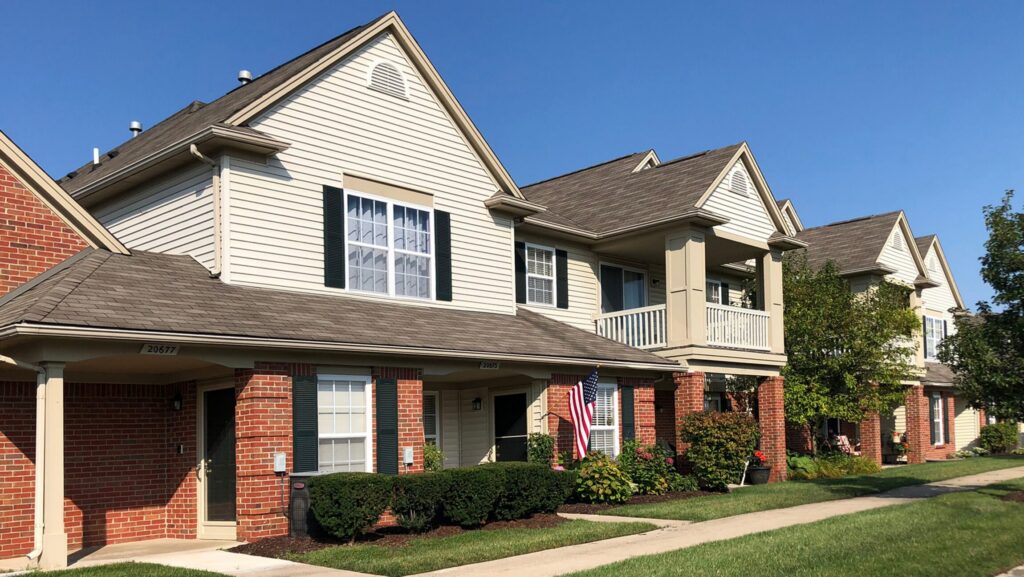
A townhouse is a home that shares one or more walls with neighboring units, but is built more like a traditional house.
Townhouse owners usually own:
- Interior of the home
- Exterior walls
- Roof
- Land the home sits on, which often includes a yard, patio or deck
Some townhouse communities have homeowners associations (HOAs), but ownership is typically more complete than with a condo.
Condo vs. Townhouse: Key Differences
- Ownership and property boundaries—With a condo, you own the interior only. Everything else is shared. With a townhouse, you usually own both the home and the land. This affects maintenance, insurance and even how you renovate your space.
- Shared walls, privacy and outdoor space—Condos often mean neighbors above and below, less privacy and no private yard. Townhouses usually offer neighbors only on one or two sides and a private yard/patio.
- Amenities and common areas—Condos tend to shine here. Many buildings offer a gym, pool or lounge, all maintained for you. Townhouses may have shared green space or a playground, but large amenities are less common.
- HOA fees and monthly costs—Condo HOA fees typically include building maintenance, exterior repairs, insurance for the structure, landscaping, trash and snow removal, and amenities. Often lower, townhouse HOA fees may cover landscaping in shared areas, road or sidewalk maintenance, and community amenities.
Cost and Financing Considerations
Condos usually cost less up front than townhouses or single family homes.
Insurance is also different. Condo owners usually need a policy that covers the interior only, while townhouse owners often need a policy similar to a single family home.
Maintenance costs can balance out. Condos have higher HOA fees, but fewer surprise repairs. Townhouses may have lower fees, but more personal responsibility.
Financing can differ by property type. Some condos must meet lender requirements related to the building, HOA budget or owner occupancy.
Credit scores, income and debt still matter most; but condos can add an extra layer of review. A loan officer can help you understand what to expect before you make an offer.
Next Steps Before You Buy
- Review HOA rules and fees carefully.
- Think about your lifestyle now and later.
- Consider long-term resale value.
- Talk with a trusted real estate agent.
- Speak with a loan officer about financing options.
If you’re ready to explore your options, Kylie Miller can walk you through how each property type may affect your loan, monthly payment and overall budget. Reach out to her, at applywithkylie.com or 937-414-0238.
Any content, resident submissions, guest columns, advertisements, and advertorials are not necessarily endorsed by or represent the views of Best Version Media LLC (BVM) or any municipality, homeowners associations, businesses, or organizations that this publication serves. BVM is not responsible for the reliability, suitability, or timeliness of any content submitted, inclusive of materials generated or composed through artificial intelligence (AI). All content submitted is done so at the sole discretion of the submitting party.