
Whether you’re shopping for an engagement ring, celebrating a milestone, or treating yourself to a special piece of jewelry, understanding common gemstone terms can help you make a confident purchase. One of the questions we hear most often is, “What’s the difference between a natural, lab-grown, and imitation gemstone?” While these terms are sometimes used interchangeably, they describe very different products.
Natural Gemstones
Natural gemstones are created by nature and mined from the earth. They form over millions of years through incredible geological processes involving heat, pressure, and time. Because of this, every natural gemstone is truly one of a kind.
Natural diamonds, rubies, sapphires, emeralds, and many other gemstones often contain tiny inclusions or unique characteristics that make each stone as individual as the person wearing it. Their rarity, beauty, and quality all contribute to their value.
Lab-Grown (Synthetic) Gemstones
Lab-grown gemstones, also called synthetic gemstones, have become increasingly popular in recent years. Despite being created in a laboratory, they have the same chemical composition, crystal structure, and physical properties as natural gemstones.
For example, a lab-grown diamond is still a real diamond. It offers the same brilliance, hardness, and durability as a natural diamond. The difference lies only in how it was formed—one grew naturally beneath the earth’s surface, while the other was created using advanced technology in a controlled environment.
For many people, lab-grown gemstones provide an opportunity to own a larger or higher-quality gemstone while staying within their budget.
Imitation (Simulant) Gemstones
Imitation gemstones, sometimes called simulants, are designed to resemble another gemstone but are made from different materials. They may look similar at first glance, but they do not share the same chemical or physical properties.
Cubic zirconia and glass are two of the most common diamond simulants. They can be attractive and affordable options, but they are not diamonds.
It’s also worth noting that some natural gemstones are commonly chosen because they resemble diamonds. White sapphire and white topaz, for example, are genuine gemstones found in nature. Although they offer a beautiful clear appearance, they are different minerals than diamonds and typically come at a much lower price point. Rather than being “fake” diamonds, they are beautiful gemstones with their own unique qualities.
Knowledge Builds Confidence
There isn’t one “best” choice when it comes to gemstones. Natural, lab-grown, and imitation stones all have a place in today’s jewelry market. The most important thing is understanding exactly what you’re purchasing so you can choose the option that best fits your style, lifestyle, and budget.
At our jewelry store, we believe an informed customer is our best customer. Whether you’re selecting a once-in-a-lifetime engagement ring, celebrating an anniversary, or finding the perfect birthday gift, we’re always happy to explain your options and answer your questions. When you understand the differences between gemstone types, you can shop with confidence—and enjoy your jewelry for many years to come.
Gemstone Quick Guide
- Natural: Formed by nature and mined from the earth.
- Lab-Grown/Synthetic: A real gemstone created in a laboratory with the same chemical and physical properties as its natural counterpart.
- Imitation/Simulant: Made to look like another gemstone but composed of different materials (such as cubic zirconia or glass). Some natural gemstones, like white sapphire and white topaz, are also chosen as beautiful diamond alternatives.
Can you tell the difference? photo heading
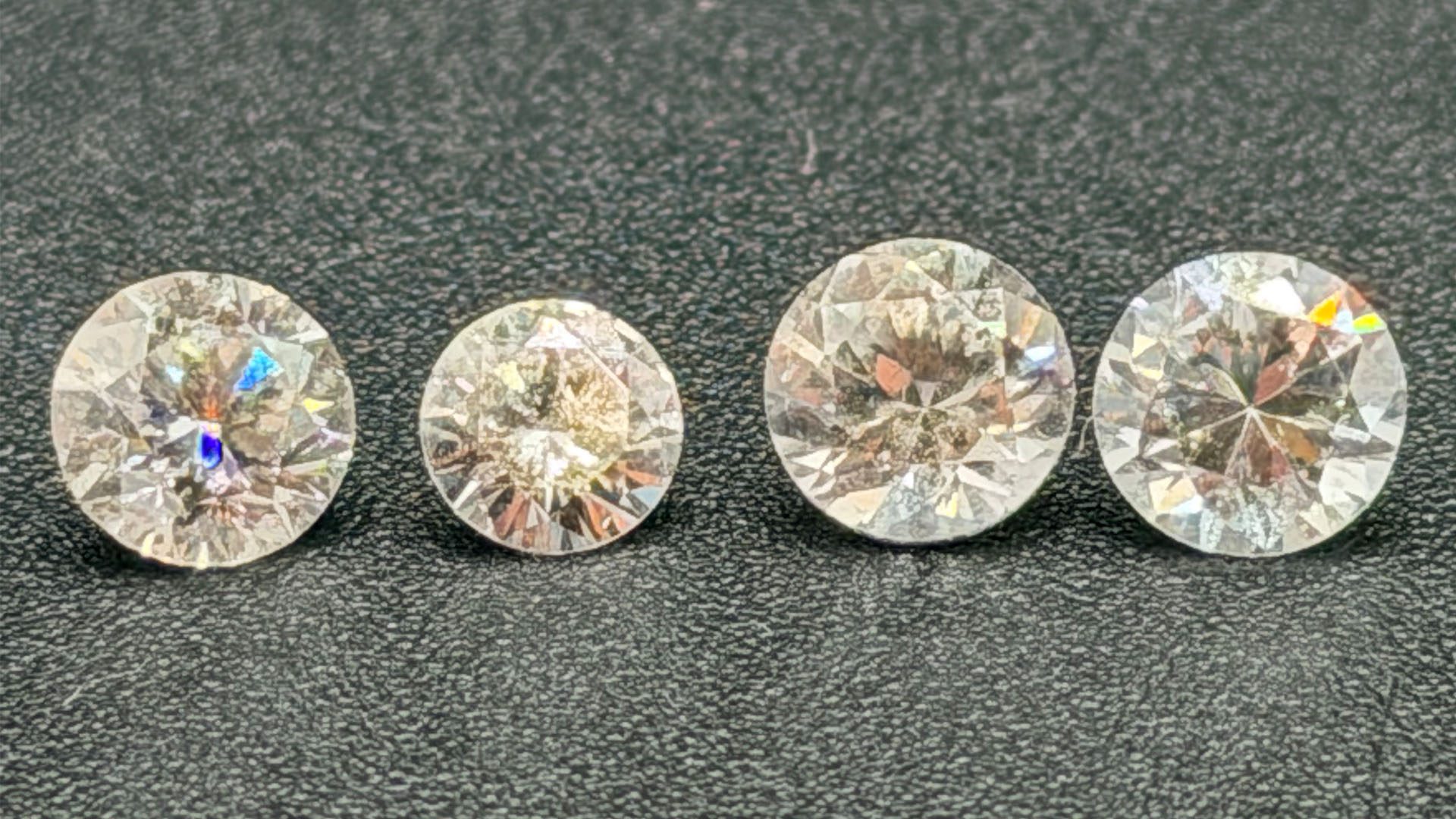
(Submitted by Tony Gonnella)
From left to right: Natural Diamond, Moissanite (simulant), Lab Diamond, Cubic Zirconia (simulant)
Any content, resident submissions, guest columns, advertisements, and advertorials are not necessarily endorsed by or represent the views of Best Version Media LLC (BVM) or any municipality, homeowners associations, businesses, or organizations that this publication serves. BVM is not responsible for the reliability, suitability, or timeliness of any content submitted, inclusive of materials generated or composed through artificial intelligence (AI). All content submitted is done so at the sole discretion of the submitting party.