More women over 40 have started using GLP-1 medications such as Ozempic, Wegovy and Zepbound.
These medications can be helpful for weight loss, but something women may not realize: Losing weight quickly can also mean losing lean mass, including muscle. That is why strength training and eating enough protein matter more than ever.
The Muscle Problem
When you lose weight, your body does not lose only fat. You can lose lean mass as well. Research suggests that lean mass may account for a meaningful portion of the total weight lost while taking GLP-1 medications, although the amount varies widely from person to person and across studies. Lean mass includes muscle, water, organs and other non-fat tissue, so it is not the same as muscle alone.
For women over 40, protecting muscle is especially important. Muscle mass and strength naturally begin to decline as we age, and hormonal changes during menopause may add to that decline. Severe age-related losses in muscle mass, strength and function can eventually lead to a condition called sarcopenia.
Muscle helps you stay strong, supports healthy bones and plays an important role in metabolism. Losing too much muscle while losing weight could leave you weaker, even when the number on the scale looks great.
Why Strength Training Helps
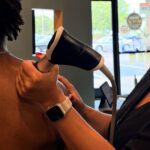
Lifting weights sends an important message to your body: “Keep this muscle. We still need it!” That message becomes even more important when you are eating less food, which often happens while taking a GLP-1 medication.
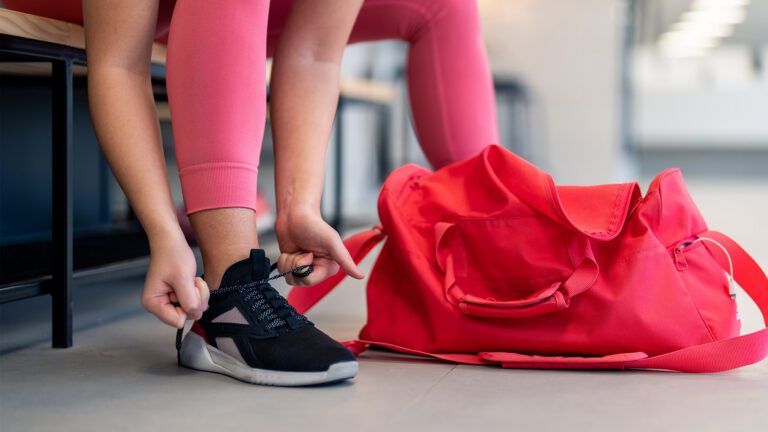
Strength training two to three times a week may help you maintain or build muscle. It also supports bone health, which becomes increasingly important during and after menopause. Strong muscles help you carry groceries, get up from the floor, stay steady on your feet and continue doing the things you love as you get older.
Why Protein Helps
Your muscles need protein to repair and grow. When you eat less food overall, it is easy to eat less protein too, but that is the opposite of what your body needs when you are trying to protect muscle.
A practical goal for many women is approximately 25 to 35 grams of protein at each meal, although individual needs vary. Good choices include eggs, chicken, fish, Greek yogurt, cottage cheese, beans, tofu and protein shakes.
Spreading your protein throughout the day can make it easier to eat enough and give your body regular opportunities to use it.
Putting It Together
GLP-1 medications can be a helpful tool, but they work best alongside habits that protect your health and strength. Think of it this way: The medication may help lower the number on the scale, while strength training and protein help protect the muscle that keeps you strong, capable and independent.
If you are taking a GLP-1 medication, talk with your doctor or a registered dietitian about your nutrition and protein needs, especially if you have kidney disease or another medical condition.
Then find a strength-training plan that fits your life and ability. Even two well-planned sessions each week can make a meaningful difference.
Aging is not something we need to face with fear. It is something we can meet with strength. Muscle is not just about how you look. It affects how you move, how you feel, and how well you live for years to come.
Any content, resident submissions, guest columns, advertisements, and advertorials are not necessarily endorsed by or represent the views of Best Version Media LLC (BVM) or any municipality, homeowners associations, businesses, or organizations that this publication serves. BVM is not responsible for the reliability, suitability, or timeliness of any content submitted, inclusive of materials generated or composed through artificial intelligence (AI). All content submitted is done so at the sole discretion of the submitting party.