As summer comes to an end, it’s tempting to simply throw on the pool cover and call it a season. But taking the time to properly winterize your pool now can prevent costly repairs, protect your equipment and make opening your pool next spring much easier.
Start with a Thorough Cleaning
Before closing your pool, remove all leaves, dirt and other debris. Vacuum the pool thoroughly and empty the skimmer and pump baskets. Leaving organic material in the water over the winter can lead to stains, algae growth and poor water quality when spring arrives.
Once the pool is clean, test and balance the water chemistry. Adjust the pH, total alkalinity and calcium hardness to their recommended winter levels. Properly balanced water helps prevent corrosion, scaling and algae growth while your pool is closed.
Lower the Water Level
Reduce the water level to approximately one inch below the skimmer opening. This simple step helps prevent water from freezing inside the skimmer and plumbing lines, where expanding ice can cause expensive damage.
Protect Your Pool Equipment
Winterizing your equipment is one of the most important parts of closing your pool. Drain all water from the pump, filter, heater and chlorinator to eliminate the risk of freeze damage.
Next, use an air compressor or specialized equipment to blow any remaining water from the plumbing lines. Even a small amount of trapped water can freeze, expand and crack pipes over the winter.
If possible, remove accessories such as ladders, handrails, automatic cleaners and solar covers, and store them in a clean, dry location until spring.
Cover It Properly
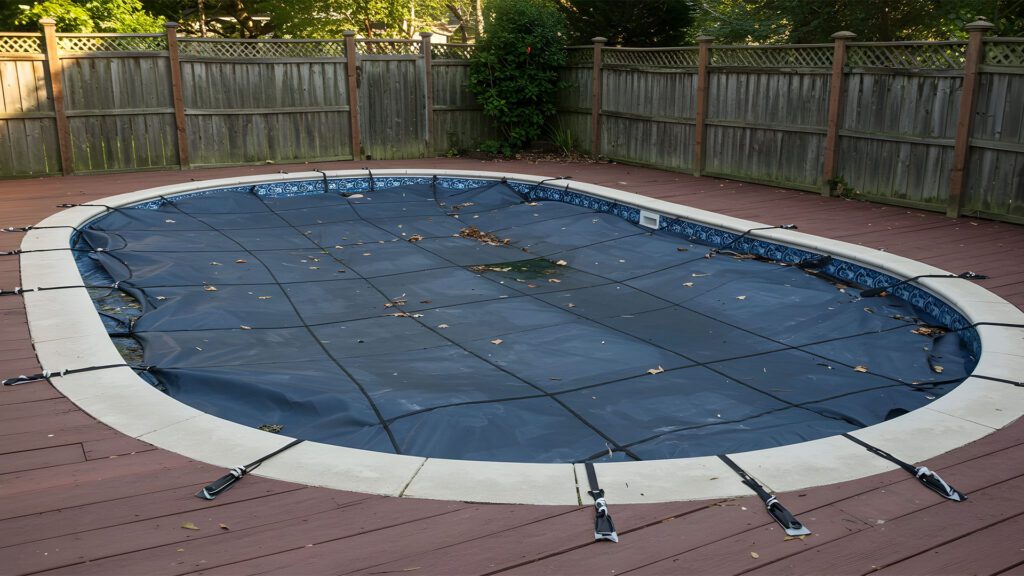
A quality winter cover is your pool’s first line of defense against leaves, debris, sunlight and contaminants during the off-season. A properly secured cover also helps maintain water quality and reduces spring cleanup.
For added protection, many pool owners place an air pillow beneath the cover. The pillow helps absorb pressure from expanding ice and directs water toward the edges of the cover, reducing the chance of damage.
Don’t Skip the Final Treatments
Before putting the cover on, shock the pool to eliminate any lingering bacteria or algae. Following the shock treatment with a winter algaecide provides additional protection against algae growth during the colder months, helping your pool stay cleaner until reopening.
Timing Matters
One of the biggest mistakes homeowners make is closing their pool too early. Wait until daytime temperatures consistently remain below 65°F before winterizing. Closing while the weather is still warm can encourage algae growth beneath the cover, creating more work when it’s time to reopen.
Leave It to the Professionals
While many homeowners tackle pool closing themselves, certain tasks—especially blowing out plumbing lines—require specialized equipment and experience. Hiring a professional pool service can provide peace of mind that every step has been completed correctly, helping protect your investment all winter long.
Any content, resident submissions, guest columns, advertisements, and advertorials are not necessarily endorsed by or represent the views of Best Version Media LLC (BVM) or any municipality, homeowners associations, businesses, or organizations that this publication serves. BVM is not responsible for the reliability, suitability, or timeliness of any content submitted, inclusive of materials generated or composed through artificial intelligence (AI). All content submitted is done so at the sole discretion of the submitting party.