Your home’s masonry works hard every day. From freezing winter temperatures and heavy rain, to summer heat and shifting ground, your brick, stone, concrete, and mortar are constantly exposed to the elements.
The good news—Many costly repairs can be prevented by taking just 15–20 minutes twice a year to inspect your home. Spring and Fall are the ideal times to catch small issues before they become expensive structural problems.
We have created this simple checklist to help protect your investment.
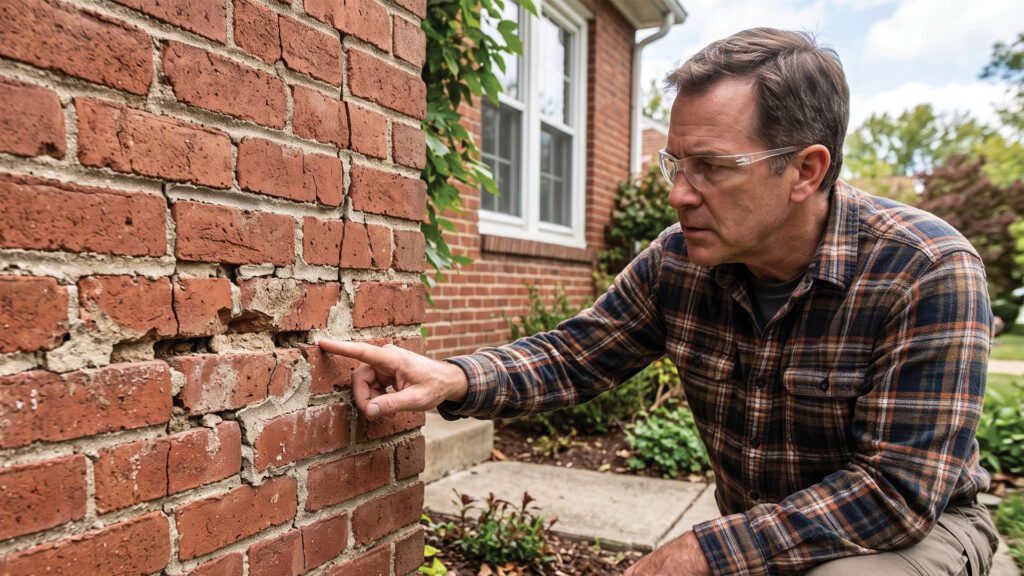
Check Your Mortar Joints
Walk around your home and look closely at the mortar between the bricks or stones.
Watch for:
- Crumbling or missing mortar
- Small gaps or holes
- Hairline cracks that seem to be growing
Why it matters:
Mortar is what holds your masonry together. Once it begins to deteriorate, water can enter the wall. During winter, that water freezes and expands, causing even more damage and potentially loosening bricks or stone.
Inspect Bricks and Stone
Look carefully at the face of your masonry.
Watch for:
- Cracked bricks
- Chipped corners
- Flaking or peeling surfaces
- Loose or shifting stones
Why it matters:
Even one damaged brick can allow moisture into your wall. Replacing individual bricks early is often far less expensive than repairing an entire section later.
Examine Your Chimney
Your chimney experiences some of the harshest weather on your home.
Watch for:
- Leaning or separating from the house
- Cracked mortar joints
- Loose bricks
- Damage around the chimney cap
Why it matters:
A neglected chimney can quickly become a safety concern. Small repairs today can help avoid major reconstruction in the future.
Look Around Windows and Doors
Pay attention to the masonry surrounding openings.
Watch for:
- Stair-step cracks
- Gaps where brick meets window or door frames
- Missing caulking or sealant
Why it matters:
These areas move more than the rest of the wall. Catching movement early can prevent water intrusion and larger structural repairs.
Check Concrete Surfaces
Inspect your driveway, walkways, steps, and patios.
Watch for:
- New cracks
- Uneven sections
- Surface scaling or flaking
- Areas where water pools after rain
Why it matters:
Water is concrete’s biggest enemy. Proper drainage and early repairs help extend the life of your concrete and improve safety.
Inspect Retaining Walls and Garden Features
If your property includes retaining walls or stone landscaping, take a close look.
Watch for:
- Bulging walls
- Leaning sections
- Loose stones
- Soil washing out behind the wall
Why it matters:
Retaining walls are designed to resist significant pressure. Small signs of movement should never be ignored.
Watch for White Stains
Notice any white, powdery residue on your brick or stone?
This is called efflorescence.
Why it matters:
While it isn’t always a structural issue, it usually indicates moisture is moving through the masonry. Finding the source early can prevent more serious problems.
Check for Vegetation
Remove vines, moss, and plants growing against masonry.
Why it matters:
Roots and climbing plants trap moisture and can gradually damage mortar joints and masonry surfaces.
Seasonal Tip
Spring: Look for damage caused by winter freeze-thaw cycles, including cracks, loose mortar, and shifting masonry.
Fall: Prepare your home for winter by repairing damaged mortar, sealing gaps, ensuring water drains away from your foundation, and addressing any issues before freezing temperatures arrive.
Remember: Small Repairs Save Big Money
Most major masonry repairs don’t happen overnight—they begin as small problems that go unnoticed. By performing a quick inspection each spring and fall, you can identify issues early, protect your home’s value, and avoid more extensive repairs down the road.
If you’re unsure whether something you’re seeing is cosmetic or a sign of a larger problem, it’s always worth having it evaluated by a qualified masonry professional.
**Stay tuned for our next article, “DIY Mistakes: When Home Repairs Can Cost You More Than You Save,” where we’ll explore common masonry repair mistakes homeowners make and how to know when it’s time to call in a professional.
Any content, resident submissions, guest columns, advertisements, and advertorials are not necessarily endorsed by or represent the views of Best Version Media LLC (BVM) or any municipality, homeowners associations, businesses, or organizations that this publication serves. BVM is not responsible for the reliability, suitability, or timeliness of any content submitted, inclusive of materials generated or composed through artificial intelligence (AI). All content submitted is done so at the sole discretion of the submitting party.