Don’t Be Short-Sighted About Nearsightedness
With childhood myopia (nearsightedness) increasing year after year, finding ways to slow its progression has become an important focus of vision research. While special contact lenses and prescription eye drops have traditionally been used to help manage myopia, advances in lens technology now offer another option that works simply through everyday glasses.
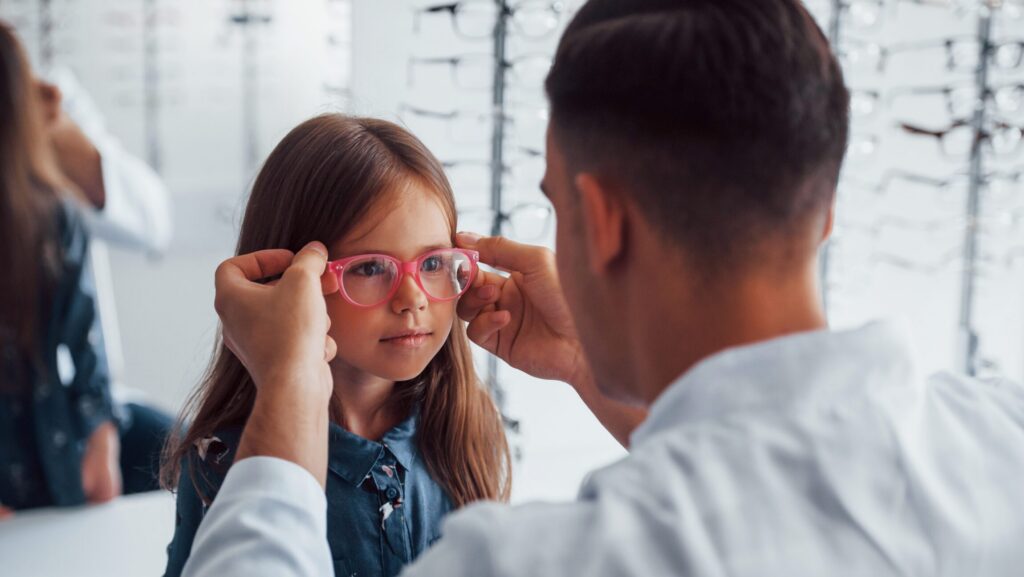
Stellest® lenses are specifically designed to slow the progression of myopia in children. Clinical research has shown an average 71% reduction in myopia progression over a two-year period when compared with standard single-vision lenses.
Stellest® lenses are designed for children ages 6 to 12 who are already nearsighted or beginning to experience changes in their vision. For children who qualify, the treatment is incorporated into their regular eyeglasses—no contact lenses or eye drops are required.
For best results, children should wear their Stellest® glasses for approximately 10 hours a day, at least six days a week. While the lenses do not stop myopia altogether, slowing its progression can help reduce the amount of nearsightedness a child develops over time.
If your child is having difficulty seeing the board at school, squinting, sitting closer to the television or experiencing other changes in vision, back-to-school season is an ideal time for a comprehensive eye examination and a conversation with your eyecare professional about myopia-management options.
Back-to-School Is the Perfect Time to Prioritize Your Child’s Vision
Between classroom learning, homework and hours spent on phones, tablets, computers and televisions, children’s eyes have more demands placed on them than ever. The right prescription lenses can help provide clear vision while making every day viewing more comfortable.
Eyezen® lenses are designed for today’s connected lifestyles. Eyezen® Start lenses are optimized single-vision lenses designed to help relax the eyes, while Eyezen® DualOptim™ Kids technology provides a wider area of comfortable vision for children.
Compared with a standard single-vision lens, Eyezen® DualOptim(TM) Kids technology provides 60% more optimal lens area and 60% fewer aberrations in the lower area, helping provide a more comfortable field of vision across upper, lower and peripheral areas of the lens. Footnote (1)
Eyezen® lenses can also filter at least 20% of blue-violet light, depending on the specific filter included in the lenses. Blue-violet light is part of the visible light spectrum and comes from natural sunlight as well as artificial sources, including digital screens and fluorescent lighting.
As your child heads back to school, schedule an eye examination to make sure their prescription is current and discuss which lens options may be appropriate for their vision and lifestyle.
For more information about the products mentioned in these spotlights, visit https://www.essilor.com/us-en/products or contact Premier Vision Center. Here’s to a clear and comfortable school year!
Any content, resident submissions, guest columns, advertisements, and advertorials are not necessarily endorsed by or represent the views of Best Version Media LLC (BVM) or any municipality, homeowners associations, businesses, or organizations that this publication serves. BVM is not responsible for the reliability, suitability, or timeliness of any content submitted, inclusive of materials generated or composed through artificial intelligence (AI). All content submitted is done so at the sole discretion of the submitting party.