If your days feel like a mix of negotiations, emotional plot twists, and exhaustion, welcome to the toddler years. Between ages one and three, children experience extraordinary brain and physical development. Understanding what is happening can make those frustrating moments feel a little more manageable.
Independence and the “No” Stage
Around age one, toddlers begin recognizing themselves as separate from their parents.
They want independence, yet still need reassurance when exploring. This push-and-pull is completely normal.
Their emotional brain is highly active, while the prefrontal cortex—which supports impulse control, logic, and emotional regulation—is still developing. That means toddlers cannot consistently calm themselves or respond logically when overwhelmed.
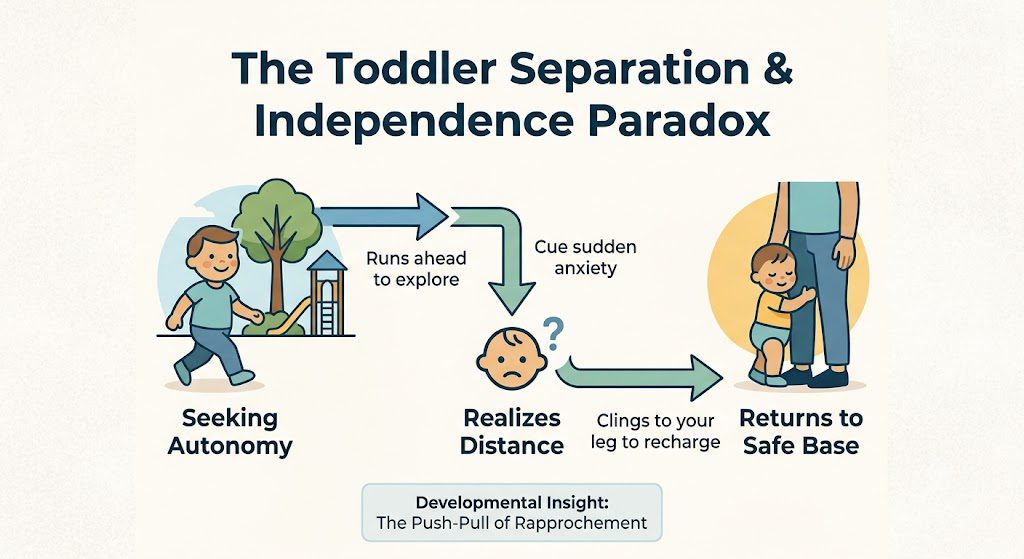
They depend on co-regulation, using a calm adult to help settle their emotions.
Give toddlers safe choices: “Do you want the blue shoes or red ones?” Small choices provide independence while keeping boundaries intact.
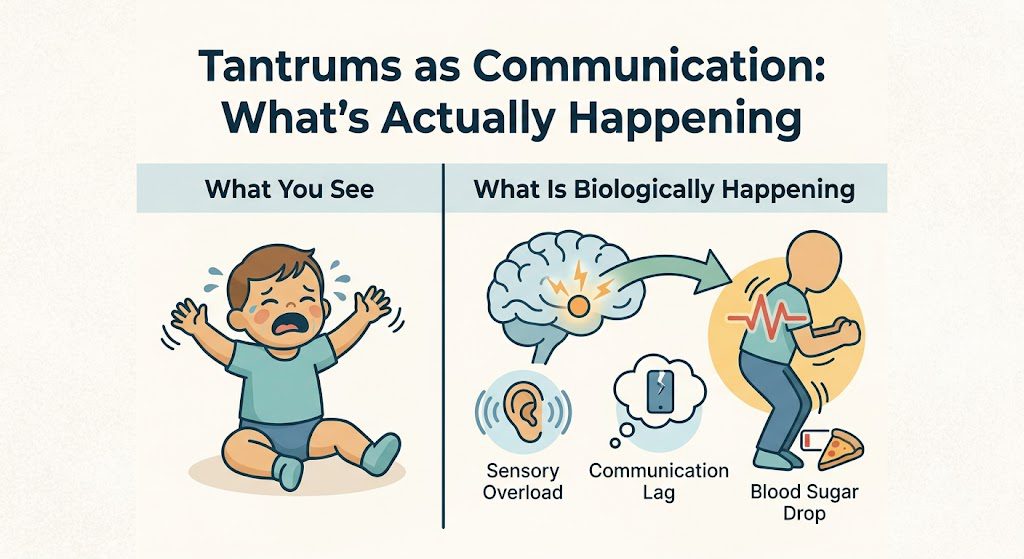
Tantrums Are Communication
Tantrums are usually signs of frustration or sensory overload, not manipulation. Toddlers often understand far more language than they can express, making communication difficult. During a meltdown, keep your words simple and calm. Name the feeling—“You’re upset because we have to leave the park”—while maintaining the boundary: “It’s okay to be mad, but it’s not okay to hit.”
Play Is Learning
What looks like messy play is often meaningful exploration. Toddlers learn through repetition: throwing objects teaches cause and effect, climbing builds physical confidence, and connecting toys develops problem-solving skills. Active play is especially important, as toddlers need plenty of movement throughout the day.
Eating and Sleep Changes
Slower growth can lead to picky eating. Parents should decide what, when, and where food is offered, while children decide whether and how much they eat.
Around 15–18 months, many toddlers transition from two naps to one, which can temporarily affect bedtime and wakeups.
The Bottom Line
You don’t need to prevent every meltdown or be a perfect parent. Your toddler needs a responsive, dependable adult who provides safety while allowing them to explore, experiment, and grow. Even on the hardest days, you are their safe harbor.
Any content, resident submissions, guest columns, advertisements, and advertorials are not necessarily endorsed by or represent the views of Best Version Media LLC (BVM) or any municipality, homeowners associations, businesses, or organizations that this publication serves. BVM is not responsible for the reliability, suitability, or timeliness of any content submitted, inclusive of materials generated or composed through artificial intelligence (AI). All content submitted is done so at the sole discretion of the submitting party.