Mobility is a measure of independence. The ability to reach work, businesses, recreation, family, healthcare and community activities directly affects quality of life. In the United States, that mobility has historically depended heavily on the automobile. E-bikes are beginning to expand the available choices.
The U.S. market is still developing. PeopleForBikes estimates that nearly one million new and used e-bikes changed hands in the United States in 2024. Among Americans who rode a bicycle in 2023, 19.4% had ridden an e-bike, compared with 7.8% two years earlier. E-bikes represented approximately 7% of U.S. bicycle unit sales in 2024, compared with 53% in Germany. The comparison suggests substantial room for continued U.S. adoption.
More important than sales is how e-bikes are being used. National Renewable Energy Laboratory research found that 34% of e-bike trips in its study replaced automobile trips. Research involving e-bike share in Sacramento found that 28% of weekday e-bike trips replaced private automobile or ride-hailing trips. E-bikes are therefore not simply another category of recreational bicycle; they can substitute for some automobile travel.
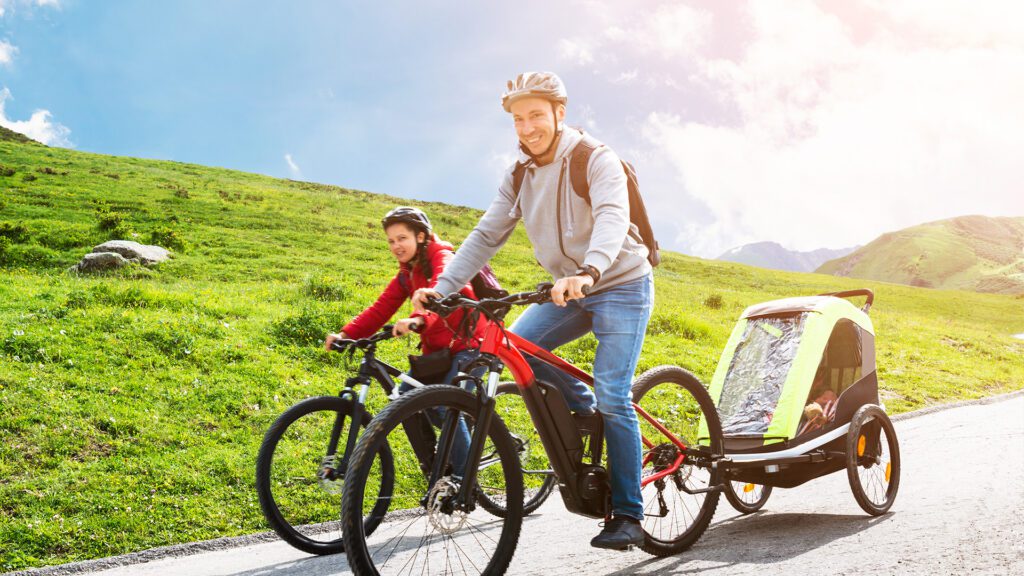
Electric assistance addresses several limitations of conventional cycling. It increases practical range, reduces the effect of hills and headwinds, and allows people with different levels of physical ability to travel together. Cargo e-bikes add utility for groceries, children and equipment. E-trikes extend the same concept to riders who need greater stability or who can no longer comfortably use a two-wheel bicycle.
That accessibility will become increasingly relevant as the U.S. population ages. The issue is larger than cycling. Maintaining independent mobility affects access to services, social participation and the ability to remain connected to a community.
Infrastructure will determine how much of this potential the United States captures. Connected trails, protected bicycle facilities, safe crossings, secure parking and connections to transit turn an e-bike from recreational equipment into a practical transportation option.
The next five years are likely to bring continued growth in e-bikes, e-trikes, cargo bikes and other forms of electric micromobility. The important measure will not be units sold. It will be the number of people who gain another practical way to move through their communities.
Mobility is freedom. Expanding mobility expands who can participate.
Any content, resident submissions, guest columns, advertisements, and advertorials are not necessarily endorsed by or represent the views of Best Version Media LLC (BVM) or any municipality, homeowners associations, businesses, or organizations that this publication serves. BVM is not responsible for the reliability, suitability, or timeliness of any content submitted, inclusive of materials generated or composed through artificial intelligence (AI). All content submitted is done so at the sole discretion of the submitting party.