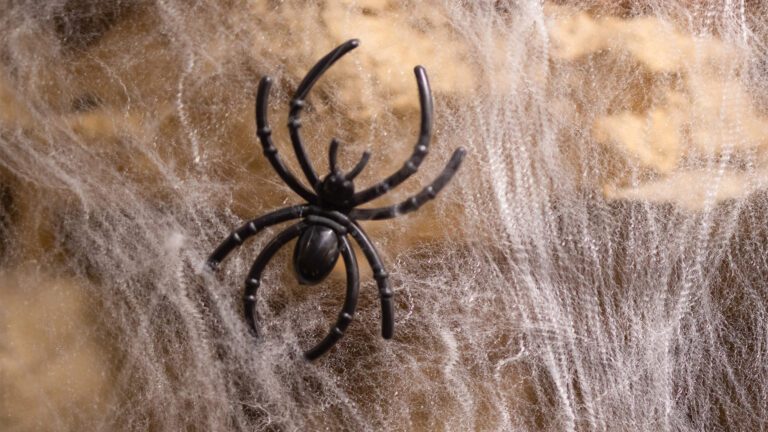
Every October, neighborhoods begin to look like Spider-Man has been practicing his web-slinging overnight. Silky strands stretch between trees, webs appear along rooflines, and spiders seem to show up everywhere at once.
Although Peter Parker may not be responsible, the real explanation is just as interesting.
Fall is often called “spider season” because many spiders become more noticeable as they mature and search for food, shelter, or a mate. Some young and small spiders even travel through the air using a fascinating behavior known as “ballooning.”
To take flight, a spider climbs to a high point, raises its abdomen, and releases extremely fine strands of silk. The silk catches the wind and lifts the spider into the air. Depending on the conditions, it may travel across a yard, through a neighborhood, or much farther. When it lands, the spider attaches its silk to trees, fences, rooflines, patios, and other parts of a home.
In other words, spiders really can swing through the air and attach webs to buildings, much like a tiny version of Spider-Man.
October also brings cooler evenings, which can push insects and spiders toward warmer, protected areas. Outdoor lights attract flying insects, and those insects become an easy food source for web-building spiders. This is why webs commonly appear around porch lights, windows, doorways, eaves, and patio furniture.
Most spiders found around homes are beneficial because they help control flies, mosquitoes, moths, and other insects. However, nobody wants to walk face-first into a web while leaving for work in the morning.
Simple Spider Prevention Tips
- Keep outdoor lights off when they are not needed, or switch to warm-colored or amber bulbs that are less attractive to flying insects.
- Remove webs regularly with a broom or long-handled web brush. Repeated removal can encourage spiders to build somewhere else.
- Trim trees, bushes, and climbing plants away from the roof, siding, and windows. These can act like bridges leading directly to the home.
- Seal cracks around doors, windows, pipes, vents, and the foundation. Replace damaged screens and install door sweeps where light is visible underneath exterior doors.
- Reduce clutter in garages, sheds, and storage areas. Cardboard boxes and undisturbed corners provide excellent hiding places.
- Shake out gloves, shoes, decorations, and outdoor items before bringing them inside, especially if they have been stored for a long time.
This October, take a moment to appreciate the impressive engineering behind those backyard webs. Spiders may not be saving the city from supervillains, but they are helping control insects, one carefully placed web at a time.
Any content, resident submissions, guest columns, advertisements, and advertorials are not necessarily endorsed by or represent the views of Best Version Media LLC (BVM) or any municipality, homeowners associations, businesses, or organizations that this publication serves. BVM is not responsible for the reliability, suitability, or timeliness of any content submitted, inclusive of materials generated or composed through artificial intelligence (AI). All content submitted is done so at the sole discretion of the submitting party.