The holidays bring family, feasting, and, every year without fail, a busier-than-usual stretch in our exam rooms. Many holiday emergencies are preventable, so we wanted to walk through the hazards we see most often, from the Thanksgiving table through the last of the holiday cookies.
Thanksgiving Table Troubles
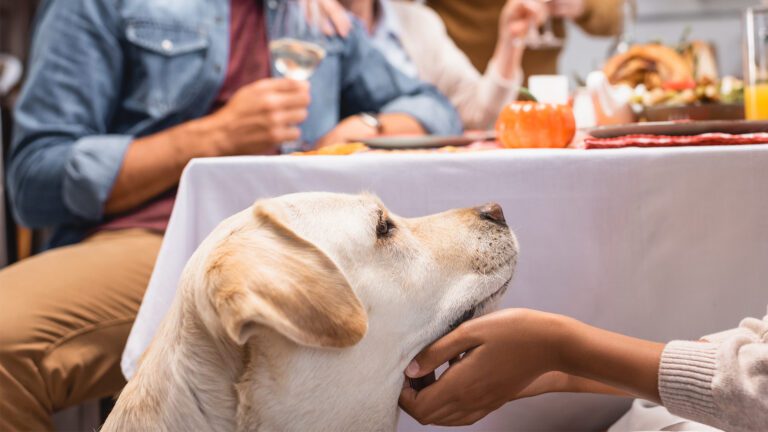
Onions, garlic, leeks, and chives, including those crispy fried onions on top of green bean casserole, are toxic to dogs and cats and can damage red blood cells, even in small, cooked amounts. Turkey bones splinter easily and can cause an obstruction or worse; turkey skin and gravy are rich enough to trigger pancreatitis. And if there are grapes, raisins, or unbaked bread dough on the counter, keep them well out of reach – raisins can cause kidney injury, and rising dough can expand dangerously in the stomach.
Chocolate, Candy, and Other Sweet Temptations
Chocolate toxicity is dose-dependent, and darker, more concentrated chocolate is the most dangerous. Our honest take: the bigger year-round risk is often hiding in “sugar-free” treats, gum, and baked goods sweetened with xylitol – it causes a rapid, severe drop in blood sugar and can lead to liver failure, even in tiny amounts. Check labels before sharing, and keep wrapped candy (foil included) up and away, as wrappers themselves can cause an obstruction.
Décor and Other Hazards
Tinsel and ribbon are especially tempting to cats and can cause a serious intestinal injury if swallowed. Mistletoe and holly typically cause mild stomach upset, but lilies, common in holiday arrangements, are severe for cats – even pollen or a nibbled petal can cause kidney failure. Candles and cords bring their own risk of burns or shock, and Christmas tree water can harbor bacteria that cause GI upset if lapped up. What’s not a big concern, contrary to popular belief? Poinsettias – the sap is only mildly irritating to the mouth and stomach.
A Few Holiday Do’s
A few easy do’s, too: keep your pet’s normal feeding schedule so table scraps are less tempting, set aside a small plate of plain turkey or sweet potato (no skin, seasoning, or bones) as a safe treat, and give anxious pets a quiet room away from the noise when guests arrive. A secured tree, sturdy ornaments, and a current ID tag or microchip go a long way toward an uneventful holiday.
Nothing ruins a holiday faster than an emergency vet visit, but most of these are avoidable with a little awareness. Keep the ASPCA Animal Poison Control line handy (888-426-4435), and if you’re ever unsure whether something your pet got into is a problem, call us – we’d rather hear from you than have you wait and see. Wishing you and your pets a safe, happy holiday season!
Any content, resident submissions, guest columns, advertisements, and advertorials are not necessarily endorsed by or represent the views of Best Version Media LLC (BVM) or any municipality, homeowners associations, businesses, or organizations that this publication serves. BVM is not responsible for the reliability, suitability, or timeliness of any content submitted, inclusive of materials generated or composed through artificial intelligence (AI). All content submitted is done so at the sole discretion of the submitting party.