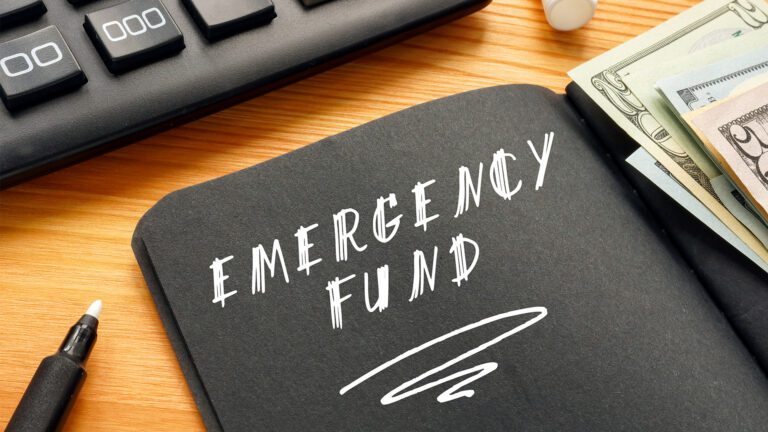
Ongoing geopolitical uncertainty has fueled a rise in already-pesky inflation, which reached 3.4% in August 2026, well above the Federal Reserve’s 2% target.1 While soaring inflation causes an increase in the cost of groceries, energy, and many other goods and services, it also means that investors have to pivot their emergency fund strategy accordingly.
Typically, investors are advised to earmark three-to-six months of living expenses into their emergency fund, although this amount is fluid depending on how many dependents you have or if you have a spouse with a significant source of income. An emergency fund helps provide a safety net when life inevitably throws a curveball – unexpected medical bills, home repairs, job loss, etc. – and can help prevent a person from going into significant debt or tapping into their savings or retirement accounts during trying times. However, elevated inflation means you’ll need more money in your emergency account to cover expenses if a “life event” would happen to occur.
For example, if your goal is to save six months of living expenses and it cost $25,000 for you to cover these expenses when you started your emergency savings a few years ago and it now costs $30,000, then you need to work on routing another $5,000 into your emergency fund to offset inflation. While this can sound intimating, it’s not impossible.
Below are some tips to help you build and enhance an emergency savings account:
- It’s okay to fund your emergency account over time – You don’t have to save an entire three to six months of living expenses in one fell swoop. If you set aside a certain percentage of every paycheck to roll into an emergency savings account, you’ll have it fully funded before you know it.
- Value liquidity over returns – If something happens where you need to access the money in your emergency account at a moment’s notice, it must be instantly available to you and not tied up in assets that take time, effort, or extra fees to turn into cash.
- Potentially grow your emergency funds considering risk – A high-yield savings or cash alternative account can help your money stay liquid and potentially grow faster than a traditional savings account that may have a low interest rate. In addition, placing your money in these types of accounts will allow your money the opportunity to grow with less risk than traditional investments.
- Only tap into the account if you have a true emergency – An unexpected medical bill, job loss, a huge home or auto repair expense – these are a few examples of life events that qualify as a legitimate reason to dip into your emergency funds. While life is best lived, traveling to the Bahamas with your high school buddies, buying a new sports car, or attending the next Super Bowl are examples of expenditures that should not be purchased with emergency funds.
- Replenish what you spend – In the event you have to use some emergency funds for an unplanned expense, start setting aside money to replenish what you had to spend so that your emergency account will again be fully funded as soon as possible.
In these volatile economic times, having a financial safety net beneath you can be a source of great comfort, and funding an emergency account that has the potential to keep up with inflation is a sound investment strategy.
Article provided by Robert Cleary, Senior Vice President/Investments, with Stifel, Nicolaus & Company, Incorporated, member SIPC and New York Stock Exchange, who can be contacted at Stifel’s 3 Bryant Park office at (212) 847-6517.
Source
1Iacurci, Greg, “Here’s the inflation breakdown for August 2026 — in one chart.”
Any content, resident submissions, guest columns, advertisements, and advertorials are not necessarily endorsed by or represent the views of Best Version Media LLC (BVM) or any municipality, homeowners associations, businesses, or organizations that this publication serves. BVM is not responsible for the reliability, suitability, or timeliness of any content submitted, inclusive of materials generated or composed through artificial intelligence (AI). All content submitted is done so at the sole discretion of the submitting party.