2026: A Year to Build
Did you know when we reach our 30s, we lose muscle mass each year as we age? Did you know our power output decreases even faster? Most people, especially this time of year, focus on how to LOSE weight. This year, let’s focus on how to BUILD, specifically your muscle mass!
Muscle is medicine, movement is medicine!
Regardless of age, gender, or any other classification; we should prioritize building and maintaining muscle mass because strength is the key to longevity and overall health. Muscle mass is essential for power, mobility, metabolism, and immunity. It’s the body’s armor against disease and a key indicator for longevity.
As we age, we naturally lose our muscle mass, strength and bone density. This in turn accelerates the decline of our cognitive function, level of physical activity, and overall energy.
The aging process, for both men and women subtly begins in your 30s! If you don’t exercise in your 30s,40s,50s and 60s then your remaining decades will be much worse. It’s dark and drastic, but it’s true. But there’s a way to help slow this down and offset the effects of aging, Strength train!
Strength training builds and preserves muscle mass at all ages, especially when you focus on
your body’s largest muscles. Regardless of training age, workouts should be designed around
exercises that utilize multiple joints and muscle groups.
What should I do for my workouts?
First, it must be said that you have to determine what your goal is with respect to fitness and your exercise regimen. Once you define your goal, you can then define your starting point (skill level) and a program that will help you get there. But let’s simplify things further.
The best way to get stronger is to train how the body moves in the real world. Strength training is about challenging the body’s ability to mobilize, stabilize, balance, and manipulate various loads of resistance utilizing the body’s fundamental movement patterns.
JARGON ALERT – What the heck are fundamental movement patterns?
I’m glad you asked! Workouts should be designed around exercises that utilize multiple joints and muscle groups.
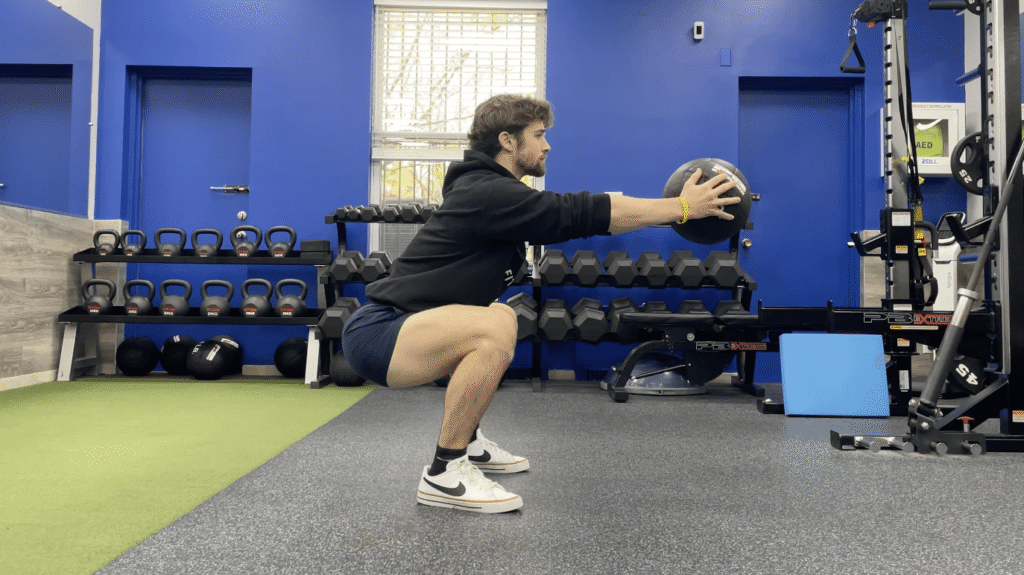
Squats, lunges, and hip hinges strengthen lower body muscles.
Pushing and pulling movements strengthen upper body muscles.
Planks, rotations, and movements to resist rotation strengthen core muscles.
But what if I have some previous injuries?
Strength training is still a critical component for injury rehabilitation. A properly designed and guided program will also help prevent any new injuries while exercising.
One more thing!
The more muscle on the frame, the higher the metabolism. You can actually eat MORE when you have more muscle mass! Fuel those muscles to live and operate as optimally as possible through proper nutrition emphasizing a high protein diet.
So let’s BUILD ourselves up in 2026! One rep at a time!