5 Critical Factors for Your Roof Replacement

Replacing a roof is likely one of the largest investments you will make in your home. It is not merely a home improvement project; it is a construction project that protects your family and your property’s structural integrity. As a contractor who has walked thousands of roofs, I often see homeowners focus entirely on the color of the shingle while overlooking the mechanics of the roof system itself.
To ensure you get a roof that lasts for decades rather than just years, here are the top five things you need to consider before signing a contract.
1. Material Suitability and Climate
While aesthetics are important, the primary function of your roof is to withstand your local climate. Asphalt shingles are the most common choice due to their affordability and versatility, but they aren’t always the best answer for every home.
- Metal Roofing: If you live in an area with heavy snowfall or high wildfire risk, a metal roof (standing seam) might be worth the higher upfront cost due to its ability to shed snow and resist ignition.
- Tile and Slate: In hotter, southern climates, clay tile or slate offers incredible thermal mass properties, keeping the home cooler, though they require a stronger structural frame to support the weight.
- Composite/Synthetic: These mimic the look of slate or shake but offer higher impact resistance, which is crucial in hail-prone regions.
Don’t just pick a color that matches your siding; pick a material that matches your weather.
2. Ventilation is Non-Negotiable
This is the number one failure point I see in premature roof aging. A roof is not just a waterproof shell; it is a breathing system. You must have a balanced intake (usually at the soffits/eaves) and exhaust (at the ridge).
Without proper ventilation, heat and moisture build up in your attic. In the summer, this “bakes” your shingles from the bottom up, causing them to blister and curl years before their warranty expires. In the winter, trapped heat melts snow on the roof, which refreezes at the gutters to form ice dams, causing leaks. When reviewing a quote, ask the contractor specifically how they plan to calculate and balance your attic ventilation.
3. The “Tear-Off” vs. The “Overlay”
To save money, some homeowners opt for an “overlay,” where new shingles are nailed over the old ones. As a professional, I strongly advise against this.
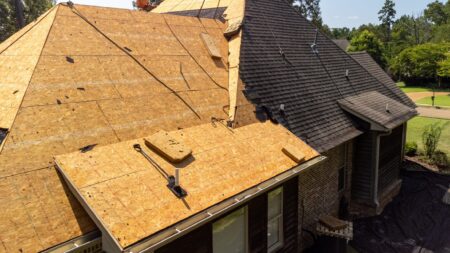
You should almost always insist on a complete “tear-off” down to the wood decking. Why?
1. Inspection: We cannot see rot, water damage, or delaminated plywood if we don’t remove the old material.
2. Weight: A second layer adds significant weight to your trusses.
3. Heat: Multiple layers trap more heat, shortening the life of the new shingles.
4. Warranty: Many shingle manufacturers will void or limit their warranty if the product is installed over an existing layer.
4. The Components Beneath the Surface
What goes under the shingles is arguably more important than the shingles themselves. A high-quality roof replacement should include a specific system of underlayments.
Shutterstock
- Ice and Water Shield: This self-sealing membrane should be installed in valleys (where roof planes meet) and along the eaves to prevent water intrusion from ice dams or wind-driven rain.
- Synthetic Underlayment: Old-school felt paper tears easily. Modern synthetic underlayment provides a durable, walkable, and water-resistant barrier that acts as the second line of defense if a shingle blows off.
- Drip Edge: This metal flashing guides water into the gutters and prevents it from wicking up under the shingles and rotting the fascia board.
5. The Warranty Structure: Material vs. Workmanship
Finally, understand what you are buying. There are two distinct warranties in roofing: the Manufacturer Warranty and the Workmanship Warranty.
The manufacturer covers defects in the product itself. However, 95% of roof failures are not due to bad shingles; they are due to bad installation. If a contractor nails the shingles too high or forgets the starter strip, the manufacturer will not pay for the repairs.
This is why vetting your contractor is key. You want a company that offers a solid workmanship warranty (ideally 5 to 10 years or more) and has the financial stability to be around to honor it.
Conclusion
Your roof is a complex system involving physics, chemistry, and construction engineering. By focusing on the right materials, proper ventilation, a complete tear-off, quality underlayment, and a strong workmanship warranty, you ensure that your investment actually protects your home. Don’t just buy a new roof; buy a roofing system installed by a professional.