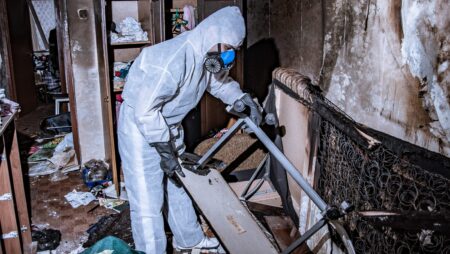
House Fire Cleanup: What’s Involved and Why It’s Hazardous

Cleaning up after a house fire is far more complex than simply sweeping up debris and repainting. The process is technical and demands careful attention due to toxic residues, structural instability, and hazardous airborne contaminants. Fire damage mitigation requires a blend of scientific know-how, safety measures, and thorough cleaning.
After firefighters leave, the home is left with numerous hazards. Smoke and soot infiltrate building materials, insulation, air ducts, and personal possessions. These residues aren’t just dirty, they’re chemically active and often toxic. Materials like plastics, household chemicals, and synthetics produce dangerous byproducts when burned, including carcinogens such as benzene, formaldehyde, and polycyclic aromatic hydrocarbons (PAHs).
Moreover, fine particulate soot can penetrate deep into lung tissue, increasing the risk of respiratory problems like asthma, as well as long-term cardiovascular issues. The environment may also be compromised by persistent odors, damp building components, and microbial growth resulting from firefighting water, making the home potentially hazardous even after the flames are gone.
Key Steps in Fire Damage Mitigation
Professional fire mitigation begins with securing the property. This means stabilizing damaged structures, covering roofs, and making sure the area is safe for workers. Once inside, experts assess which items and areas can be saved and which must be removed.
The cleanup involves specialized techniques, such as HEPA vacuuming and both dry and wet soot removal. Chemical sponges and cleaners are used to break down acidic residues before these can corrode surfaces or etch glass. HVAC systems often require replacement or sealing. Odor removal typically involves thermal fogging or using ozone and hydroxyl generators to neutralize smells at their source.
If water was used to fight the fire, drying out the structure is critical. Industrial dehumidifiers, air movers, and HEPA filtration help prevent mold growth and further damage.
Why You Need Professionals
The health risks and technical challenges of fire cleanup mean it’s not a job for amateurs. Professional crews come equipped with personal protective equipment (PPE), specialized training, and industrial-grade tools. Their expertise prevents contamination from spreading and ensures safety and thoroughness. Proper mitigation doesn’t just make the home look clean; it removes hazardous residues and odors, restoring a safe living environment.