Indoor Air Quality in Winter: Why It Matters and How to Improve It
As winter arrives in the Lehigh Valley, most of us close our windows, turn up the heat, and settle in for the colder months. But with that cozy indoor living comes something far less comforting: a dramatic drop in indoor air quality. In fact, winter is when homeowners experience the highest levels of indoor pollutants — from dry air and allergens to pet dander and airborne bacteria. Understanding how your home’s air changes during the winter can help you create a healthier, more comfortable living environment for your family.
The Problem with Dry Winter Air
Cold air naturally holds less moisture, and once it’s heated inside your home, it becomes even drier. This can lead to:
- Itchy skin
- Dry sinuses
- Chapped lips
- Irritated eyes
Dry air also makes your home feel cooler than it actually is, causing your heating system to work harder. That means discomfort and higher utility bills — a frustrating combination.
Allergens Don’t Disappear in Winter — They Move Indoors
Even though pollen levels drop during cold weather, indoor allergens begin to rise. With windows closed for months, pollutants become trapped inside. Common winter allergens include:
- Dust mites
- Mold spores
- Pet dander
- Fireplace smoke
- Lingering household chemicals
These particles circulate through your heating system and into every room of the house — triggering allergies, congestion, and respiratory issues — especially for children, pets, and older adults.
Pet Dander: The Invisible Winter Menace
Pet owners often notice their allergies worsen in winter. That’s because pets spend more time indoors, shedding more dander. Standard HVAC filters are rarely strong enough to catch these microscopic irritants, allowing them to recirculate again and again.
Upgrade Your Filtration: Why It Matters
For homes battling dust, pet dander, or allergies, PureAir and HEPA filtration provides a much higher level of protection than standard HVAC filters. True PureAir and HEPA filters can capture up to 99.97% of airborne particles, including:
- Dander
- Dust mites
- Mold spores
- Smoke
- Pollutants as small as 0.3 microns
Some HVAC systems can be retrofitted to work with these high-level filtration systems, while others use advanced media filters that dramatically outperform basic filters.
Finding the Right Humidity Balance
The ideal indoor humidity range during winter is between 30–40%. Staying within this zone helps:
- Reduce dry skin and sinus irritation
- Minimize dust movement
- Improve heating efficiency
When humidity drops below 30%, the air becomes uncomfortable and more likely to carry dust and allergens. On the other hand, levels above 40% can encourage mold growth — which is why proper control matters.
Whole-Home Humidifiers: Comfort You Can Feel
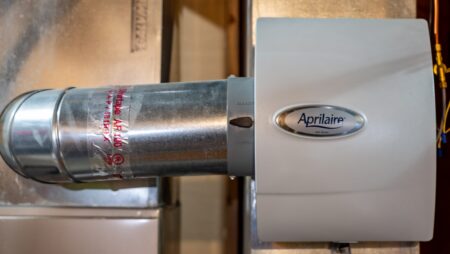
Unlike portable humidifiers, whole-home humidifiers integrate directly into your HVAC system, delivering consistent moisture throughout the entire house. They help maintain ideal humidity levels and offer benefits such as:
- Softer skin and easier breathing
- Healthier indoor plants
- Lower heating bills (because moist air feels warmer)
They’re one of the most effective winter upgrades a homeowner can make for comfort and health.
UV Purification: A Clean Sweep for Airborne Germs
With cold and flu season in full swing, UV air purification is becoming increasingly popular. Installed inside your ductwork, UV-C lights neutralize bacteria, viruses, and mold spores as air passes through your system. This silent, light technology provides an added layer of protection — especially helpful during the months when everyone is indoors more often.
Creating a Healthier Home This Winter
Indoor air quality isn’t just about comfort — it’s about protecting your health. Dry air, allergens, and poor filtration can take a real toll on your family’s well-being during the winter months. Fortunately, small upgrades such as whole-home humidifiers, PureAir and HEPA filtration, and UV light air purification can make a noticeable difference in both comfort and health.
As your local HVAC expert, Comfort Generation can help assess your home’s air quality and recommend the best solutions for your space, system, and budget. With the right tools in place, you can enjoy a warmer, healthier, and more comfortable winter season.