Keep the Heat On: 7 HVAC Tips for Winter Comfort
Your home’s heating and cooling system plays a major role in your comfort and energy use. As cold temperatures set in, your furnace is arguably the hardest-working appliance in your home. A well-maintained system runs more efficiently, lasts longer, and saves money on utility bills.
Here are seven simple but effective HVAC maintenance tips to help keep your heating system running at its best this winter.
1. Change Your Air Filters Regularly
One of the easiest and most impactful tasks is replacing your air filter regularly. A clogged filter restricts airflow, forcing your system to work harder and increasing energy consumption. For most homes, changing the filter every 1–3 months is ideal. A fresh filter is critical for maximizing furnace efficiency.
2. Keep Vents and Registers Clear
Blocked vents can make your HVAC system struggle to distribute heated air properly. Make sure furniture, rugs, or curtains aren’t covering any vents, and occasionally vacuum them to remove dust. Good airflow ensures heated air reaches every room efficiently.
3. Clear Snow and Ice from Exhaust Vents
If you have a high-efficiency furnace, it vents through a white PVC pipe on the side of your home. During heavy snow or freezing rain, these vents can become blocked by snow or ice, causing your furnace to shut down completely as a safety measure. Critically, keep these outdoor vents clear to prevent a sudden “no-heat” emergency.
4. Schedule Professional Furnace Maintenance
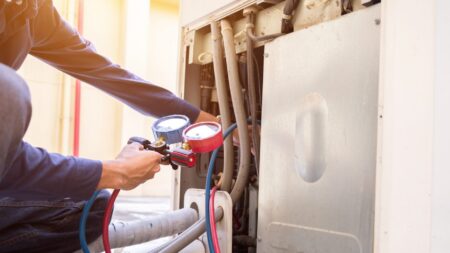
A winter professional tune-up ensures your system is reliable when you need it most. A qualified technician will clean internal components, check the heat exchanger for safety issues, and identify problems with the flame sensor or ignitor before they lead to costly mid-winter breakdowns.
5. Use a Programmable Thermostat Wisely
A programmable or smart thermostat helps reduce energy waste. Setting your temperature a few degrees lower (e.g., 70 F) while you are away or asleep can significantly reduce the runtime of your furnace, leading to noticeable savings on your heating bills.
6. Seal Air Leaks and Insulate
Drafts around windows, doors, and ductwork force your heating system to work overtime. Sealing gaps with weatherstripping or caulking and ensuring your home is properly insulated helps maintain a consistent indoor temperature with less effort from your HVAC system.
7. Consider an HVAC Upgrade
If your furnace or heat pump is over 10-15 years old, it may be time for an upgrade. Newer, high-efficiency models use significantly less energy and provide superior comfort. While an upfront investment, a new system can dramatically reduce energy bills and improve your home’s value and comfort. Regular, proactive maintenance is the key to a warm home and manageable energy bills. By focusing on these simple, winter-focused steps, you can ensure your furnace runs reliably throughout the coldest months. If you need a professional tune-up or advice on energy-saving upgrades, don’t hesitate to reach out to us at 484-797-9051.