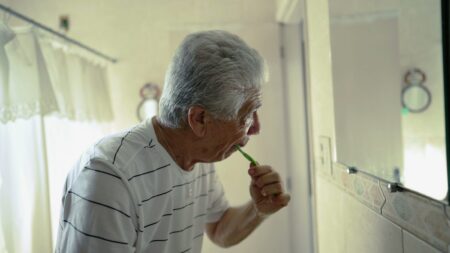
Oral Care for Aging Parents: Practical Tips for Daily Comfort
Unfortunately, as we age, so do our parents. At some point you may face the decision to place one or both in an assisted care residence. Hopefully, the parents can care for themselves, but sometimes due to dementia, stroke, or other debilitating issues, the parent is unable to care for themselves and depends on the staff for basic home care.
Back in the 70’s as a young adult, I worked summers at the Charles Johnson home, now known as Parkhouse Providence Pointe. One summer I worked as a nurse’s aide taking care of those who could not take care of themselves, bathing them, dressing them, and feeding them. One thing I wanted to do, but many times due to time constraints or patient resistance, I could not do proper oral care. This was a time when nursing homes were not as understaffed as they are now, and I was attuned to mouth care given my desire to become a dentist.
Unfortunately, due to understaffing, often oral care is overlooked or difficult to do on a daily basis. I have been the dentist at Parkhouse for 40 years and have seen so many residents with many conditions: HIV, Multiple Sclerosis, Parkinsons, Huntington’s Chorea, Dementia, Alzheimer’s…etc. My advice to many of the children/POA of the residents who are concerned with the oral health of their loved ones is try to do the oral care themselves when they come to visit.
When cleaning dentures and partials, I recommend soap, water, and a stiff brush. Also, the green scouring pads (non-metal) are very effective for cleaning buildup on the dentures that no matter how hard you brush, never seems to come off. Oral care is straightforward: if there are teeth, use a toothbrush. Tooth paste is not necessary, as it is more important to remove the soft food debris from where the gum and tooth meet. The brush does this without toothpaste. Usually, the gums will bleed, which is okay. It means you’re brushing inflamed gums, and regular brushing will help alleviate the bleeding. If you can do this by a sink, it is easier to rinse; if not, use two cups, one with water and one to spit into. Be careful of rinsing if swallowing is an issue.
Sometimes it is more effective to wrap gauze around your finger and dip it into mouthwash if using a brush proves difficult or if there is resistance. This is also a highly effective way to clean and moisten a mouth with no teeth, or if the person is in a comatose-like state or near the end of their life. I remember when I went to a resident’s room to do a checkup, and Mr. F was nearing the end. I placed a gauze on my finger and dipped it into Listermint and swabbed out his mouth thinking the moisture and mint would feel good to him. When I finished, he feebly whispered “thank you.” Do not underestimate how good and refreshing it feels to have one’s mouth cleaned and moistened. Again, hopefully your parents and loved ones live a long, productive life and don’t need specialized care. Sadly, that is not always the case. I hope this helps you get comfortable with administering oral care to your loved one. It is not as hard as it seems and it definitely will feel good to the person whom you are caring for.
For a consultation on the unique oral care needs of your loved one, please call me directly at 484-938-1754.