Plantar Fasciitis: Why It Persists — and the Proven Protocol Most People Miss
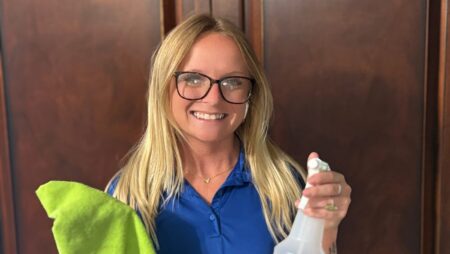
Vicky (62 F) had just finished a workout with jump rope and box jumps. In spite of feeling exhausted, she had a wide grin on her face. When her coach asked why, she said “I can’t believe my feet aren’t hurt after that!” For years, Vicky had been dealing with Plantar Fasciitis and thought she’d never do anything that involved jumping or running again. After multiple iterations of Physical Therapy and orthotics to no avail, Vicky found a new protocol that allowed her to tackle workouts with minimal style shoes (with NO orthotics) and without zero issues.
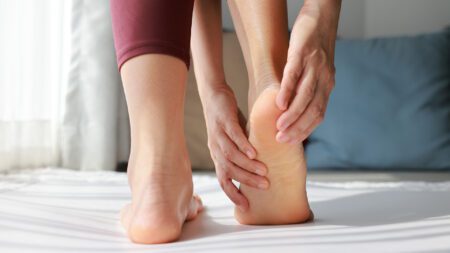
The reasoning was simple: plantar fasciitis is not just an inflammation problem. It’s a soft-tissue and mechanics problem involving multiple muscles of the lower leg and intrinsic foot.
Why Orthotics Aren’t a Cure
Orthotics reduce pressure on the plantar fascia, which can feel good initially. But support does not equal correction. Over time, relying on inserts weakens the intrinsic foot muscles that naturally support the arch. When those muscles underperform, the plantar fascia becomes overloaded and irritated—continuing the cycle of pain.
Orthotics can be helpful as a short-term tool, but they alone do not resolve the underlying dysfunction.
Stretching Alone Isn’t Enough
Most people are told to stretch their calves or lengthen the bottom of the foot. While stretching can help reduce stiffness, it does nothing to change the quality of the tissue. In many cases, the calf muscles and small foot muscles are full of adhesions and trigger points.
Trying to stretch unhealthy, bound-up tissue is like pulling on a knotted rope. You may feel temporary relief, but the knot remains. And in some cases, you could be stressing ligaments or tendons and actually exacerbate the issues….
The Missing Ingredient: Soft Tissue Work
Soft tissue work—manual massage, foam rolling, myofascial release, lacrosse-ball pressure, scraping, or trigger-point release—is the step most people skip or are unaware of. This is the intervention that actually changes tissue density, improves blood flow, releases adhesions, and restores glide between layers of fascia and muscle.
When tissue quality improves, the plantar fascia no longer bears the full load of every step, allowing pain to decrease more quickly and reliably.
The Long-Term Fix: Combine Soft Tissue, Stretching, and Strength
The most effective and research-supported approach is a three-part system:
1. Soft Tissue Release
Daily or near-daily work on:
- Calves (gastrocnemius and soleus)
- Plantar fascia
- Tibialis posterior
- Peroneals
2. Targeted Stretching
Once tissue is mobile, stretching becomes exponentially more effective. Key areas include the calf complex, arch, and ankle mobility.
3. Strengthening
This is the step that prevents recurrence. Strengthening the intrinsic foot muscles and the calf complex restores natural shock absorption. Key exercises include short-foot activation, towel scrunching, controlled calf raises, and barefoot balance exercises.
How Primedy Health Addresses the Root Cause
At Primedy Health, we don’t rely on quick fixes. Our coaches teach members how to assess their own tissue quality, release problem areas safely, develop proper mobility, and strengthen the foot-to-calf chain for lasting results. Through guided soft-tissue work, customized mobility sequences, and progressive strength training, our members not only relieve plantar fasciitis—they prevent it from returning.
We don’t treat symptoms. We rebuild function. And that’s why our members stay pain-free for the long term.