PNF Stretching Helps Manage Neuropathy
For many people living along the coast, staying active is part of the lifestyle—morning walks on the beach, pickleball matches with friends, golf, surfing, boating weekends, or simply keeping up with kids and grandkids. But for thousands of adults, especially those managing neuropathy, staying steady on their feet is becoming progressively more challenging.
Neuropathy can cause numbness, tingling, weakness, and loss of sensation in the feet and legs—symptoms that directly affect balance, coordination, and overall confidence with movement. While there’s no quick fix for neuropathy, one powerful and often overlooked tool is making a dramatic difference in how people move and feel: PNF stretching, offered daily at StretchLab studios across the country.
What makes PNF stretching so impactful? Let’s break it down.
What Is PNF Stretching?
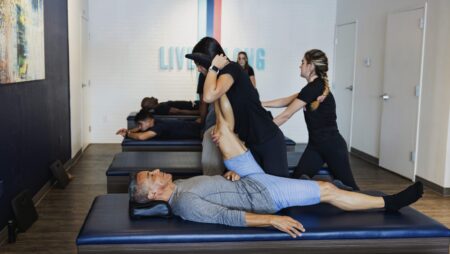
PNF—short for Proprioceptive Neuromuscular Facilitation—is a type of assisted stretching performed by a trained professional. It combines gentle resistance with deep, guided stretching to help retrain muscles, improve mobility, and enhance communication between your nerves and muscles.
At StretchLab, flexologists lead clients through customized PNF sessions that help:
- Increase range of motion and flexibility
- Improve neuromuscular coordination
- Activate weak muscles
- Release tension in tight or overworked areas
Think of it as a conversation between your brain and your body—one that helps restore control, stability, and movement quality.
Why PNF Stretching Helps People With Neuropathy
When neuropathy affects the feet, legs, and lower body, the nervous system has a harder time sending clear signals that tell your muscles how to work together. This leads to balance issues, slower reflexes, and difficulty navigating uneven surfaces.
Here’s how PNF stretching can support people experiencing these symptoms:
1. Enhancing Proprioception (Your Sense of Position and Balance)
Neuropathy often dulls proprioception—the body’s ability to sense where it is in space. PNF stretching stimulates the muscles, joints, and surrounding tissues, helping “wake up” these signals. Many clients report feeling more grounded and stable after just a few sessions.
2. Strengthening Muscles Through Isometric Contractions
PNF incorporates gentle muscle contractions against resistance before moving deeper into the stretch. This activates dormant muscles, improves motor control, and builds stability—crucial for people who feel unsteady when standing or walking.
3. Improving Blood Flow
The rhythmic patterns of contracting and releasing muscles help increase circulation. Better blood flow means improved nutrient and oxygen delivery to the tissues affected by neuropathy, often reducing discomfort and improving function.
4. Restoring Mobility in the Ankles, Hips, and Lower Back
When neuropathy alters walking patterns, the body compensates, creating tightness in other areas.PNF’s targeted approach helps rebalance the kinetic chain so walking feels smoother and less effortful while also improving posture.
Why Balance Declines and How Stretching Helps
Balance isn’t just about strong legs. It’s the result of communication among your nervous system, proprioceptors, core muscles, and lower-body strength. When one link weakens—like with neuropathy—your whole sense of stability is affected.
Stretching improves balance by:
- Releasing tight muscles that pull your body out of alignment
- Activating stabilizing muscles around the hips, pelvis, and ankles
- Improving joint mobility so your body can react faster
- Helping retrain movement patterns in a safe, controlled environment
At StretchLab, clients often begin to stand taller, walk more confidently, and move with less hesitation once their mobility begins to improve.
Staying Active: The Ultimate Medicine
One of the biggest risks for people with neuropathy or balance problems is reduced activity. When movement becomes uncomfortable or unsteady, people naturally begin doing less—and that decline accelerates loss of strength, mobility, and independence. Stretching helps reverse that cycle.
Mobility = More Movement = Better Health
Regular stretching keeps joints lubricated, muscles long and resilient, and the body in better alignment. When your body moves well, you naturally stay more active—walking more, playing more, and living more.
Helping Prevent Injuries
Tight, imbalanced muscles are more prone to injury. When mobility improves, the risk of falls, strains, and overuse injuries declines dramatically—especially for active adults who love golf, tennis, pickleball, cycling, or boating.
Supporting Everyday Activities
Clients often report improvements in daily movements such as:
- Getting out of bed
- Climbing stairs
- Getting in and out of cars
- Standing for long periods
- Walking longer distances
Stretching creates freedom of movement that makes life feel easier.
Stop by StretchLab in The Forum shopping plaza at 111-E Military Cutoff Road or email wilmington@stretchlab.com to schedule an appointment and learn more about PNF stretching.