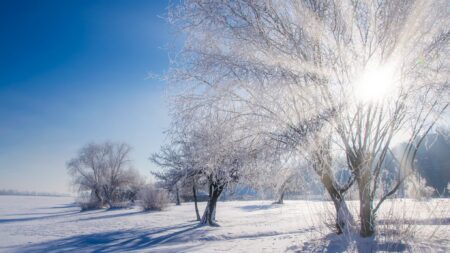
Protecting Trees from Winter Damage

Preparing and protecting your trees going into and through winter is vital to the longevity and success of newly planted trees and certain types of evergreens. The change in temperature can cause desiccation of water from the foliage in shrubs like rhododendrons, boxwoods, azaleas, mountain laurels, and even young pines and spruces.
Roots of any young tree trying to establish can split due to frost damage, which is often observed in the foliage in the growing season. This is often the brown leaves or distorted bud development we see moving into spring.
Frost cracks occur in thin bark trees like Japanese maples, dogwoods, or cherries. Chewing and scraping of bark on the trunk of young, newly planted trees is caused by pests, including rodents, deer, or rabbits. Flower buds and sapwood of trees provide water and nutrients that become scarce during the dormant season.
Other things to consider include heavy salt from driveways or sidewalks that can cause imbalances in the soil, which can lead to desiccation as we enter spring. Although I strongly feel that winter is the best time to prune trees, there is a balance between too much pruning or pruning at the wrong time of year leading to a decline in flower abundance.
Since we cannot control the weather or the population of animals that attack our trees, there are ways to help give them protection to combat these threats through the winter season. Here are some tips for winter protection.
As an arborist, I tell my clients to water deeply one last time before the ground freezes. This can be as late as the first week of December. To further protect the root zone, make sure to have an adequate layer of fresh mulch or woodchips down. This is going to help prevent root splitting our sensitive root fibers from desiccating themselves.
Winter desiccation in the foliage can be combated via application of anti-desiccant treatments, which is a foliar application of a specialized product to protect the leaves of evergreens. It is only necessary for broadleaf or needle trees under 10 to 15 feet. One of my favorite methods is to physically wrap each tree in burlap.
You can wrap entire trees in burlap to give them an extra layer of protection from cold, dry, winds. You can also use burlap to help prevent frost cracks on trees with thin bark layers by wrapping trunks. Animals can be repelled from feeding on the trunk with burlap or other physical barriers. Animal repellents can be used on flower buds, but beware, the stench is potent and requires multiple treatments in a season.
If you do not know which method for which trees is best for your landscape, reach out to a certified arborist and we can help you create a plan.