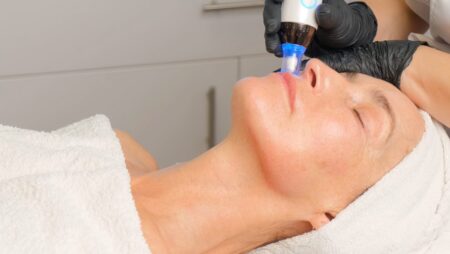
RF Microneedling: The Science, the Benefits, and Why 4 MHz Technology Is Leading the Future of Skin Rejuvenation
Skin rejuvenation has entered a new era—one focused not only on improving the appearance of the skin’s surface but also on rebuilding its internal structure. RF Microneedling, one of the fastest-growing technologies in aesthetics, delivers precisely that. By combining controlled microneedling with targeted radiofrequency (RF) energy, this treatment enhances collagen production, tightens laxity, and transforms the overall quality of the skin with little downtime.
What Is RF Microneedling?
RF Microneedling is a minimally invasive treatment that blends two proven modalities:
- Microneedling – mechanical micro-injuries stimulate the body’s natural repair mechanisms
- Radiofrequency energy – controlled heat delivered into the dermis encourages collagen contraction and long-term remodeling
The tiny needles penetrate at customizable depths, allowing providers to target concerns from superficial texture to deeper structural issues. When RF energy is delivered through these needles, it heats the dermis to an optimal therapeutic temperature—typically between 60–70°C—without overheating the surface layer of the skin. This results in significant collagen and elastin regeneration, improving firmness, tone, and texture.
Traditional microneedling stimulates collagen near the surface, but RF microneedling works much deeper, creating a three-dimensional tightening effect that continues improving for months.
What Does RF Microneedling Help With?
RF Microneedling offers broad application for clients seeking natural, progressive improvement. It is clinically shown to improve:
Fine lines and wrinkles by tightening collagen fibers and encouraging new growth Skin laxity, especially around the lower face, jawline, eyes, and neck
Acne scars and pitted texture, making it a top choice for scar remodeling Stretch marks, due to deeper dermal stimulation
Sun damage and pigment irregularities
Enlarged pores and overall rough texture
Crepey skin on the neck and décolletage
Because the treatment strengthens the skin’s internal framework, improvements are both immediate (tightening) and long-term (collagen regeneration).
Why Frequency Matters: Understanding 4 MHz vs. 1 MHz Machines
One of the most overlooked—but most important—features of any RF microneedling device is its operating frequency. Many older or budget systems run at 1 MHz, while advanced devices like the Rohrer Pixel-8 operate at 4 MHz.
But what does that mean for results?
- Faster, More Controlled Heating
RF frequency determines how quickly energy oscillates.
1 MHz = 1 million cycles per second
4 MHz = 4 million cycles per second
A higher frequency allows the device to deliver heat more efficiently, evenly, and predictably. This improved energy control leads to:
Smoother thermal distribution
Less epidermal trauma
More reliable collagen coagulation
Higher frequency = better results with less sensation and downtime.
- Increased Comfort and Reduced Surface Heat
1 MHz machines often require longer pulses to achieve therapeutic dermal heating, which increases the risk of:
Hot spots
Surface overheating
Post-treatment redness
A 4 MHz system reaches the target temperature faster but with less surface energy. Clients typically describe Pixel-8 treatments as significantly more comfortable than experiences with earlier RF devices.
- Enhanced Precision for Delicate Areas
Higher frequency improves the accuracy of the thermal profile. This means:
Less risk near the under-eye area
Safer treatment of thinner skin
Better consistency for acne-scarred tissue
Precision is especially important for aesthetic work because the dermis varies in thickness from one area to another.
- Superior Collagen Remodeling
Heat is what stimulates fibroblasts to produce new collagen and elastin. A 4 MHz system reaches the desired depth and temperature more consistently, optimizing:
Collagen contraction (immediate)
Neocollagenesis (long-term)
Overall tightening and smoothing
Why We Use the 4 MHz Rohrer Pixel-8 at Weigh To Be
After evaluating multiple RF systems, Weigh To Be Medical Weight Loss & Aesthetics chose the Rohrer Pixel-8 due to its:
Higher 4 MHz frequency for superior heating control
Minimal downtime
Customizable needle depths for face and body
Safety on all skin types (Fitzpatrick I–VI)
Consistent results for acne scarring, wrinkles, and skin laxity
Our clients love that the treatment is effective, comfortable, and provides long-lasting rejuvenation without surgery or extensive recovery.
A Modern, Science-Driven Solution for Skin Health
RF microneedling represents the perfect marriage between advanced engineering and natural biological healing. As collagen loss becomes a universal concern—accelerated by aging, sun exposure, and lifestyle—treatments like RF microneedling provide a way to rebuild the skin from the inside out.
Devices operating at higher frequencies, like Rohrer’s Pixel-8, are shaping the future of regenerative aesthetics by offering more precision, more safety, and more dramatic results.
References
Clinical & Dermatology Literature
Alam, M., et al. “Safety and Efficacy of Fractional Radiofrequency Microneedling for Skin Rejuvenation.” Journal of Dermatologic Surgery.
Lee, H. S., et al. “Fractional Radiofrequency Microneedling for the Treatment of Acne Scars.” Annals of Dermatology.
Cho, S. I., et al. “The Efficacy of Radiofrequency in Skin Tightening and Rejuvenation.” Dermatologic Surgery.
Na, J. I., et al. “High-Frequency Radiofrequency Devices for Dermal Remodeling.” Journal of Cosmetic and Laser Therapy.
Engineering & RF Physics Sources
- W. Powell. Principles of Radiofrequency Energy in Dermatology.
Kim, H. et al. “Thermal Effects of Different RF Frequencies on Soft Tissue.” Lasers in Medical Science.
Device-Specific Understanding (Rohrer Aesthetics & Industry Data)
Rohrer Aesthetics Pixel-8 RF Technical Specifications
Comparative engineering analyses of 1 MHz vs 4 MHz RF delivery in microneedling systems
White papers from aesthetic device manufacturers regarding frequency efficiency and dermal heating patterns