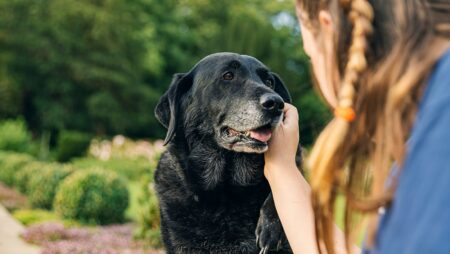
As a realtor and someone involved in dog rescue, I work with many families who share life with aging pets. Having had a senior dog with dementia myself, I know how confusing and emotional these changes can be, and I hope this information brings some comfort and clarity.
As dogs live longer thanks to better veterinary care and nutrition, age-related issues like dementia are becoming more common. The challenge is that symptoms develop gradually, making them easy to miss until they’re more advanced. Early recognition can help you make simple adjustments that protect your dog’s quality of life.
Early Signs & Tracking
Cognitive decline often shows up as subtle disorientation, anxiety, nighttime wandering, or changes in interaction. If you’re unsure what you’re seeing, many veterinarians use the DISHAA guide (Disorientation, Interaction, Sleep, House-soiling, Activity, and Anxiety) to track symptoms over time.
Safety & Comfort at Home
Small changes make a big difference:
-
Block off stairs and tight spaces behind furniture
-
Give your dog quiet spaces to rest if they choose
-
Approach gently if hearing is fading—speak softly and tap the floor so they feel vibration
Nighttime pacing is common. Nightlights and a short walk before bedtime may help. Melatonin benefits some dogs, but always check with your veterinarian first.
Helping With House-Soiling
First, rule out medical causes like bladder infections. If dementia is the reason, doggy diapers, more frequent walks, or easy-access potty spots may help. Keep your dog clean and dry to prevent irritation.
Routines & Gentle Enrichment
Older dogs thrive on predictability—especially around meals and walks. Keep furniture and bowls in the same places, and try to walk at consistent times. That said, enrichment is still important:
-
sniffing walks
-
simple food puzzles
-
gentle trick training
Smell often remains strong even if sight and hearing fade, so scent games are wonderful for senior dogs.
If you’ve been thinking about adding another dog, know that some seniors enjoy the energy while others find it stressful. When possible, try a short foster arrangement before making a decision.
Vet Care, Grooming & Nutrition
Plan veterinary checkups every six months, and do monthly home check-ins. Keep ID tags and microchip information up-to-date, since wandering or confusion can occur.
Grooming adjustments—like trimming rear fur, keeping nails short, or using softer brushes—can help seniors stay comfortable.
Ask your veterinarian about senior diets, omega-3 fatty acids, and medications like selegiline (Anipryl), which may help with nighttime confusion and cognition. Some dogs benefit from therapies like acupuncture, laser treatment, or underwater treadmill sessions.
A Note on Vestibular Syndrome
Vestibular syndrome can look like dementia but appears suddenly and affects balance. Most dogs recover gradually, though you may need support from your veterinarian during the early days.
Every extra bit of understanding helps us give our aging companions the dignity, comfort, and love they deserve.