The Silent Danger: Busting the 3 Biggest Drowning Myths That Endanger Kids Year-Round
As we settle into the new year and the quiet rhythm of the winter season, water safety may be the last thing on your mind. However, for families with young children, water safety is a 24/7, 365-day commitment.
Drowning remains the leading cause of death for children ages one to four. The biggest danger we face as parents is not carelessness but misunderstanding how drowning occurs. By busting three common and potentially fatal myths, we can ensure we’re protecting our children year-round.
Myth 1: Drowning Is Loud and Dramatic
The most dangerous myth is perpetuated by movies and television: the idea that a person drowning will splash, yell, and wave their arms for attention.
The Reality: Drowning is almost always silent, quick, and inconspicuous.
A child who is struggling cannot call for help because their body is focused entirely on breathing. Their airway is either submerged or struggling to stay above the surface, making it difficult for them to call for help. They are often floating vertically in the water, head tilted back, with minimal movement. It can happen in seconds, often while an adult is standing only a few feet away, distracted by a phone call or a conversation. This silence underscores why constant, dedicated supervision is critical, but also why it’s not the only defense we can rely on.
Myth 2: Drowning Only Happens in Pools or Deep Water
We naturally worry about the swimming pool, but the statistics show that fatal drownings also occur in households, especially for infants and toddlers.
The Reality: Drowning is defined by the submersion of the airway, not the depth of the water.
A child’s body proportion is top-heavy, meaning their head is often the heaviest part of their body. If they slip or lean into a few inches of water in a bathtub, bucket, a pet bowl, or even an unsecured toilet bowl, they can be unable to right themselves and may panic. Use safety latches for toilets, non-slip mats or decals in tubs, and practice the same dedicated, undistracted supervision with a bathtub as a pool.
Myth 3: Parent Vigilance is the Only Safety Measure I Need
This belief is emotionally comforting but strategically flawed. It places 100% of the responsibility on the adult, ignoring the reality of human fallibility and external distractions.
The Reality: Drowning prevention requires layers of protection.
As the experts at Stop Drowning Now emphasize, water safety is most effective as a layered system. Physical barriers can help prevent dangerous or fatal situations — locked doors, secured fences, and alarms can alert pool owners or parents when a gate or door has been opened.
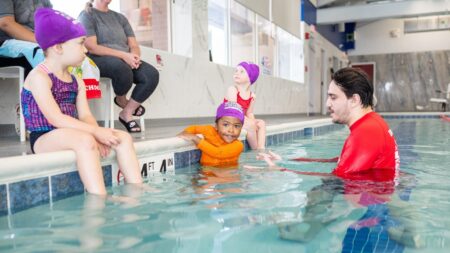
Swim lessons and water safety knowledge are a critical piece of the layered protection system. Teaching a child to always ask an adult before playing in or around water and teaching them fundamental skills in swim lessons can keep them out of dangerous situations and help them not to panic if they do fall into the water. Skills like learning to roll onto their back to float can buy a struggling child precious minutes—the only layer of protection that travels with them. Most swim programs welcome students as young as 3 to 6 months old.
Make Water Safety Your First Resolution of the Year
The winter months are the perfect time to get ahead of the danger. By starting lessons now, you reinforce survival skills without the distraction and chaos of summer pool parties.
This year, resolve to bust these dangerous myths and make a proactive investment in safety. Life-saving swim lessons are the most powerful layer of protection you can provide your child and your family.
To learn more about British Swim School visit: britishswimschool.com/montgomery-county-pa or call 610-871-5550.