The Unseen Strength: A Guide to Drawer Joints in Your Furniture
Part Two: Dado and Staple/Nailed Joint
As you explore the world of fine furniture, understanding the different types of drawer joints will empower you to make more informed choices, ensuring your investment stands the test of time. Last month, we covered Dovetail and Box joints. Now let’s explore the Dado and Staple/Nailed Joint.
The Workhorses of Durability: Exploring Key Drawer Joints
Furniture makers employ various jointing techniques, each with its own strengths and characteristics.
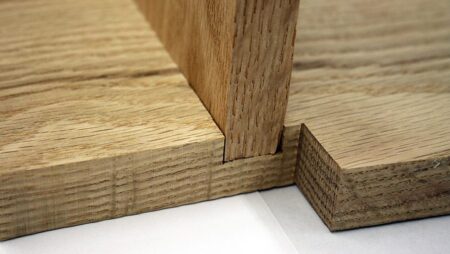
The Dado Joint: A Grooved Connection
The dado joint is a different approach to joining, often used in drawer construction, particularly for securing drawer bottoms or internal dividers. A dado is essentially a square-sided channel or groove cut across the grain of a piece of wood, into which another piece of wood fits.
How it’s made: A dado is cut into the drawer side, and the drawer bottom (or another drawer component) slides into this groove. When glued and fastened, it creates a very stable connection.
Benefits:
- Strong Support for Bottoms: Provides excellent support for drawer bottoms, preventing them from sagging or detaching overtime, even with heavy contents.
- Easy Assembly: Once the dadoes are cut, assembly is relatively straightforward.
- Hidden Strength: Often, the dado is concealed within the drawer, offering a strong, unseen connection.
Drawbacks:
- Not for Primary Drawer Construction: While excellent for drawer bottoms, dado joints are generally not used for joining the drawer sides to the front/back as they lack the same resistance to pulling forces as dovetails or box joints.
- Requires Precision: The dado must be precisely the width of the material it’s holding for a tight fit.
You’ll find dado joints commonly used for holding the drawer bottom within the drawer box, a key indicator of a well-constructed drawer that won’t give out under load.
The Stapled or Nailed Joint: The Economy Option (and What to Watch For)
At the other end of the spectrum in terms of durability and craftsmanship are drawers that rely solely on staples or nails (sometimes combined with glue).
How it’s made: These joints simply involve fastening the drawer components together with staples or nails, often using pneumatic tools in high-volume production.
Benefits:
- Fast and Inexpensive: This is the quickest and cheapest method of drawer construction, ideal for mass production.
Drawbacks:
- Weakest Link: Without a mechanical interlock, these joints are the weakest and most prone to failure.
- Prone to Separation: Over time, staples or nails can work loose, especially with repeated pulling and pushing, leading to wobbly or detached drawer fronts.
- Limited Lifespan: Furniture with only stapled or nailed drawers is unlikely to withstand heavy use for long.
While perfectly acceptable for very light-duty or temporary furniture, a drawer constructed primarily with staples or nails is a red flag if you’re looking for lasting quality.
Making Your Informed Decision
When evaluating furniture, don’t hesitate to open a drawer and take a peek at the joints. A quick inspection can tell you volumes about the furniture’s underlying quality.
Dovetails are the hallmark of high-end, durable furniture. If you see them, you’re looking at a piece built to last for generations.
Box joints offer a very good balance of strength and affordability, making them a solid choice for quality everyday furniture.
Dado joints for drawer bottoms indicate thoughtful construction and a drawer that can handle its contents.
Stapled or nailed joints should signal caution, particularly if the furniture is intended for frequent use or to bear significant weight.
By understanding these essential drawer joints, you’re not just buying a piece of furniture; you’re investing in its unseen strength, its longevity, and the craftsmanship that will serve you well for years to come. Happy hunting for your perfect piece!