What’s All the Fuss About at Greeley Orthodontics?
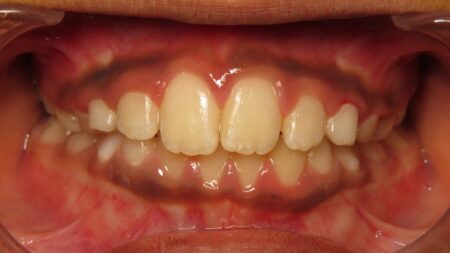
For those of you who routinely view my information reels on our Greeley Orthodontics Facebook page, you probably are familiar with some of the issues regarding young patients’ habits and their effect on developing dentitions and jaws. That is not to say that adults don’t have destructive oral habits but that is an issue for another publication! Typically, we discuss two types of children’s oral habits: acquired and stressful.[1]
The acquired habits include thumb/finger sucking, biting on pens, fingernails and other deliberate movements. Stress and emotional issues can also result in oral habits.
The stress/emotional habits are a lot sneakier. These include tooth grinding, tongue thrusting, lip chewing, etc. and often are unknown to the parents until their children are evaluated by their dentist, orthodontist or speech therapist.
A good evaluation can help determine if the child’s oral muscles are functioning in balance or not. Obviously, a thorough oral evaluation of the patient’s current jaw shape and tooth alignment usually line up to reflect any habit that is present.
Questions directed at the child patient as well as at the parent can be revealing. Direct questions are not always answered the same by parents and child patients. Asking about habits needs to be non-judgmental and low key to encourage reflection and truth.
Truth is elusive without good intel. It can mean missing chronic mouth breathing, poor oxygen levels, and low level of performance in school due to poor deep sleep time.
It is also important to recognize inherited anatomic patterns that forecast eventual growth expression. For example, the family tendency to have long tapering faces may well be a detriment to breathing especially if the patient already has allergies, or chronic nasal rhinitis (stuffy nose). These are the patients who benefit from upper expansion at an early age. It can open a whole new appreciation of where to place the tongue during speaking and swallowing. A team of dental professionals, ENT docs and speech therapists, can be quite an asset to the developing youngster.
As you often hear me say on videos and in articles, inhaling starts in the nose and ends in the lungs and the more air exchanged in that journey, the better the patient can perform and grow into a balanced facial pattern that can ward off adult sleep apnea and all its attendant issues.
There are several ways to address these issues including encouraging habit control as well as intervening orthodontic therapy. New approaches involving neuromuscular facilitation that operates at a subcortical level (below the consciousness) have shown some promise.
If you detect your child might benefit from a thorough evaluation, give us a call. There is no fee for the first consultation, and you will be happy to have useful information to help you make good decisions.
[1]Grob.; Understanding Oral Facial Habits, Orthotown, September 2025.