Why Mentorship Matters in Modern Hairdressing
When I opened blue – a complete hair salon in Lexington more than 20 years ago, my vision was bigger than creating a beautiful space. I wanted to build a salon that blended high-level technical skill with a supportive environment where young stylists could grow into confident, capable professionals. Mentorship has always been essential to my own journey, and it has become the foundation of how I lead Blue today.
I entered the hair industry at 18, working in my family’s salon. Early on, I didn’t fully understand the depth or artistry of the craft. It wasn’t until I returned to the profession as a young single mother, focused on building a stable future, that everything changed. I discovered the precision-based “cut and blow-dry” approach revolutionized by Vidal Sassoon, and for the first time, hair made sense to me. It wasn’t repetitive work, it was geometry, architecture, and design.
That realization sparked a lifelong commitment to learning. I trained with respected stylists in Europe, developed a deeper understanding of bone structure and movement, and learned how to design hair that supports a person’s natural features and lifestyle. Those lessons shaped not just my career, but the teaching philosophy I carry into Blue.
Mentorship Bridges the Gap
While cosmetology schools do an excellent job preparing students for their licensing exams, there is a significant gap between graduating and being truly salon-ready. New stylists arrive with enthusiasm, but they often lack the hands-on, technical, and analytical skills required behind the chair.
This is where mentorship becomes invaluable.
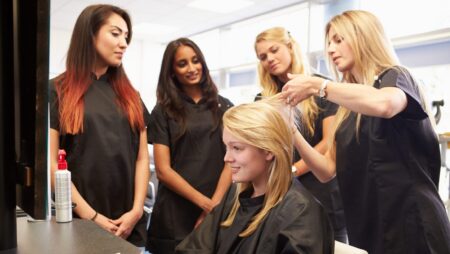
When a young stylist joins Blue, I guide them through a structured apprenticeship centered on observation, technique, and critical thinking. I teach them how to assess face shape, growth patterns, hair density, and undertones — skills that elevate their work far beyond basic cutting and coloring. More importantly, I help them understand why each decision matters. Technique becomes far more powerful when the reasoning behind it is clear.
Mentoring the Human Being Behind the Scissors
Technical training is only half of what makes a successful stylist. The other half is emotional intelligence: communication, confidence, and the ability to listen. A haircut is deeply personal. Clients want to feel seen, heard, and understood.
I work closely with new stylists to build these skills. I encourage them to speak with clarity, ask thoughtful questions, and treat each client interaction as a partnership. As they grow, I watch their confidence shift. Their shoulders straighten, their consultations deepen, and their work becomes more intentional.
Seeing that transformation is one of the most rewarding parts of my career.
A Legacy That Extends Beyond Our Walls
Some stylists I mentor remain at Blue and become leaders within the salon. Others take their skills into the wider world, building successful careers across Greater Boston and beyond. I’m proud of all of them. My goal has never been to keep talent; it’s to cultivate it.
After more than 30 years in this industry, I’m still learning, still teaching, and still passionate about the craft. Mentorship is the most meaningful work I do, and I believe it is my greatest contribution to both our salon and our community.